
Microsoft’s AI boss says AI can replace every white-collar job in 18 months — ‘We’re going to have a human-level performance on most, if not all, professional tasks’
Source: Tom’s Hardware
Overview
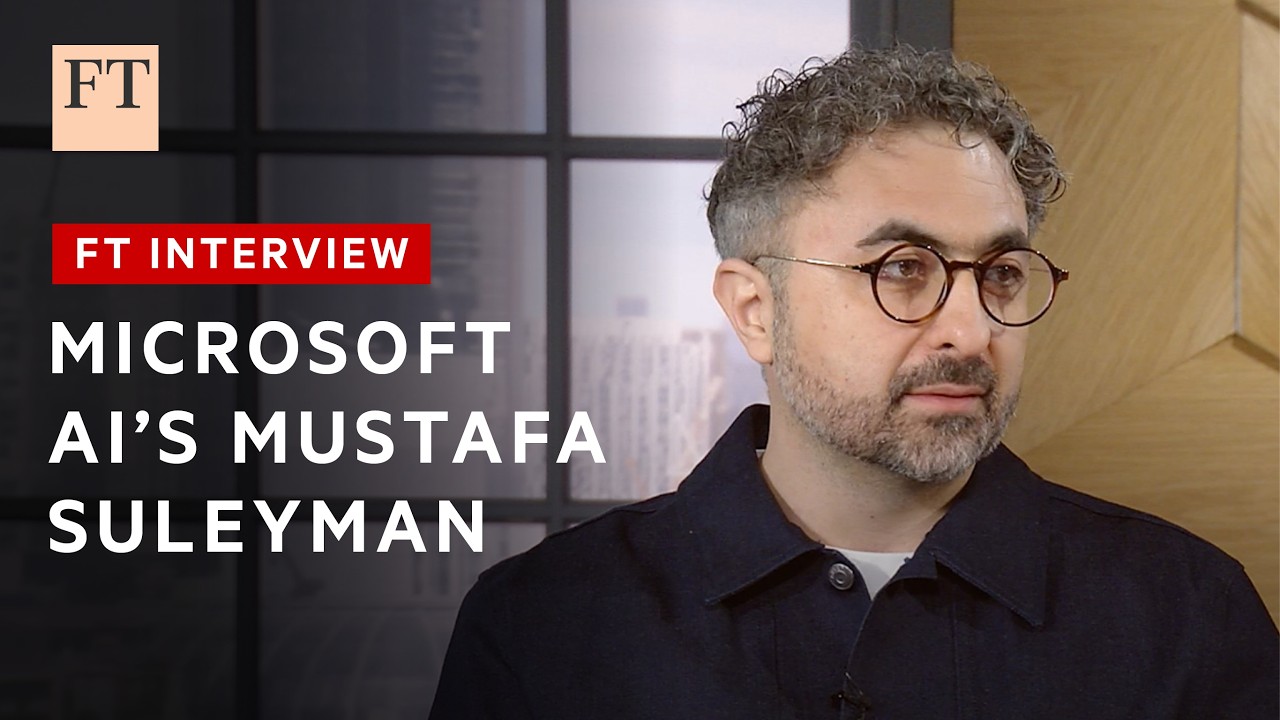
Microsoft AI chief executive Mustafa Suleyman said that artificial intelligence can replace most white‑collar work within the next 12 to 18 months. He made the comments during a Financial Times interview on YouTube, where the conversation turned to the company’s aim of achieving “humanist superintelligence.”
During the interview, Suleyman introduced the term artificial capable intelligence to describe the phase between basic large language models (LLMs) and Artificial General Intelligence (AGI).
Predictions
When asked about the timeline for human‑level performance, Suleyman said:
“I think we’re going to have a human‑level performance on most, if not all, professional tasks. So, white‑collar work, where you’re sitting down at a computer — either being, you know, a lawyer, or an accountant, or a project manager, or a marketing person — most of those tasks will be fully automated by an AI within the next 12 to 18 months.”
His view echoes other industry leaders:
- Anthropic CEO Dario Amodei warned that AI could wipe out half of all entry‑level white‑collar jobs in five years. [source]
- Ford CEO Jim Farley agreed, saying “AI will leave a lot of white‑collar people behind.” [source]
- An MIT simulation suggested AI could replace 11.7 % of U.S. workers across multiple industries, affecting roughly $1.2 trillion in salaries. [source]
Skepticism
Other analysts caution against such sweeping forecasts:
- A claimed surge in AI‑driven layoffs last year may have been driven by poor business performance, with firms exaggerating AI capabilities. [source]
- An MIT study found that 95 % of enterprise generative‑AI implementations had no measurable impact on profit and loss. [source]
- A PwC report revealed that 55 % of chief executives saw no benefits from AI deployment, with only 12 % reporting higher revenues or reduced costs. [source]
Suleyman’s Vision
Despite the doubts, Suleyman remains confident about AI’s versatility:
“There are going to be billions of digital minds. There are going to be many, many different lineages of model [sic]. Creating a new model is like creating a podcast or writing a blog — it is going to be possible to design an AI that suits your requirements for every institution, organization, and person on the planet.”
