
'MacBook Ultra' May Drive Industry Shift to Hybrid OLED Laptop Displays
Source: MacRumors
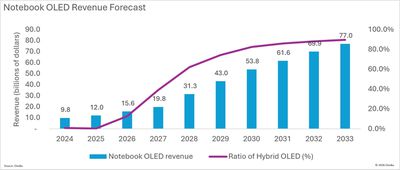
Apple’s upcoming OLED MacBook Pro – nicknamed “MacBook Ultra” – is expected to be the primary driver of a hybrid OLED laptop display market worth $4 billion this year, according to a new Omdia research report.

Hybrid OLED Architecture
The report corroborates rumors that Apple’s first OLED MacBook will use a hybrid OLED architecture that combines oxide TFT (thin‑film transistor) and tandem OLED layers. This combination, already employed in Apple’s iPad Pro models, delivers:
- Higher brightness
- Improved power efficiency
- Longer lifespan compared with conventional single‑stack OLED panels
Production Milestones
Samsung Display is slated to manufacture the panels, having invested heavily in an 8.6‑generation OLED production line in South Korea. The line recently reached a key milestone for mass production.
It will be the first time this hybrid architecture is used in a laptop of the 14‑inch and 16‑inch size class. Apple’s adoption is expected to pull the rest of the OLED laptop industry in the same direction.
Market Forecast
- Omdia estimates hybrid OLED panels will account for 12.6 % of all OLED laptop shipments in 2026.
- This share is projected to rise dramatically to 89.5 % by 2033.
Manufacturers are already exploring new patterning methods for large OLED panels. In addition to the established Fine Metal Mask (FMM) process, technologies such as inkjet printing (IJP) and fine photolithography mask (FPM) are being developed to improve production efficiency for larger screens.
Design and Feature Highlights
- Touchscreen display – reported by analyst Ming‑Chi Kuo and corroborated by Bloomberg reporter Mark Gurman.
- Thinner and lighter frames – aimed at delivering the thinnest possible device without compromising battery life or major new features.
- Potential new “Ultra” tier with a higher price point.
Additional Design Elements
- A hole‑punch camera at the top of the display, possibly housed in a pill‑shaped cutout similar to the iPhone’s Dynamic Island, rather than the traditional notch.
- Powered by M6 chips, with a launch window now looking more likely for late 2026 or early 2027, due in part to the global memory‑chip shortage.
Source: Tim Hardwick, MacRumors (June 4 2026).