
Legacy Modernization Explained: UI, UX, Performance & Scalability Perspective
Source: Dev.to
What is Legacy Modernization?
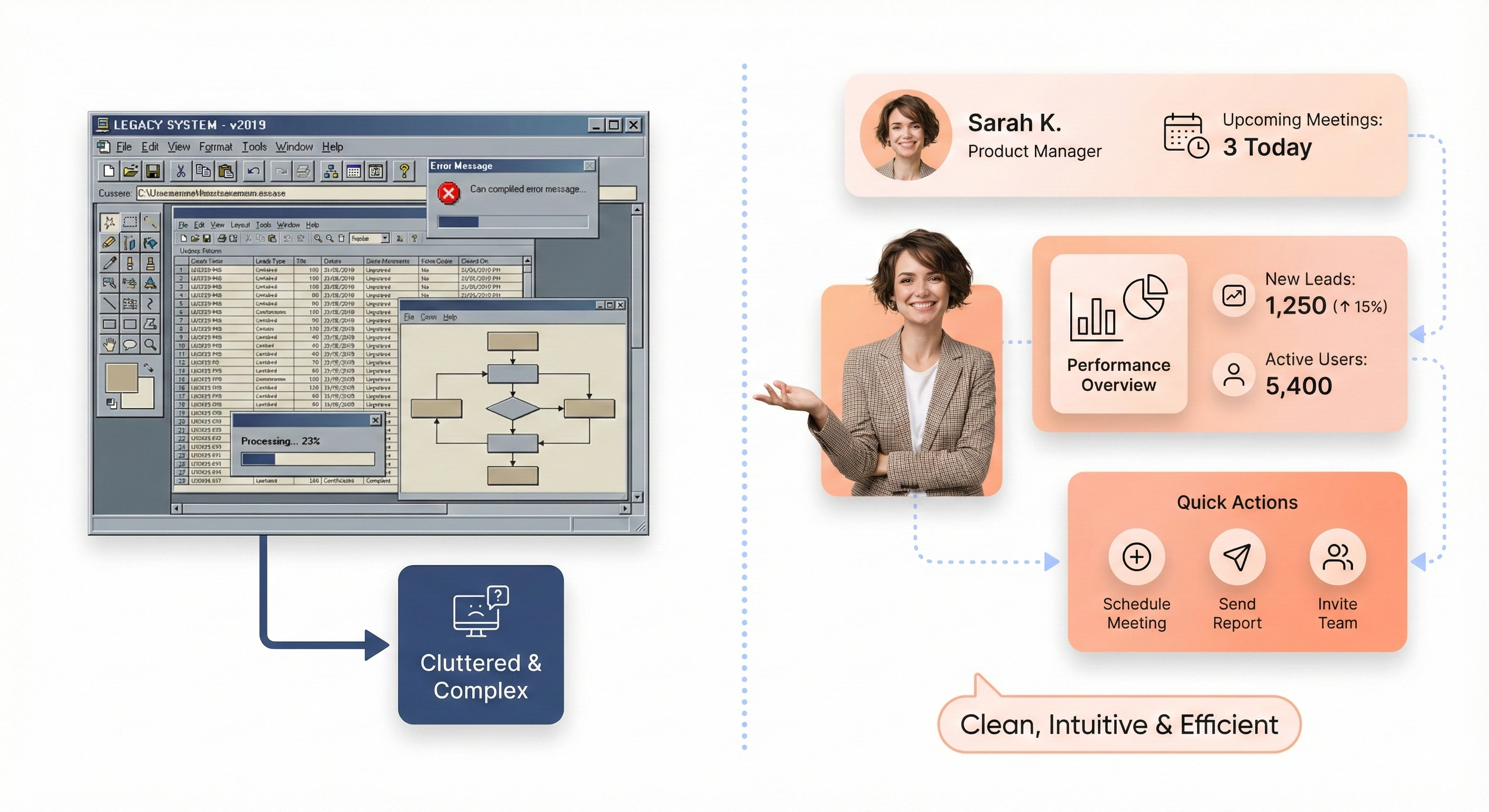
Legacy modernization refers to the process of updating existing software applications to align with modern technologies, architectural patterns, and business needs. According to IBM, application modernization focuses on improving agility, reducing technical debt, and enabling digital transformation without losing the value embedded in existing systems.
Modernization does not always mean rewriting everything from scratch. Amazon Web Services defines modernization as a spectrum of strategies—ranging from rehosting applications to fully rearchitecting them—based on risk, cost, and desired outcomes. Increasingly, organizations recognize that frontend UI, UX quality, performance, and scalability are as critical as backend changes, a view reinforced by Google Cloud in its application modernization guidance.
The Business Case for Legacy Modernization
Market Growth and ROI Statistics
Legacy modernization is a key pillar of digital transformation. Research from McKinsey & Company shows that organizations modernizing their core systems improve time‑to‑market and overall business agility. Modernized platforms enable faster experimentation, quicker feature releases, and easier integration with new digital channels.
Industry analysts such as Gartner consistently highlight application modernization as a priority investment area, driven by cloud adoption, rising customer expectations, and the need for scalable digital platforms. Microsoft Azure adds that cloud‑enabled modernization also helps organizations optimize infrastructure costs while supporting rapid scaling.
Cost of Inaction
Choosing not to modernize carries its own costs. McKinsey identifies technical debt as a growing drain on engineering productivity, increasing maintenance costs and slowing innovation over time. Legacy systems also limit the ability to adopt modern security standards, performance optimizations, and UX best practices—an issue frequently cited by IBM in enterprise modernization engagements.
UI Modernization: Transforming Visual Design
Why UI Modernization Matters
User‑interface design shapes first impressions. Research by the Nielsen Norman Group shows that users form opinions about digital products within milliseconds, largely based on visual clarity and usability. An outdated UI signals risk, complexity, and lack of innovation—directly impacting user trust and adoption.
Google’s UX guidelines emphasize that modern UI design improves perceived performance, usability, and accessibility, making it a critical component of modernization initiatives.
Component‑Based Approach
Modern UI modernization relies heavily on component‑based architectures. Frameworks like React promote building interfaces from reusable components, improving maintainability and scalability. The official React documentation highlights how component‑driven development simplifies complex UIs and enables consistent updates across applications.
Design systems further strengthen this approach. Google’s Material Design framework demonstrates how shared UI components and standards accelerate development while ensuring visual consistency across platforms.
Progressive Modernization Strategy
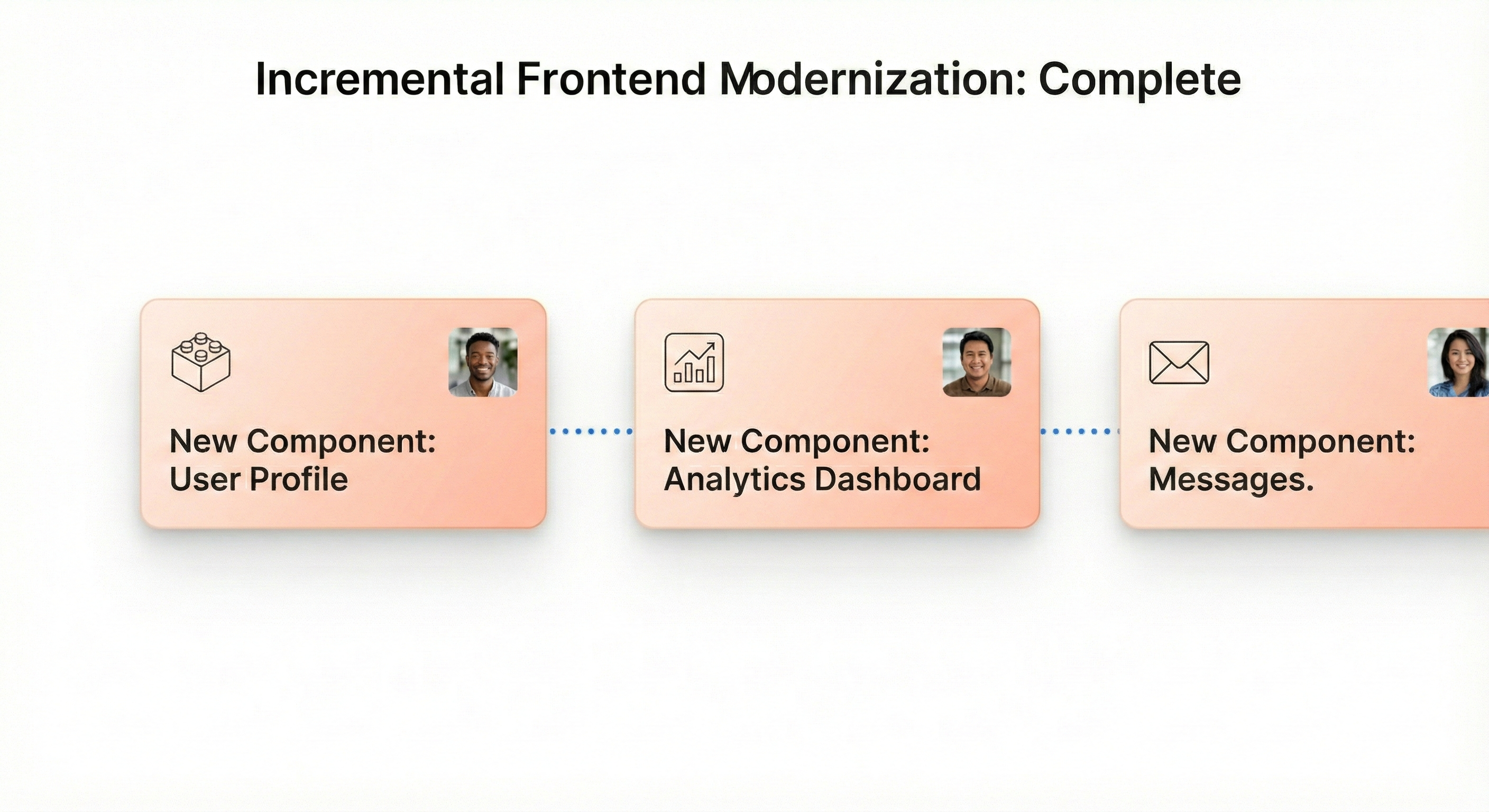
UI modernization does not need to be disruptive. Progressive modernization allows teams to update parts of the interface incrementally, reducing risk and avoiding large‑scale rewrites. Microsoft documentation on progressive web and UI strategies explains how teams can modernize user‑facing layers while legacy systems continue to operate.
Micro‑frontend architectures, popularized by ThoughtWorks, support this incremental approach by allowing independent UI modules to be developed, deployed, and scaled separately.
UX Modernization: Enhancing User Experience
Understanding the Legacy Trap
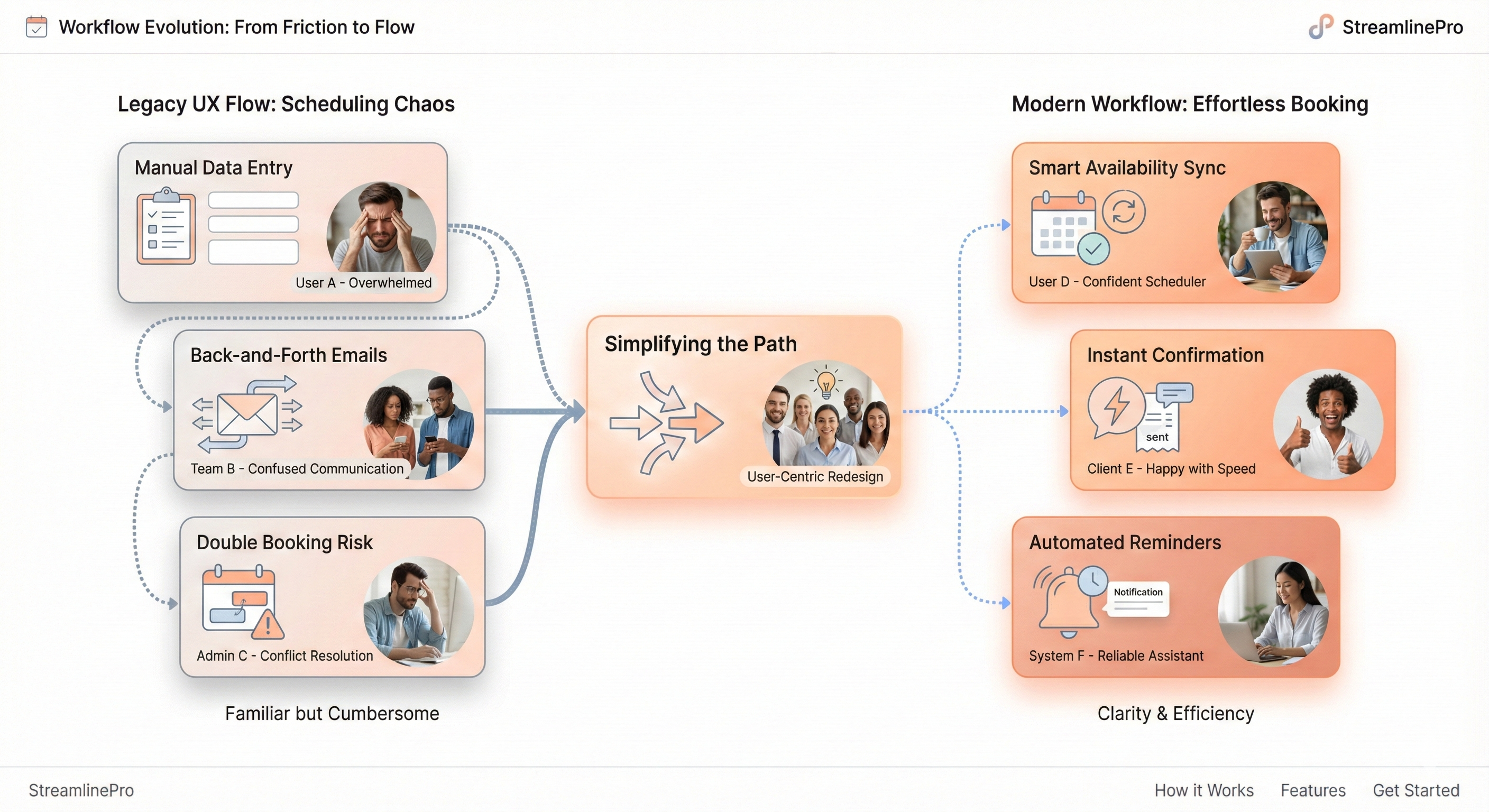
Legacy UX often reflects historical system constraints rather than real user needs. The Nielsen Norman Group identifies common legacy usability problems such as dense screens, unclear workflows, and excessive cognitive load—issues that frustrate users and reduce productivity.
Balancing Familiarity with Innovation
(If the original image URL was truncated, replace it with the correct link or a suitable placeholder.)
Performance & Scalability Modernization
(Add any performance‑related content here, following the same clean structure.)
Getting Started
- Assess your current landscape – inventory applications, technical debt, and user pain points.
- Define clear business outcomes (e.g., faster time‑to‑market, reduced cost, improved NPS).
- Choose a modernization path (rehost, refactor, rearchitect, replace) that aligns with risk tolerance and budget.
- Prioritize UI/UX upgrades that deliver the highest user impact early.
- Implement incrementally using component‑based or micro‑frontend approaches.
- Measure success with KPIs such as deployment frequency, page‑load time, and user satisfaction.
References
- IBM – Application Modernization
- AWS – Modernization Strategies
- Google Cloud – Application Modernization Guidance
- McKinsey & Company – Digital Transformation & Technical Debt
- Gartner – Application Modernization Investment Priorities
- Microsoft Azure – Cloud‑Enabled Modernization
- Nielsen Norman Group – Usability Heuristics & Legacy UX
- React.dev – Component‑Driven Development
- Material Design – Design System Overview
- ThoughtWorks – Micro‑Frontend Architecture
UX Modernization
Modernization must balance improvement with continuity. Abrupt UX changes can increase resistance and training costs. NNGroup research on change aversion shows that gradual UX evolution helps users adapt while still benefiting from improved workflows and clarity.
User‑Centered Design Principles
User‑centered design is central to successful UX modernization. The international standard ISO 9241‑210 defines user‑centered design as an approach that improves usability and accessibility by focusing on user needs throughout the design process. NNGroup further emphasizes that UX research during modernization is essential to prevent usability regressions and ensure adoption.
Performance Optimization
Performance Bottlenecks in Legacy Systems
Legacy applications often suffer from performance issues caused by outdated front‑end stacks, blocking scripts, large bundles, and monolithic back‑end architectures.
- Web.dev outlines how inefficient loading and rendering patterns degrade user experience.
- AWS highlights how monoliths limit scalability and performance optimization.
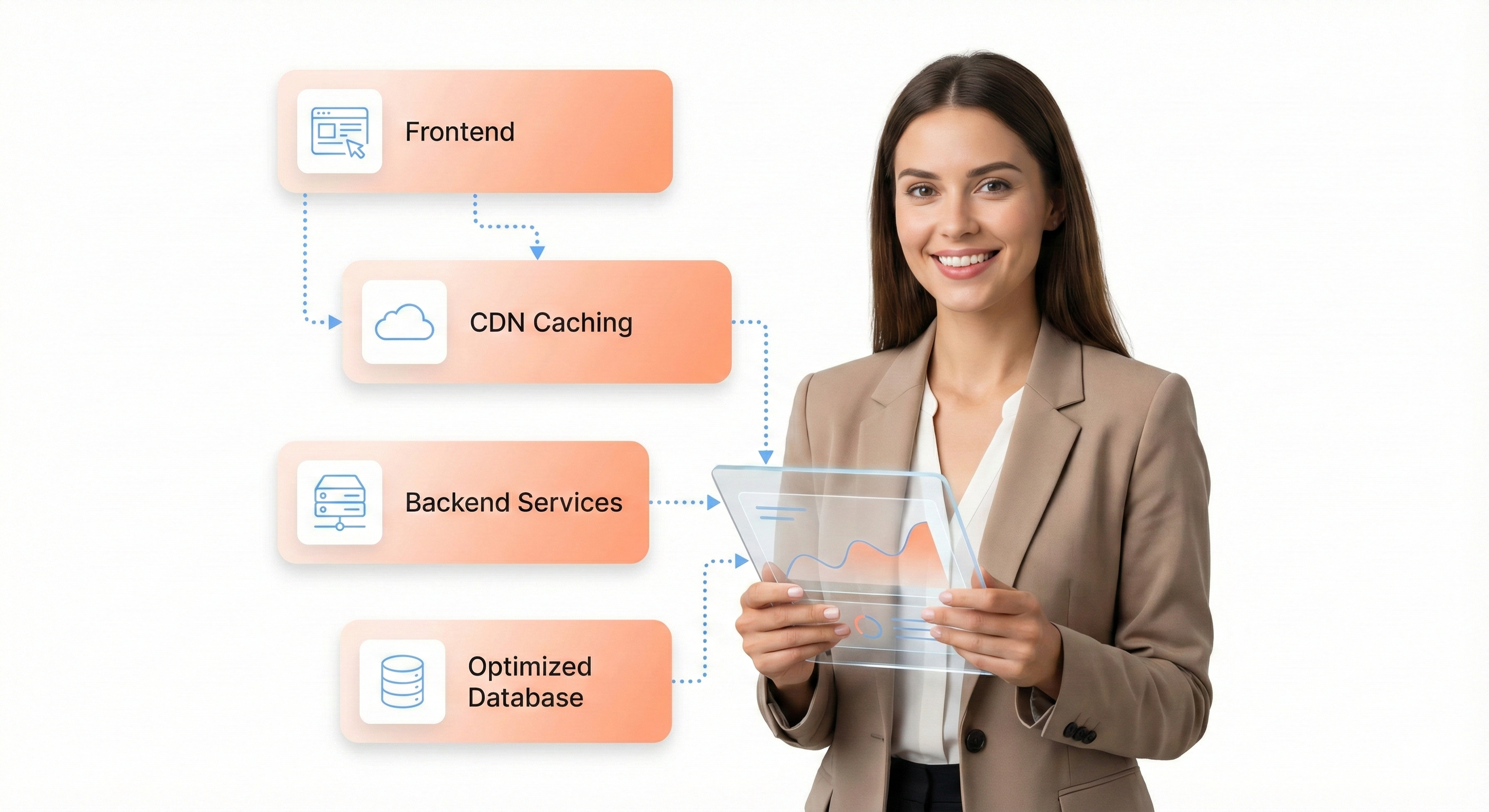
Multi‑Layer Caching Strategies
Caching is a core performance lever.
- Browser caching reduces round‑trips for static assets.
- CDN caching (e.g., Cloudflare) serves content from edge locations, cutting latency.
- Server‑side caching (e.g., Varnish, Redis) offloads work from the application layer.
Edge caching, promoted by platforms like Vercel, further improves performance by serving content even closer to users.
Database Performance Optimization
Back‑end performance is equally critical. AWS best practices for relational databases emphasize:
- Proper indexing.
- Query optimization (e.g., avoiding N+1 queries).
- Efficient connection management (pooling, timeout settings).
These practices improve response times and overall system reliability.
Scalability Through Modernization
Cloud Migration for Elastic Scalability
Scalability is a major driver of modernization. Google Cloud architecture guidance explains how cloud platforms enable elastic scaling based on real‑time demand. In contrast, legacy on‑premise systems often struggle with horizontal scaling and capacity planning, as outlined by AWS scalability documentation.
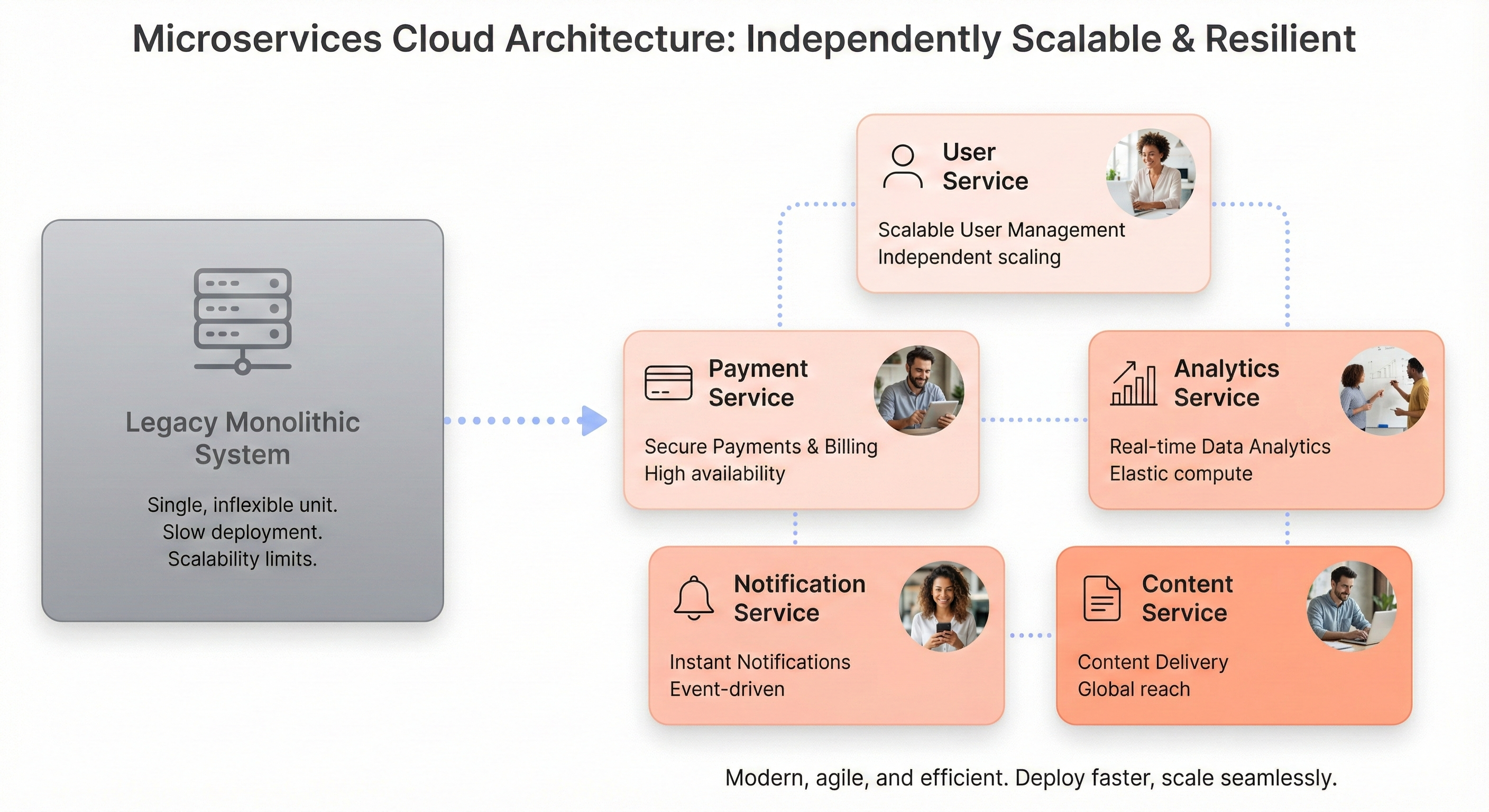
Microservices Architecture
Microservices allow applications to be broken into independently deployable services. Both AWS and Martin Fowler highlight how microservices enable:
- Independent scaling of components.
- Faster, more frequent deployments.
- Reduced impact of failures compared with monolithic systems.
Containerization and Orchestration
Containers standardize application environments, improving portability and consistency.
- Docker documentation shows how containerization simplifies deployment.
- The Cloud Native Computing Foundation explains how Kubernetes automates scaling, orchestration, and resilience.
Technical Debt: The Hidden Enemy
Understanding Technical Debt
Martin Fowler defines technical debt as the future cost incurred by choosing expedient but sub‑optimal technical solutions. Over time, this debt compounds, making systems harder to change and maintain.

Impact on Business Operations
McKinsey research links high technical debt to:
- Slower feature delivery.
- Increased defect rates.
- Reduced engineering morale.
For businesses, this translates into missed market opportunities and rising operational costs.
Strategies for Debt Reduction
Modernization initiatives provide an opportunity to address technical debt systematically—through:
- Refactoring of problematic code.
- Architectural improvements (e.g., modularization).
- Adoption of better tooling and automated quality gates.
Modernization Approaches and Strategies
The 7 R’s of Modernization
AWS outlines the commonly used “7 R’s” of modernization:
- Rehost – lift‑and‑shift to the cloud.
- Replatform – make minimal changes to use cloud services.
- Refactor – re‑write parts of the code for cloud‑native benefits.
- Rearchitect – redesign the application for scalability and resilience.
- Rebuild – develop a new application from scratch.
- Retire – decommission obsolete components.
- Retain – keep systems that still meet business needs.
These strategies help organizations choose the right modernization path based on business goals, risk tolerance, and system criticality.
Choosing the Right Strategy
No single strategy fits all applications. Microsoft emphasizes aligning modernization choices with:
- Business priorities.
- Technical constraints.
- User impact.
A tailored approach avoids the pitfalls of a one‑size‑fits‑all methodology.
Incremental vs. Big‑Bang Approach
- Incremental modernization reduces operational risk and supports continuous delivery.
- Big‑bang rewrites have higher failure rates, often due to complexity and organizational resistance (McKinsey analysis).
Most organizations benefit from a phased, incremental path.
Emerging Trends in Legacy Modernization
AI‑Powered Modernization
AI is increasingly used to assist code analysis, refactoring, and testing. IBM highlights how AI‑powered tools accelerate modernization by:
- Identifying hidden dependencies.
- Recommending code improvements.
- Automating regression test generation.
Low‑Code / No‑Code Platforms
Gartner research notes that low‑code platforms enable faster application updates and modernization, especially for:
- Business‑logic‑heavy workloads.
- Rapid prototyping and citizen‑developer initiatives.
These platforms help bridge the gap between legacy systems and modern delivery expectations.
DevOps and Automation
AWS defines DevOps as a combination of cultural practices and automation that improves deployment frequency and reliability. DevOps practices are now integral to sustaining modernized systems over time.
Industry‑Specific Considerations
BFSI Sector
In banking and financial services, modernization prioritizes security, compliance, and scalability. IBM’s BFSI guidance emphasizes modern platforms to support regulatory requirements and digital banking experiences.
Healthcare
Healthcare modernization must address interoperability and compliance. HIMSS highlights digital transformation as a driver for improved patient care and operational efficiency.
Manufacturing
The World Economic Forum notes that modernized systems enable real‑time data visibility and operational efficiency in manufacturing, supporting Industry 4.0 initiatives.
Best Practices for Successful Modernization
Assessment and Planning
Google Cloud stresses the importance of thorough assessment and roadmap planning to reduce risk and align modernization with business outcomes.
Change Management
McKinsey research shows that effective change management is critical to user adoption and long‑term success, particularly when workflows and tools change.
Continuous Monitoring
AWS recommends continuous monitoring to ensure performance, reliability, and security as systems evolve.
Conclusion: The Path Forward
Legacy modernization is not a one‑time project—it is an ongoing transformation. By addressing UI, UX, performance, and scalability together, organizations can unlock the full value of their existing systems while preparing for future growth. Enterprises that modernize thoughtfully—guided by user needs, architectural best practices, and incremental strategies—position themselves to compete effectively in a fast‑changing digital landscape.