
Key to ultra-dense next-gen data storage could be a new magnetic state found in twisted 2D materials — German researchers reveal 'super‑moiré' magnetic milestone
Source: Tom’s Hardware
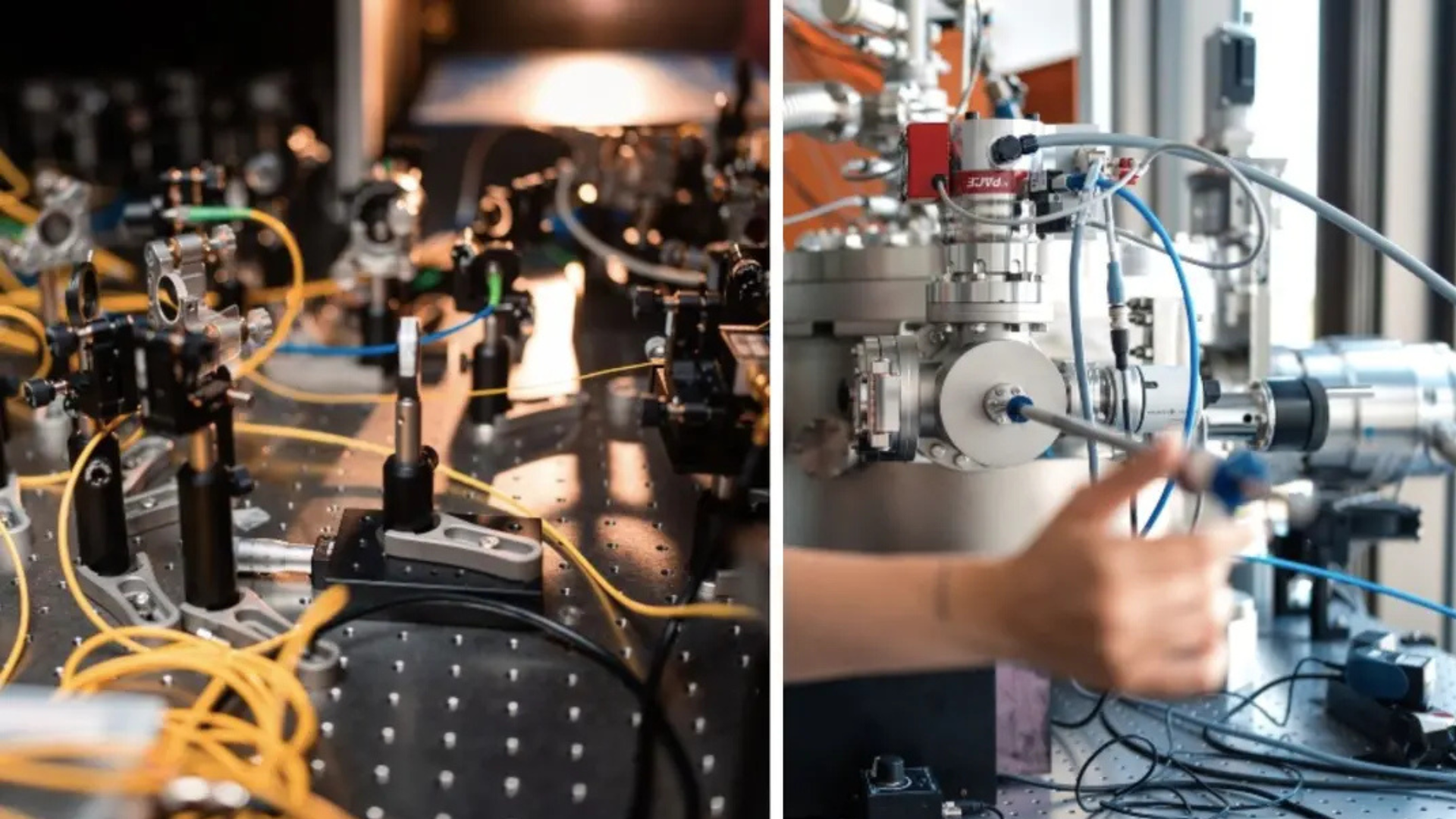
Image credit: University of Stuttgart / Ludmilla Parsyak
Overview
Researchers from the University of Stuttgart have discovered an unusual magnetic state in twisted, two‑dimensional chromium triiodide (CrI₃). The study, published in Nature Nanotechnology on February 2, reveals long‑range spin textures that extend beyond the material’s underlying moiré pattern, suggesting a potential route toward ultra‑dense magnetic data storage.
Background: Twisted van der Waals Materials
Small angular offsets between atomically thin layers create moiré superlattices, which can dramatically alter electronic and magnetic properties. Over the past few years, twisted van der Waals heterostructures have become a focal point for exploring novel quantum phenomena.
Experimental Findings
- Technique: Scanning nitrogen‑vacancy (NV) magnetometry was used to image magnetic textures in twisted double‑bilayer CrI₃ at cryogenic temperatures.
- Observed textures: Ordered, dot‑like magnetic features spanning multiple moiré unit cells.
- Size dependence:
- As the twist angle increased within a narrow “long‑angle” range, the textures grew, reaching ~300 nm at ~1.1° twist.
- The textures vanished near a 2° twist.
- Individual features within the textures measured roughly 60 nm.
- Super‑moiré state: Unlike previously reported moiré‑locked magnetic states, these textures are not confined to a single stacking configuration or local energy minimum. They represent a higher‑order “super‑moiré” magnetic state that reorganizes magnetism on a larger length scale.
Implications for Data Storage
The discovery of magnetic textures that extend over several moiré cells could enable magnetic bits far smaller than those in conventional storage media, potentially leading to ultra‑dense magnetic memory technologies.
Limitations and Outlook
- Temperature: Measurements were performed at low (cryogenic) temperatures.
- Material stability: CrI₃ is air‑sensitive, making direct integration into commercial devices challenging.
- Transferability: The authors suggest that the underlying mechanism may be applicable to other layered magnetic materials with higher ordering temperatures, opening avenues for future research.
Reference
- Nature Nanotechnology: “Super‑moiré magnetic textures in twisted 2D magnets”.