
Is Samsung using a newer periscope lens on the Galaxy S26 Ultra? Here’s what we know (Updated)
Source: Android Authority
TL;DR
- The Galaxy S26 Ultra replaces the conventional periscope 5× zoom with a new design, likely using Samsung’s ALoP (All Lenses on Prism) technology.
- The new setup allows for a wider aperture and circular bokeh, but the minimum focus distance has regressed from 26 cm to 52 cm.
- Samsung has removed “periscope” from its official S26 Ultra materials, even though the hardware still uses light‑bending prisms.
Update (Mar 6 2026, 9:12 PM ET)
Samsung confirmed in a statement to SammyGuru that the Galaxy S26 Ultra does indeed utilize ALoP tech.
Original article (Mar 6 2026, 5:25 AM ET)
Samsung reserved most of the highlight upgrades on the Galaxy S26 series for the Galaxy S26 Ultra, including a wider aperture on the primary camera and the 5× telephoto camera. One change that flew under the radar is that the 5× camera is no longer a periscope zoom lens. Instead, Samsung has switched to a different lens type for the 5× zoom camera.
Galaxy S26 Ultra has a different 5× optical zoom camera setup
A report from GSMArena notes that the new Galaxy S26 Ultra uses a “traditional” lens design for its 5× optical zoom camera, with the lens elements and the sensor parallel to the phone. In contrast, the S25 Ultra uses a periscope lens design, where a prism bends light 90°, making the lens elements and sensor perpendicular to the phone.
Because of this change, the Galaxy S26 Ultra’s 5× optical zoom camera has a poorer minimum focus distance of 52 cm, whereas the Galaxy S25 Ultra could focus at 26 cm and beyond.
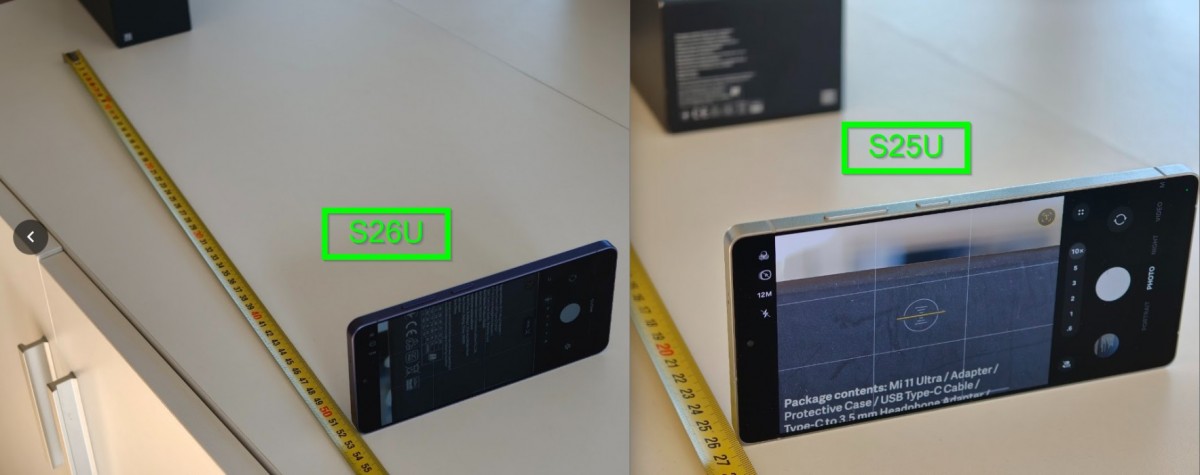
For users who love close‑up telephoto shots, this downgrade is noticeable—though most people use the 5× zoom for distant subjects.
The report also notes that the different lens assemblies produce different bokeh shapes. The Galaxy S25 Ultra yields a more rectangular bokeh for out‑of‑focus lights, while the Galaxy S26 Ultra produces a more oval/circular bokeh.
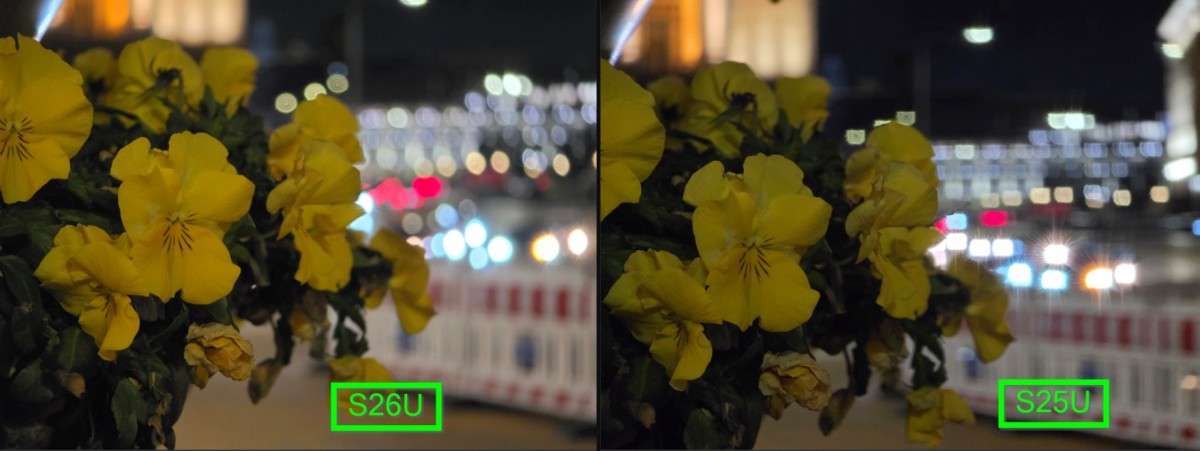
Samsung’s specifications and marketing for the Galaxy S26 Ultra make no mention of a “periscope,” whereas those for the S25 Ultra do. The report suggests the lens swap is likely not due to the wider aperture, but the exact reason remains undisclosed.
Is Samsung using ALoP on the Galaxy S26 Ultra?
There’s speculation that the Galaxy S26 Ultra uses Samsung’s ALoP (All Lenses on Prism) technology. In an ALoP solution, the sensor sits perpendicular to the phone, while the lens elements sit on top of the prism (rather than between the prism and sensor), parallel to the phone.
This configuration allows for a smaller camera module and a faster aperture, and it explains the circular bokeh (since the rectangular prism isn’t the first entry point for light).
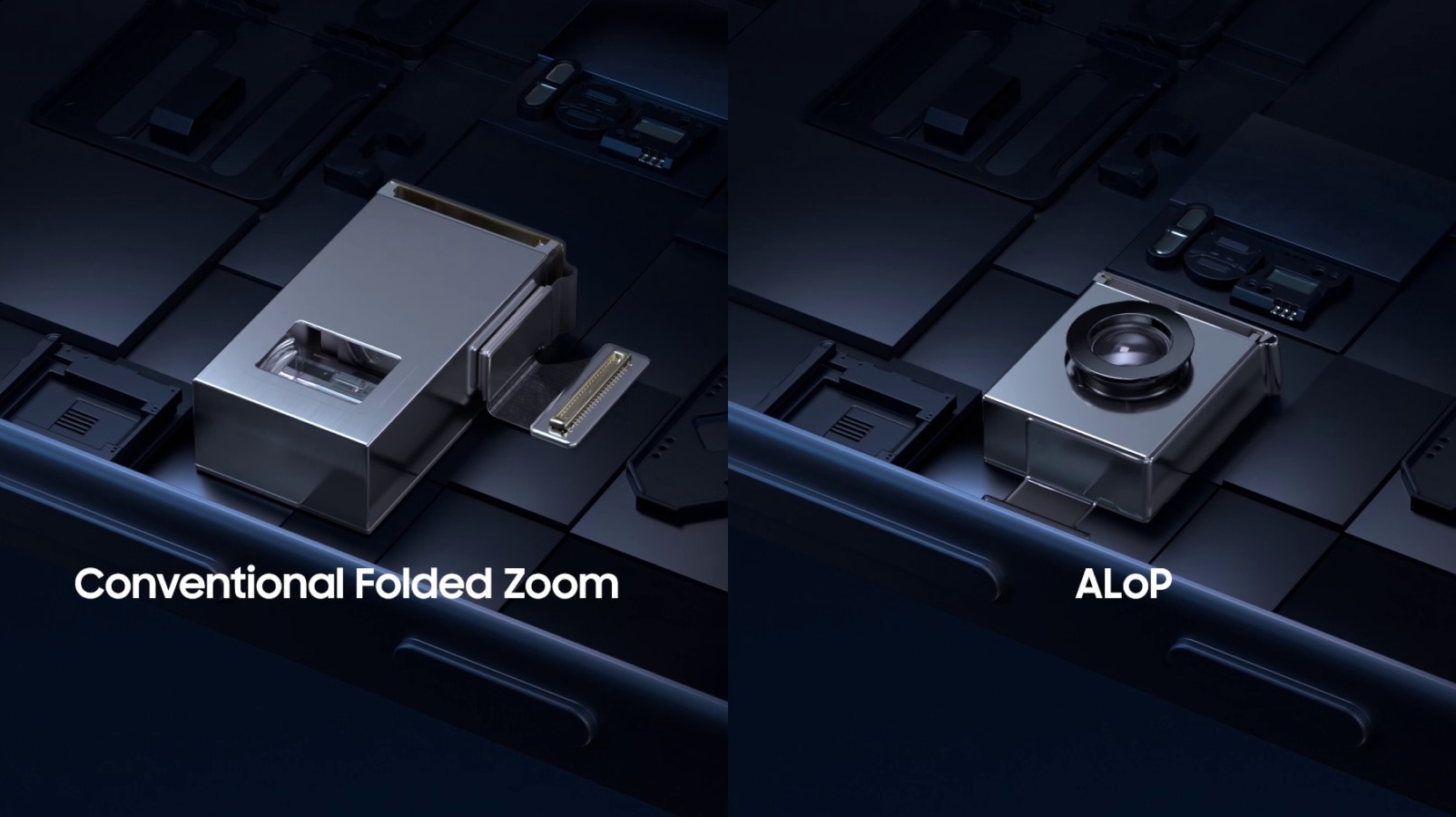
However, an ALoP setup cannot be considered a purely “traditional” lens design, as it combines perpendicular and parallel elements. We’re curious about GSMArena’s exact findings on the Galaxy S26 Ultra’s 5× optical zoom camera, since they describe it as returning to a “traditional” lens design.
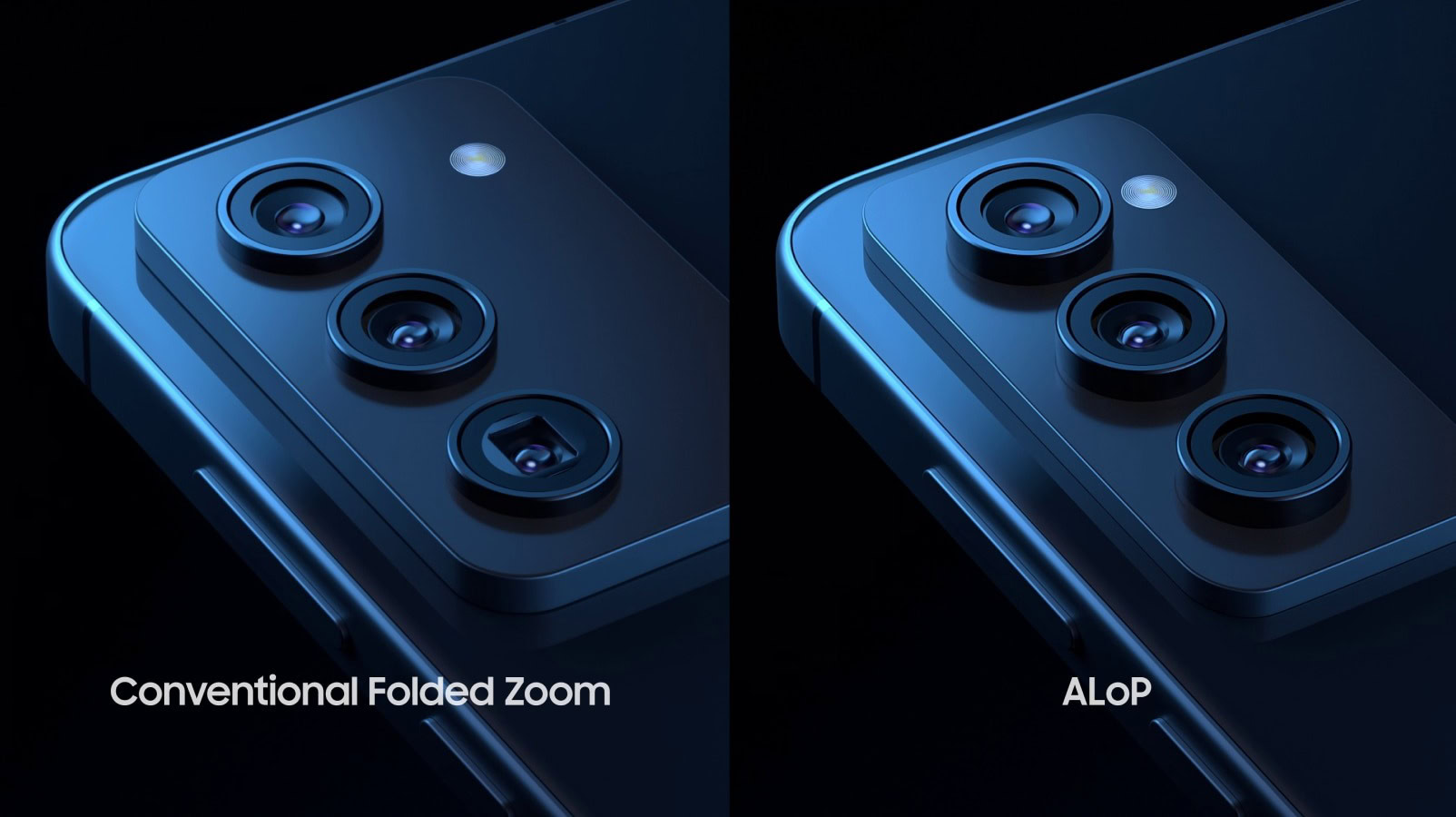
Confusingly, while Samsung Semiconductor does not publicly classify ALoP as a “periscope” zoom camera, the use of a prism to bend light 90° technically makes it a periscope zoom camera. ALoP merely reconfigures the architecture of what is referred to as a “conventional folded zoom” camera module—periscope zoom cameras with the visibly rectangular lens opening.
Thus, Samsung’s hesitation in assigning the word “periscope” to the Galaxy S26 Ultra’s camera setup remains unexplained. Samsung’s Mobile division often omits deep technical details from marketing materials, so it’s not surprising that neither ALoP nor “periscope” are mentioned.
We’ve reached out to Samsung for clarification on whether the Galaxy S26 Ultra’s 5× optical zoom camera uses the conventional folded‑zoom design or the newer ALoP design, and whether it is still classified as a periscope zoom camera. We’ll update the story when we hear back.