
Introducing Trusted Contact in ChatGPT
Source: OpenAI Blog
What is Trusted Contact?
Trusted Contact is an optional safety feature that lets adults (18+ globally, 19+ in South Korea) nominate a trusted person—friend, family member, or caregiver—who may be notified if our automated systems and trained reviewers detect that the user may be discussing self‑harm in a way that indicates a serious safety concern.
Trusted Contact adds another layer of support alongside the existing localized helplines [link] and builds on parental‑control safety notifications [link].
“Psychological science consistently shows that social connection is a powerful protective factor, especially during periods of emotional distress. Helping people identify a trusted person in advance, while preserving their choice and autonomy, can make it easier to reach out to real‑world support when it matters most.”
— Dr. Arthur Evans, CEO, American Psychological Association
Why Trusted Contact?
- Social connection is one of the most important protective factors for reducing suicide risk [CDC guidance].
- Trusted Contact encourages users to reach out to someone they already trust.
- It does not replace professional care or crisis services; it is one of several safeguards.
- ChatGPT will still recommend contacting crisis hotlines or emergency services when appropriate.
How It Works
-
Add a Trusted Contact
- From ChatGPT settings, add one adult (18+ globally, 19+ in South Korea).
- The Trusted Contact receives an invitation explaining the role and must accept within one week. If they decline, you can invite another adult.
-
Detection & Notification
- If automated monitoring detects a conversation that may indicate a serious self‑harm concern, ChatGPT informs the user that a Trusted Contact may be notified and suggests conversation starters.
-
Human Review
- A small team of specially trained reviewers examines the situation.
- If they determine a serious safety concern exists, the Trusted Contact receives a brief notification (email, text, or in‑app) that:
- States the general reason (self‑harm discussed in a concerning way).
- Does not include chat details or transcripts, protecting user privacy.
- Provides a link to expert guidance for handling the notification [guidance].
-
Managing Trusted Contacts
- Users can add, edit, or remove their Trusted Contact at any time in settings.
- Trusted Contacts can remove themselves via the Help Center.
Timing
- Notifications are reviewed by trained humans within one hour of detection.
- While serious safety situations are rare, the system is designed for timely review and response.
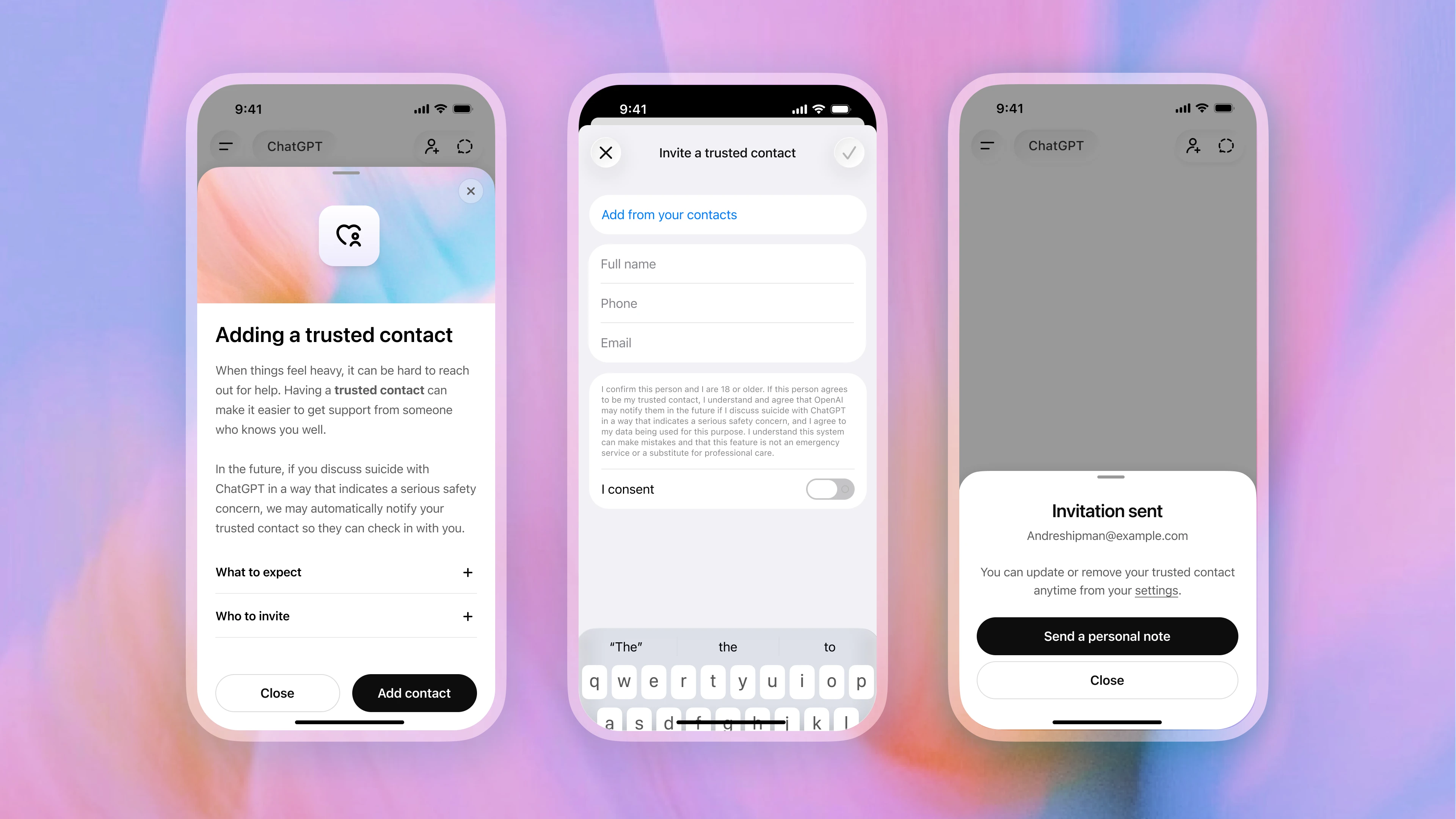
Image: Illustration of safety features in ChatGPT.
Guided by clinicians and safety experts
“One of AI’s biggest promises is how it can foster authentic human‑to‑human connection and psychological safety. I am encouraged by ChatGPT’s Trusted Contact feature, which offers a step forward to human empowerment, especially during moments of vulnerability.”
— Dr. Munmun De Choudhury, Ph.D., J. Z. Liang Professor of Interactive Computing at Georgia Tech and member of the Expert Council on Well‑Being and AI
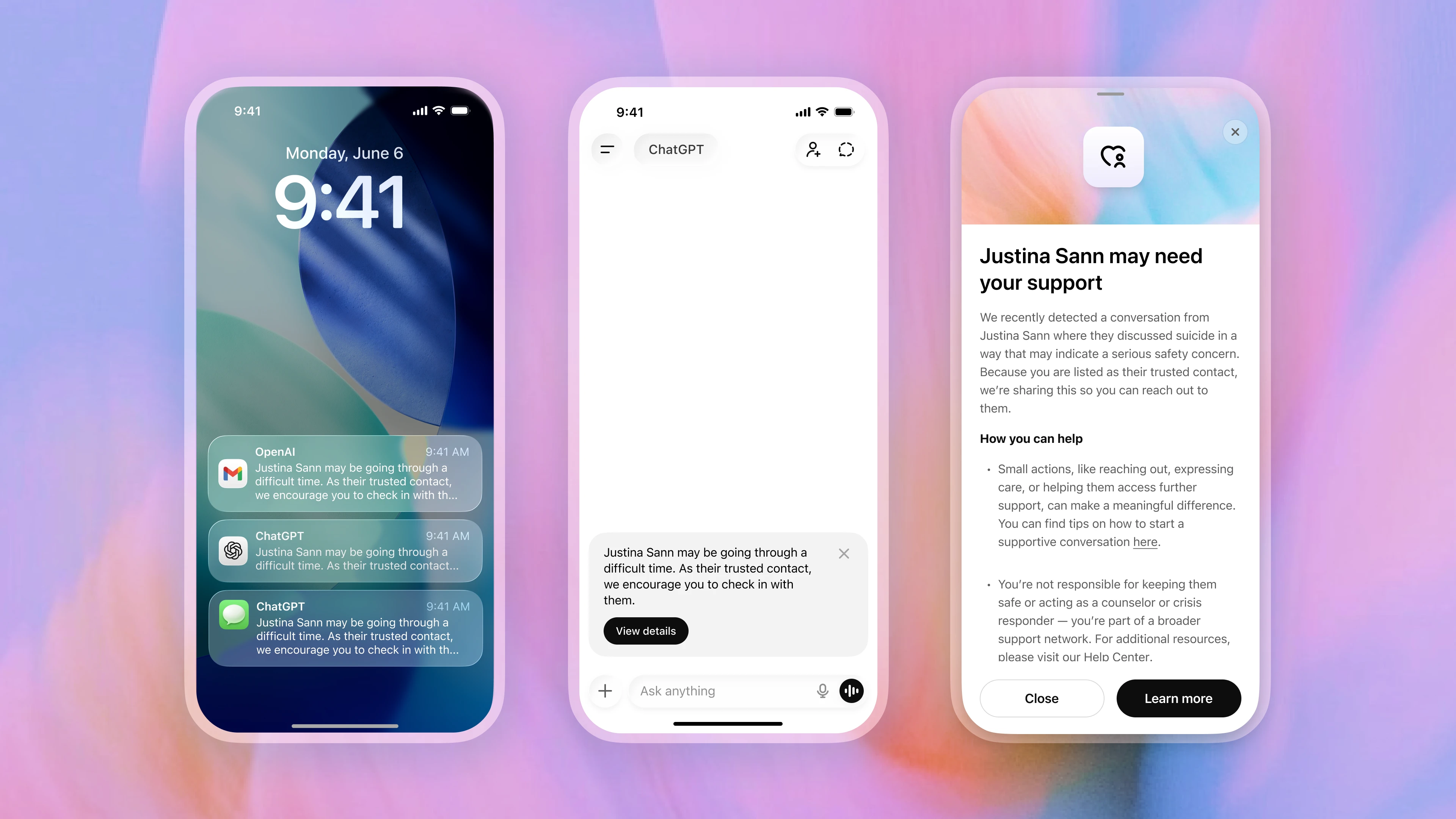
Prioritizing Safety at Every Stage
In addition to Trusted Contact, ChatGPT has safeguards to guide sensitive conversations at every stage. We’ve continued improving how the system responds to different levels of risk expressed in a conversation:
- Supporting real‑world help – In sensitive moments, ChatGPT may encourage people to contact emergency services, crisis helplines, mental‑health professionals, or trusted people in their lives.
- Responding with care – We’ve worked with 170 + mental‑health experts (source) to improve ChatGPT’s ability to detect and respond to signs of potential distress, de‑escalate conversations, and guide people to real‑world support when appropriate.
- Helping people stay in control of their time – In some situations, ChatGPT may suggest taking a break or stepping away after extended use to promote healthy technology habits.
- Refusing harmful requests – ChatGPT is trained to refuse providing instructions for suicide or self‑harm. When users request this type of information, the system refuses the request, redirects toward safer responses, and surfaces localized crisis resources.
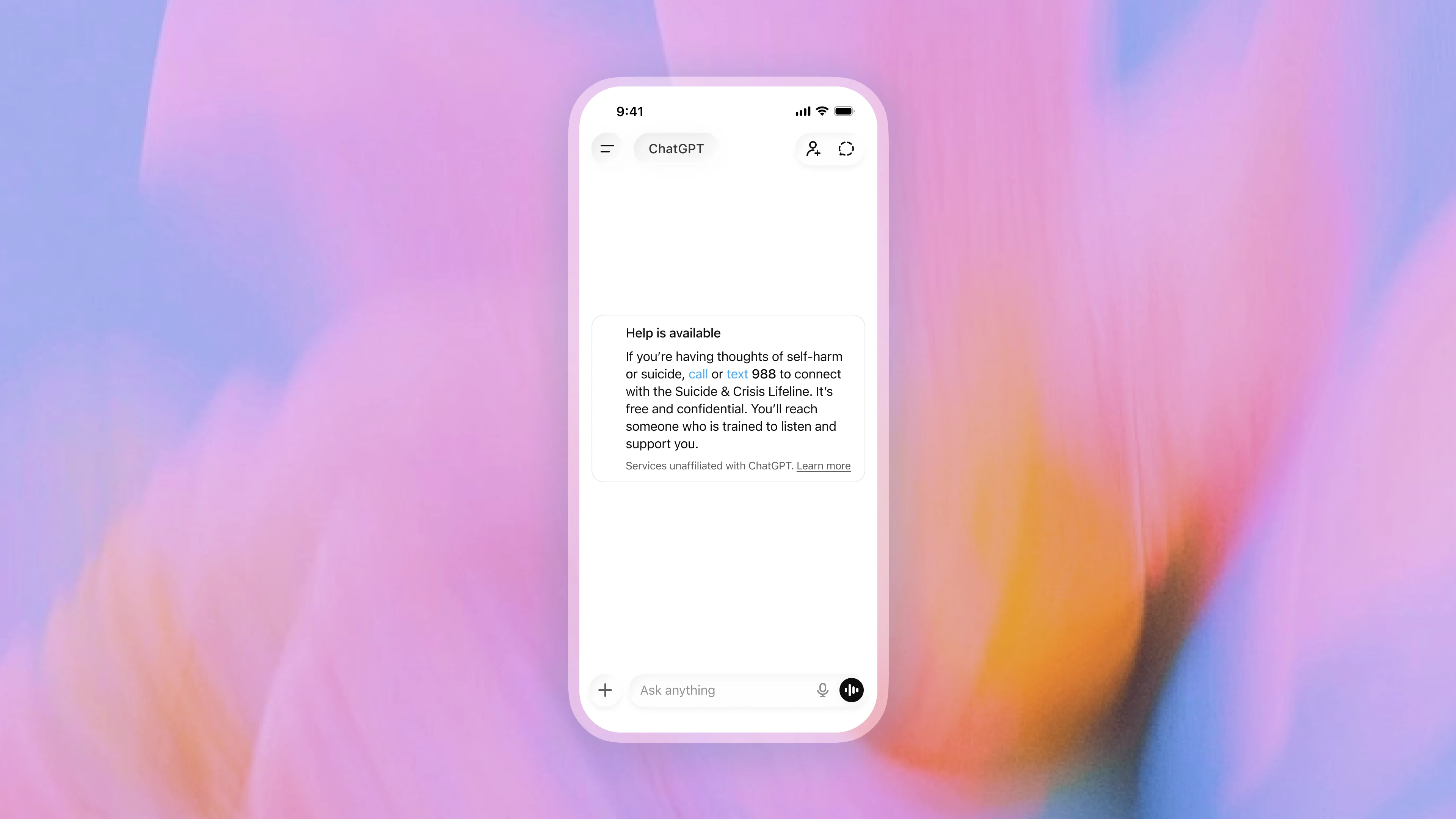
Continuing to Evolve Safety in AI
Trusted Contact is part of OpenAI’s broader effort to build AI systems that help people during difficult moments. We will continue to work with clinicians, researchers, and policymakers to improve how AI systems respond when people may be experiencing distress.
Our goal is to ensure that AI systems do not exist in isolation; instead, they should help connect people to the real‑world care, relationships, and resources that matter most.