
Intel XeSS 3 MFG mod triples Arc A380 triples performance in Cyberpunk 2077 — supercharged 6GB GPU pumps out 140 FPS at 1080p on low preset
Source: Tom’s Hardware
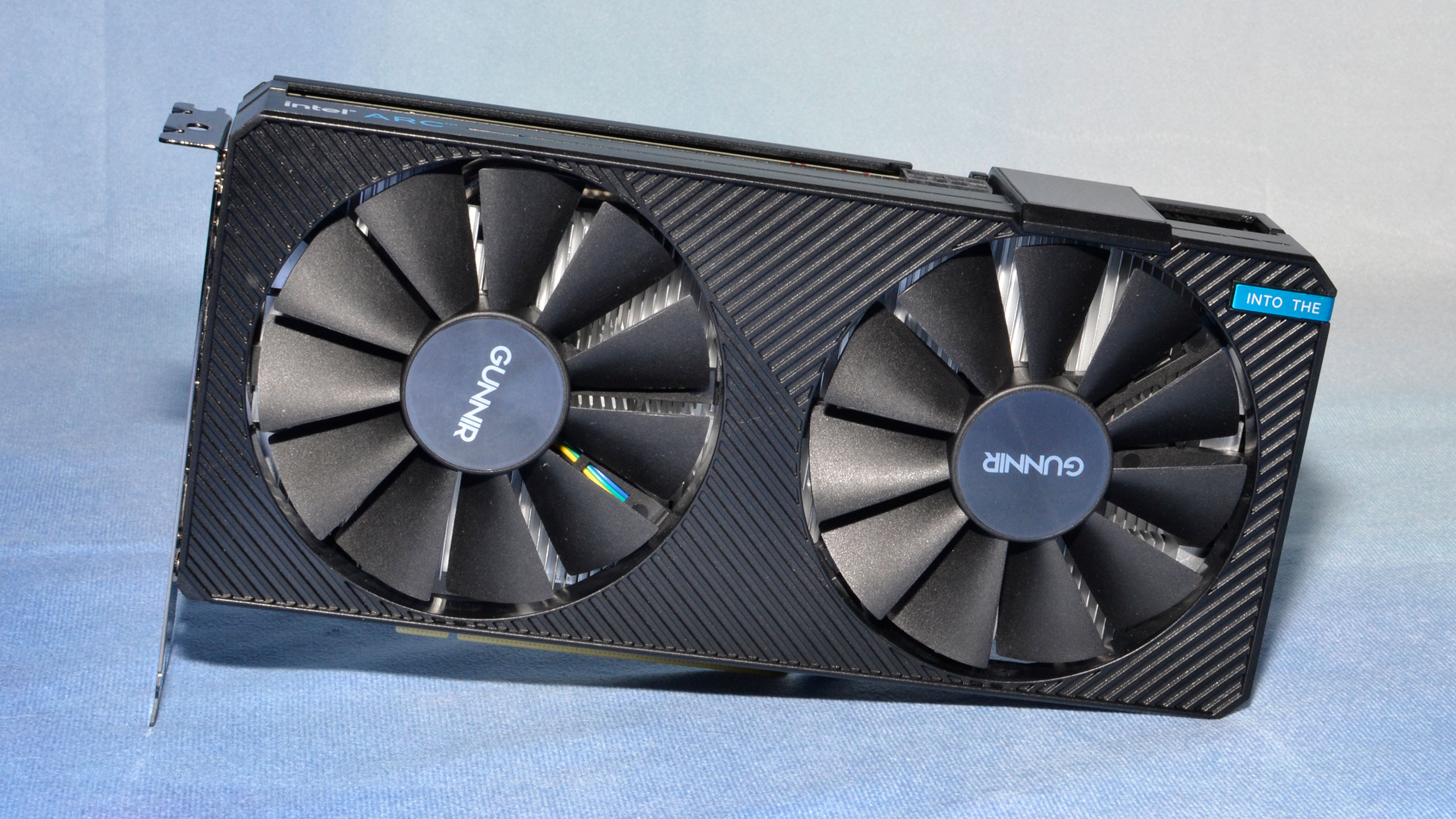
Image credit: Tom’s Hardware
Overview
Intel has enabled XeSS 3 Multi-Frame Generation (MFG) across its Arc discrete GPUs and Core Ultra integrated GPUs with Xe2 or Xe3 cores. YouTuber Alva Jonathan tested this technology on an ASRock Arc A380 LP 6 GB GPU to see how far Intel’s frame‑generation tech can push performance in Cyberpunk 2077.
Test Setup
- GPU: ASRock Arc A380 LP 6 GB
- CPU: AMD Ryzen 5 7500F
- Motherboard: ASRock B650M‑HDV/M.2
- Memory: 32 GB (2 × 16 GB) Adata XPG DDR5‑6000 CL30
- Storage: 1 TB Adata XPG Mars 980 Pro NVMe SSD
- Power Supply: FSP Vita GM 750 W
Driver Modification
Intel does not provide official drivers for multi‑frame generation on the A‑series or Arc B‑series. Jonathan copied two files—igxell.dll and igxess_fg.dll—from the Graphics_101.8362 folder to the Graphics_101.8452 folder, then installed the newer driver. This exposed the XeSS Frame Generation Override dropdown in the Intel driver control panel.
Benchmark Details
- Game: Cyberpunk 2077
- Resolution: 1080p
- Graphics preset: Low
- XeSS version: Super Resolution 2.0, Ultra Quality
Results Without Frame Generation
- Base FPS: 55–60
Results With 4× Multi‑Frame Generation (MFG)
- Average FPS: 135–140
- Base FPS (without XeSS): 33–35
- Notes: High hardware load, noticeable mouse lag. Intel recommends a base frame rate of 180–240 FPS for 4× MFG; below 45 FPS the experience degrades.
Results With 3× Multi‑Frame Generation (MFG)
- Average FPS: ~120
- Base FPS: ~40
- Notes: Slightly better input latency than 4× MFG, though still below the ideal 45 FPS threshold. Intel currently lacks a latency measurement tool comparable to Nvidia’s NV Reflex API, so latency was judged subjectively.
Video Preview
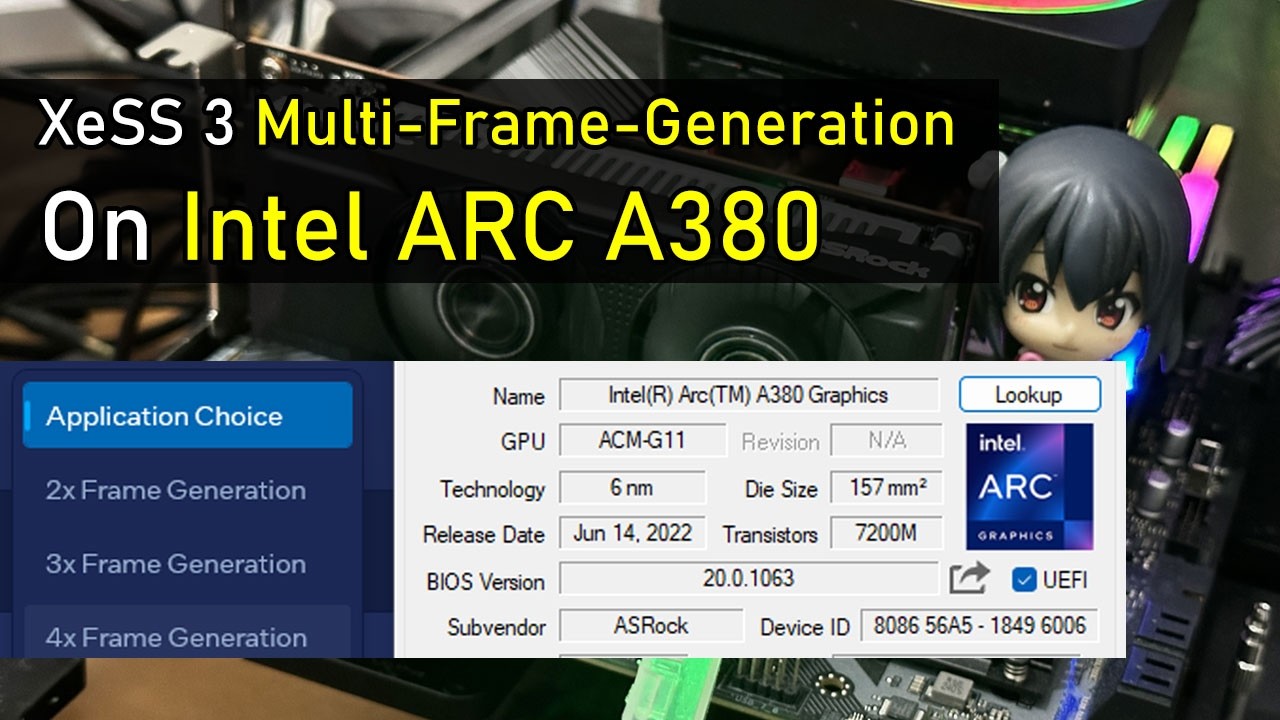
Implications for Budget Gamers
XeSS Frame Generation can deliver a noticeably smoother experience on entry‑level hardware when paired with low graphics settings. This is also promising for integrated‑GPU devices and handhelds such as the MSI Claw series. Wider adoption depends on game developers adding support for Intel XeSS 2 MFG, which could become more common with the upcoming Panther Lake CPUs.
References