
Insights from our executive roundtable on AI and engineering productivity
Source: Dropbox Tech Blog
Improving Engineering Productivity at Dropbox
The faster we can deliver high‑quality features, the more value our customers receive. This rapid iteration has been key to building tools like Dropbox Dash—a context‑aware AI that connects to all your work apps, letting you search, ask questions about, and organize all your content.
Our AI‑Powered Workflow
While building Dash, we’ve become big adopters of AI tools in our own development process, including:
- Claude Code – for code generation and review
- Cursor – for intelligent editing and navigation
Early results are promising, but many open questions remain:
- How do we work most effectively with these tools?
- Where can they have the greatest impact on engineering productivity?
Executive Roundtable
To advance the conversation, Dropbox CTO Ali Dasdan hosted an executive roundtable on December 11 2025 at our San Francisco studio.
- Audience: A small group of technology leaders from top companies
- Format: Open discussion, idea‑sharing, and a deep dive into the evolving world of engineering productivity and AI
Highlights
- Key takeaways on integrating AI into daily workflows
- Best practices for balancing automation with human judgment
- Future directions for AI‑driven productivity tools at Dropbox
“AI is not a silver bullet, but when woven thoughtfully into our processes, it can dramatically accelerate delivery and improve quality.” – Ali Dasdan
Stay tuned for a full recap and actionable insights from the roundtable.
How Dropbox Is Accelerating Progress with AI
Adopting AI tooling for the sake of AI is meaningless; it must be tied to tangible business results. As we navigate this shift, we’ve had to ask ourselves:
- Which approach is the right one?
- What existing processes need to be upgraded in light of AI workflows?
To kick off the event—and show attendees how we’ve been thinking through these questions at Dropbox—Uma Namasivayam, Senior Director of Engineering Productivity, examined our experimentation, adoption, and enablement cycle for accelerating engineering productivity with AI.
From Grassroots Experiment to Company‑Level Priority
- Leadership buy‑in – Worked with Dropbox leadership to establish AI tooling as a strategic priority.
- Organizational alignment – Turned AI from a grassroots experiment into an urgent, company‑wide initiative.
- Empower teams – Reduced contract‑approval overhead, allowing teams to pilot new tooling quickly.
Impact Across the Software Development Life Cycle
Dropbox has seen AI‑driven improvements in every stage of development—from code review and documentation to debugging and testing. Because we operate a massive, multi‑language monorepo, off‑the‑shelf AI tools often don’t meet our scale constraints. Consequently, we’ve been deliberate about where to adopt, extend, or build our own capabilities.
Example: We built an AI tool that monitors failed builds on pull requests and automatically proposes fixes using our internal AI platform.
Metrics & Results
- AI adoption: Most Dropbox developers now use at least one AI tool in their daily workflow.
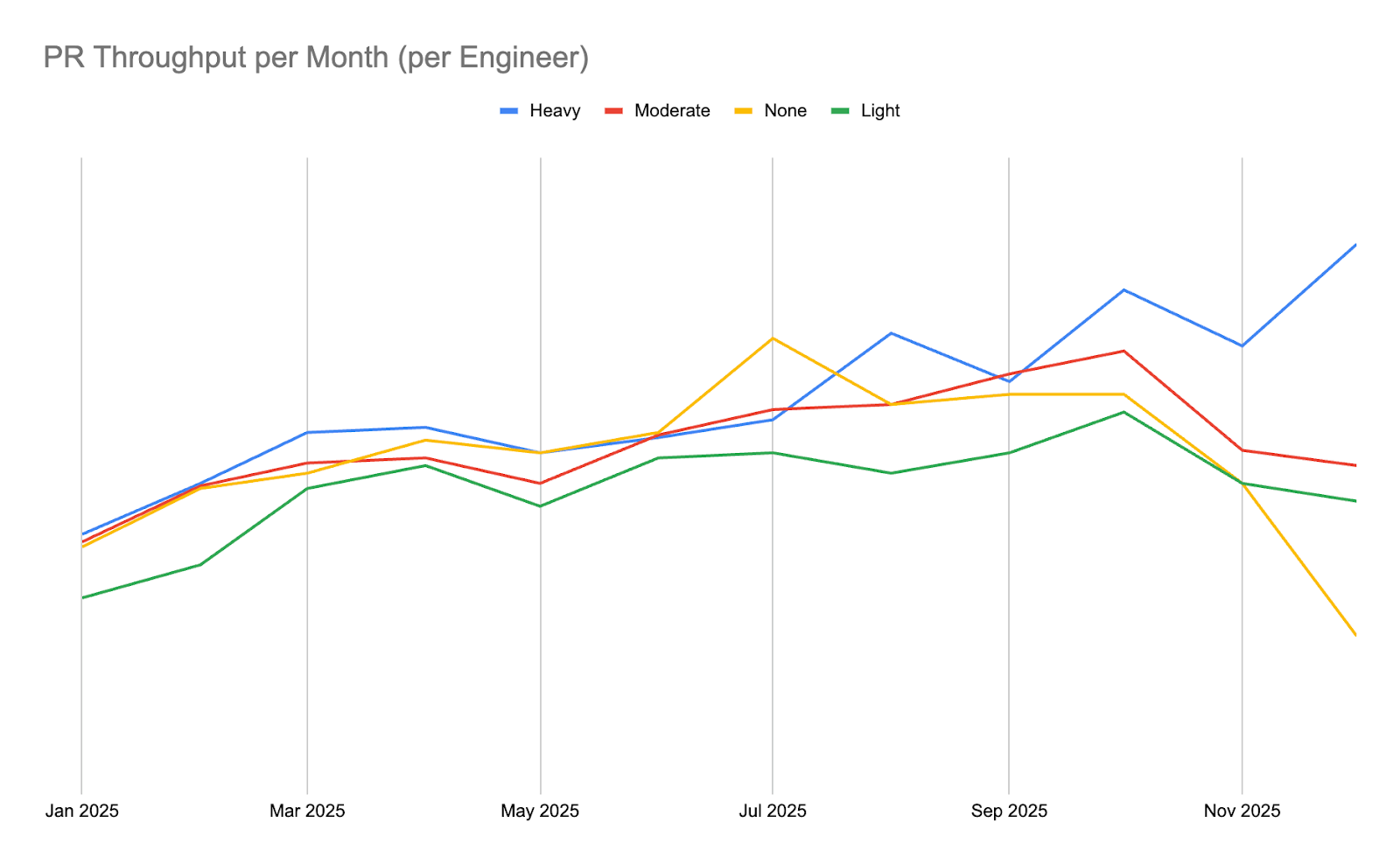
- PR throughput: We track pull‑request (PR) throughput per month, per engineer. Engineers who engage more with AI tools ship significantly more code.
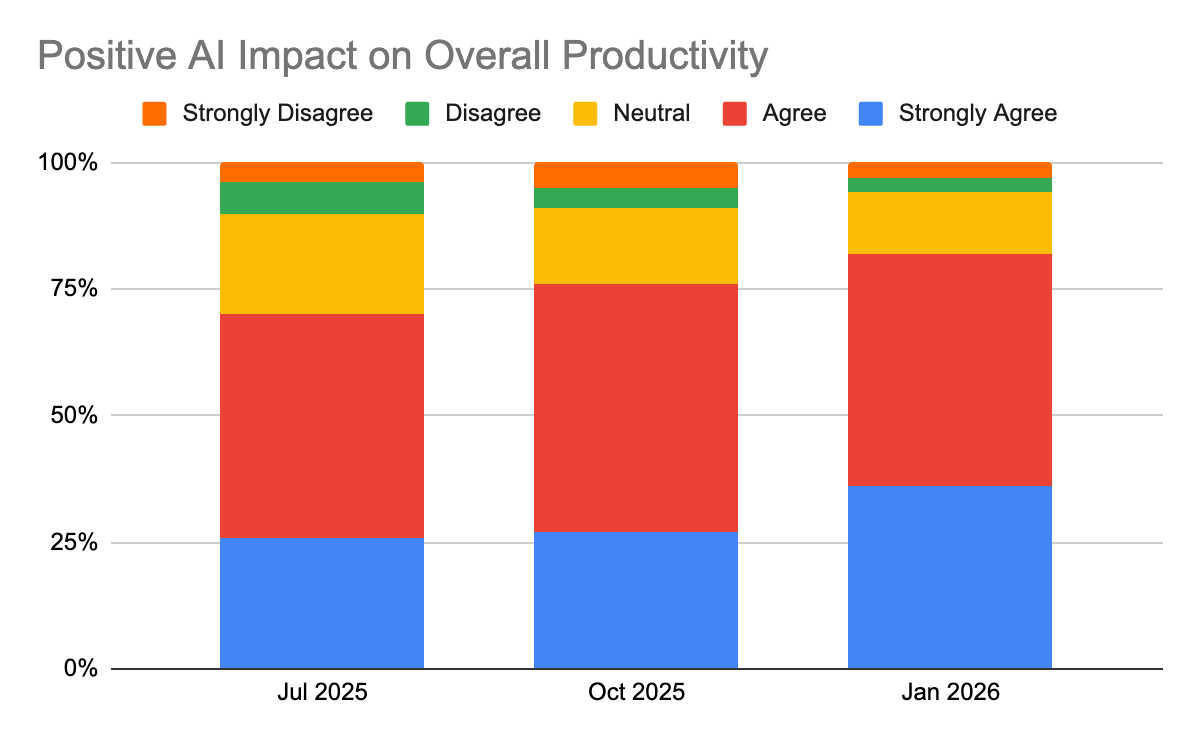
- Engineer sentiment: Internal surveys show growing positive sentiment toward AI tooling, with negative sentiment steadily decreasing.
Key Takeaway
Developers experience less friction when using AI because we make it easy to adopt tools that best fit their teams’ needs. By aligning leadership, streamlining adoption, and building custom solutions where necessary, Dropbox is turning AI into a measurable productivity engine.
The Executive Roundtable
The heart of the evening was a roundtable discussion designed to cross‑pollinate ideas across different industries. To facilitate this, we divided attendees into three cohorts, rotating the groups for each question so that every leader could learn from three different peer groups.
Core Pillars
-
Measuring Impact
- What are the top three ways attendees are measuring AI‑driven engineering productivity gains?
- What are the top three ways of measuring the resulting business impact?
-
Leadership Alignment
- Describe three ways of aligning with company leadership on the progress and pace of AI deployment and use for productivity.
-
The Human Element
- What are the top three ways attendees are recruiting, evaluating, and growing their workforce for AI competency and productivity?
- What lessons can be applied to make non‑developers more productive?
Following the structured session, the conversation continued over a cocktail hour, where leaders shared further insights into the commitment to craft required to lead in the age of AI.
What we learned, and what’s next
The overarching themes that emerged from the roundtable discussions centered around the following:
- Balance. Productivity gains must be carefully balanced against potential trade‑offs in quality and long‑term maintenance costs.
- The role of leadership. Management—especially technical leadership—is pivotal in establishing and enforcing effective AI‑usage norms.
- Formalization. Formalizing AI competency within career frameworks signals a long‑term commitment to its strategic importance.
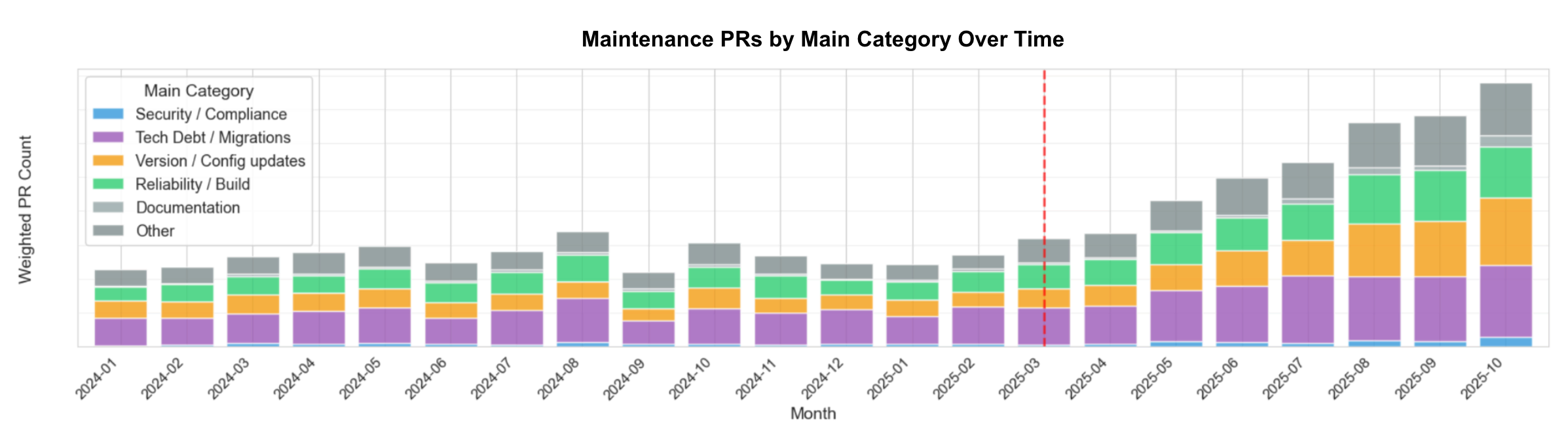
There are still a number of open questions. For example, if AI is giving us more capacity, where is that capacity actually going? At Dropbox, this capacity is currently being channeled into:
- Addressing tech debt
- Executing migrations
- Improving reliability
A key challenge remains: effectively connecting these productivity gains to tangible business outcomes—a concern voiced by many attendees during the roundtable. Consequently, the focus for 2026 will be on:
- Mapping productivity directly to specific outcomes
- Extending operational rigor beyond engineering teams
- Driving end‑to‑end product velocity
A huge thank you to everyone who made the trip to our San Francisco studio and contributed to such a memorable event. If you missed it this time, keep an eye on our events page for future opportunities to connect!
If building innovative products, experiences, and infrastructure excites you, come build the future with us! Visit jobs.dropbox.com to see our open roles.