
I’m not letting Gemini know everything about me
Source: Android Authority
Joe Maring / Android Authority
I knew this was going to happen one day when AI would become this omnipresent power that knows every single detail about our daily routines and us in general. It’s inevitable. This form of advanced personal intelligence hasn’t just been propagated — it has been actively solicited from both sides. The dream was that AI would be your companion, so personal that no human assistant could ever match the depth of context and information it holds about you, offering hyper‑personalized help.
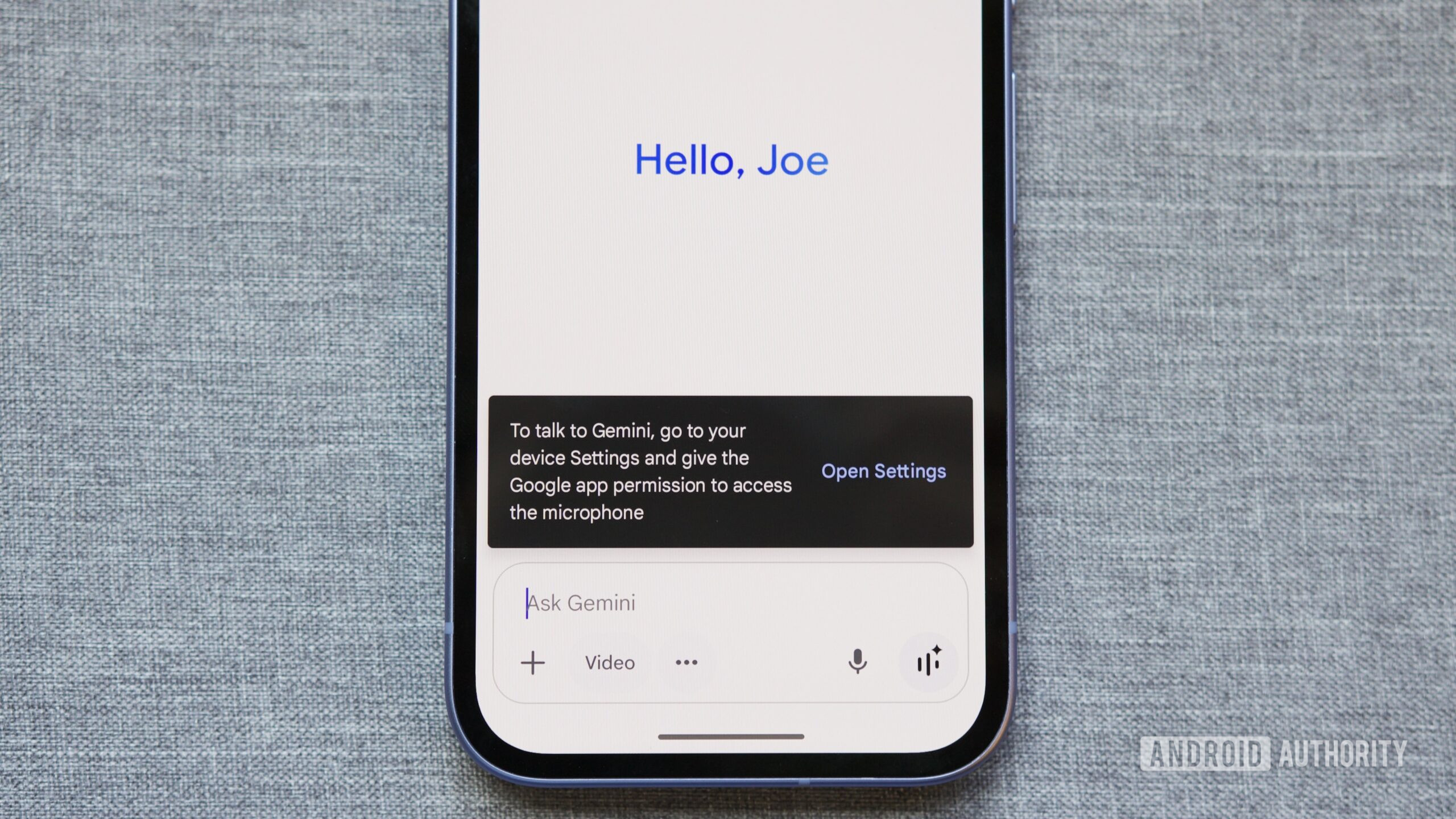
But now that the future is almost upon us with Gemini’s Personal Intelligence, it feels deeply unsettling for me, so much so that I’ve grown very wary of it.
Where are you comfortable letting AI build long‑term memory about you?
26 votes
Gemini Already Has a Lot on Me — And Intentionally So
Credit: C. Scott Brown / Android Authority
Personal Intelligence from Google isn’t the first time Gemini has had access to my life. It already lives inside Gmail and Docs through my Workspace account, and I’m using it with my explicit consent.
I use it all the time to:
- Dig up information from old threads.
- Summarize conversations.
- Find decisions buried in complicated email chains.
I can query almost anything from the sidebar and be as specific as I like. For instance, I can ask about potential clients I reached out to last year but didn’t close deals with, and it usually returns an accurate answer.
Sometimes it feels almost magical. I’ve caught myself thinking how much of a better assistant it is—digging up information in seconds that would take a human several hours.
But there’s a crucial difference here: I gave conscious consent to this virtual assistant, and a professional contract binds everything.
Read more about querying Gemini from the Gmail sidebar.
My data is safer in Workspace
Joe Maring / Android Authority
Google’s Workspace subscription—designed for professionals, businesses, and enterprises—bundles the same apps people already know (Gmail, Docs, Sheets, etc.). However, there’s a huge underlying difference between Workspace and personal Google accounts: it’s a business‑to‑business relationship.
- Workspace accounts are covered by a separate contract and a more robust privacy policy.
- These agreements enable stricter data management and stronger guarantees, because enterprises are subject to tighter industry regulations.
These legal and contractual obligations are why the data I interact with through Gemini stays within the organization and isn’t used to train consumer‑facing language models.
With my Workspace account, I am a customer — not the product.
Getting to My Personal Self Is Way Too Personal
The conclusion of the age‑old debate about how Google offers so many consumer services for free has always been the same: we are the product. The company profits by using our data to build hyper‑detailed profiles and serve targeted ads.
Even today, when many of us pay for services like Google One or YouTube Premium, the contract you sign for a personal Gmail account still heavily favors Google versus Workspace accounts. The privacy policies are broader and more flexible, largely benefiting the company—not users like me. I have no negotiating power here. While entire legal frameworks exist to protect enterprises (and those laws are far more stringent), they don’t apply equally to individuals.
Think about your family conversations in Gmail or Google Messages, financial information stored in Drive and Docs, medical history, photos, and all the emotional, deeply private moments you’d never want to share with another living soul, let alone an AI. Personal data is far more intimate and at a greater risk – see the recent Gemini‑Google‑Calendar exploit. All of that would now be available for Gemini to process and respond from.
The stakes are completely different and much higher. Yet Gemini (at least today) doesn’t differentiate between the “work me” and the “personal me.” Those are two very different identities that shouldn’t be forced to coexist.
When “Helpful” Starts Crossing the Line
The pitch always starts innocently. AI is positioned as a helpful tool for everyday tasks. Ask something simple like, “When should I get my car serviced?” and Gemini can automatically pull details from old emails, receipts, or past conversations—no need to tell it your car model.
Sure, the Gemini app needed a more robust memory system to catch up to ChatGPT, but Personal Intelligence goes far too deep—and in the wrong direction.
If Google’s adamant, I’m adamant‑er
Joe Maring / Android Authority
I understand that AI is the future and that some version of this is inevitable. But for now it feels unsettling, and I’m going to resist it as much as I can.
Even if Google gives me a thousand assurances that everything is processed on‑device and that none of this data ever leaves my phone, one thing remains true: the AI gains memory of you, and that memory accumulates. Years from now, when Gemini knows every detail about my life, how do I realistically go back and erase something from the past?
As they say, the internet never forgets — and the same will be true for AI.
The moment my personal life and family enter the picture, I’m forced to draw a line.
I won’t lie, Google’s pitch is tempting. I’d love an assistant with a deep knowledge of my work life, one that saves me time and effort. But Gemini cannot be my personal historian, building a long‑term model of my life. Some moments are meant to stay only with me — and I intend to keep it that way for as long as I can.
References
- Google Workspace privacy and security overview (same link used for both citations).
Follow
Please read our Comment Policy before posting.