
I’m not disappointed with the Pixel 10’s Tensor G4 processor, but I’m not happy either
Source: Android Authority
Rumor confirmed: the new affordable Google Pixel 10a ships with the company’s in‑house Tensor G4 processor.
That’s the same chip that powered last year’s Pixel 9 flagships and the budget‑oriented Pixel 9a, but it’s not the latest silicon found in the Pixel 10 flagship series.
We’re used to new Pixel releases shipping with fresh silicon—even in budget segments—so this decision marks the end of business‑as‑usual for Google’s affordable model. Still, there’s no reason to let last year’s chip dissuade you from checking out what else the Pixel 10a has to offer. At least not on its own.
Is the Pixel 10 worth $200 more than the 10a?
209 votes
Not the best, but better than most
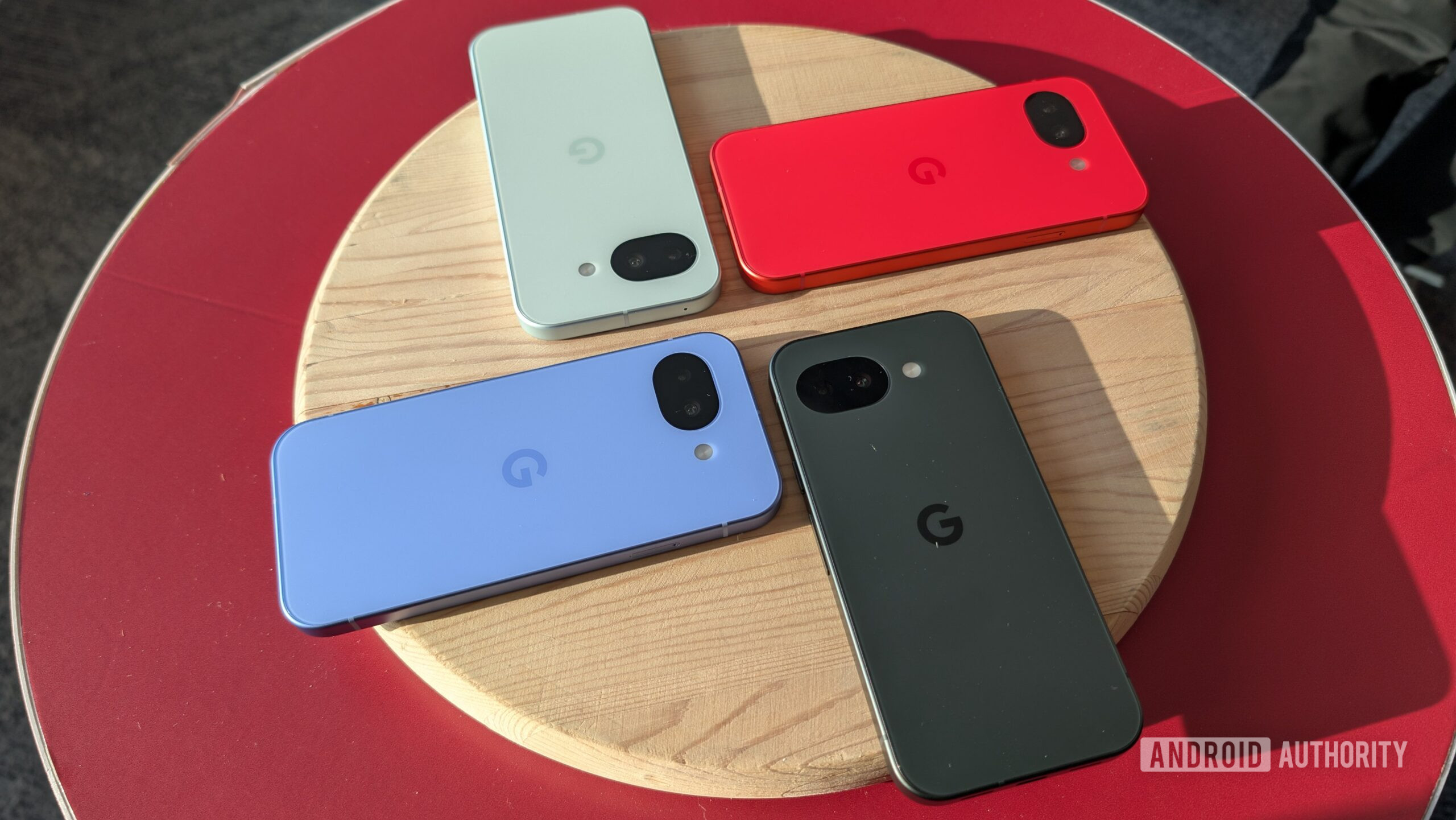
Adamya Sharma / Android Authority
Google’s silicon has never been a benchmark topper, but the Tensor series has consistently landed on the right side of “good enough” for the current generation. It’s a cliché to point out these days, but modern smartphone processors are more than potent enough for our day‑to‑day tasks, and Google’s hardware configuration is certainly still more than a match for other chipsets found at the Pixel 10a’s price point.
The Pixel 10a will run rings around the identically priced Samsung Galaxy A56 and its Exynos 1580 chip, particularly in gaming. That’s tough to complain about.
Still, if you can’t help but look at the Pixel 10 series with envy, it’s also worth remembering what the newer Tensor G5 offers—and what it doesn’t.
- The newer chip looks better in benchmarks; it is up to 35 % faster than the G4 when fully loaded, which can be significant.
- While benchmarks are based on real‑world algorithms, how those larger numbers translate into actual experiences is often subtler. Browsing the web or flicking through reels doesn’t feel noticeably different on the Tensor G4 or G5. At best, an app might open a fraction of a second faster—hard to tell without a side‑by‑side comparison.
- You’re more likely to notice the difference in demanding applications like on‑device video rendering, heavy multitasking, or running desktop‑class apps, which is usually a bit outside the typical use case for a mid‑range phone.
Performance vs. Process
It might be older, but the G4 is still better than most other mid‑range chips.
The Tensor G4 leaves a few next‑gen improvements off the table, including the G5’s slightly smaller and more efficient 3 nm process and fourth‑generation AI Tensor TPU. However, the G4 is still very modern, sporting an efficient 4 nm manufacturing process and Google’s in‑house imaging and AI smarts that were good enough for last generation’s flagship.
Given the extra cash you’d have to stump up for the Pixel 10 (vs. the 10a), those benefits are not necessarily worth it—at least not when looking at the processor in isolation. The A series is always designed to be functional first, and the Tensor G4 remains well‑positioned to deliver on that.
Growing Pains of the G5
It’s also worth remembering that the Tensor G5 hasn’t been a flawless launch for Google. It debuted a very different GPU architecture from its predecessors, which, although it wins by a significant margin in benchmarks, has had teething issues. We clocked much closer performance between the two chips when we tested them side‑by‑side in real games.
The newer processor suffered from early graphical glitches, inferior emulation performance, and outright incompatibility with certain games. The long‑awaited graphics driver upgrade for the Tensor G5 shows promise in my testing, but it will be a little while yet before it rolls out widely in a stable Android release.
I’m not trying to justify picking the old chip over the new one—the newer model’s slightly improved performance will no doubt help it stay relevant a little longer. However, the bottom line is that a mature flagship‑grade chip that still feels as snappy as its successor in real‑world applications and games is certainly not a bad place to be, especially for a phone costing $499.
Google Pixel 10a

Gemini features • Solid mid‑tier offering • Great software‑support promise
MSRP: $499.99
Google’s best AI features, in a more affordable mid‑tier device.
The Pixel 10a is a refined mid‑range phone built around the Tensor G4, a brighter 120 Hz 6.3‑inch display, tougher Gorilla Glass 7i, satellite SOS, and trickled‑down Pixel AI features—paired with a reliable dual‑camera system, 30 W charging, and seven years of updates.
Power on a Budget
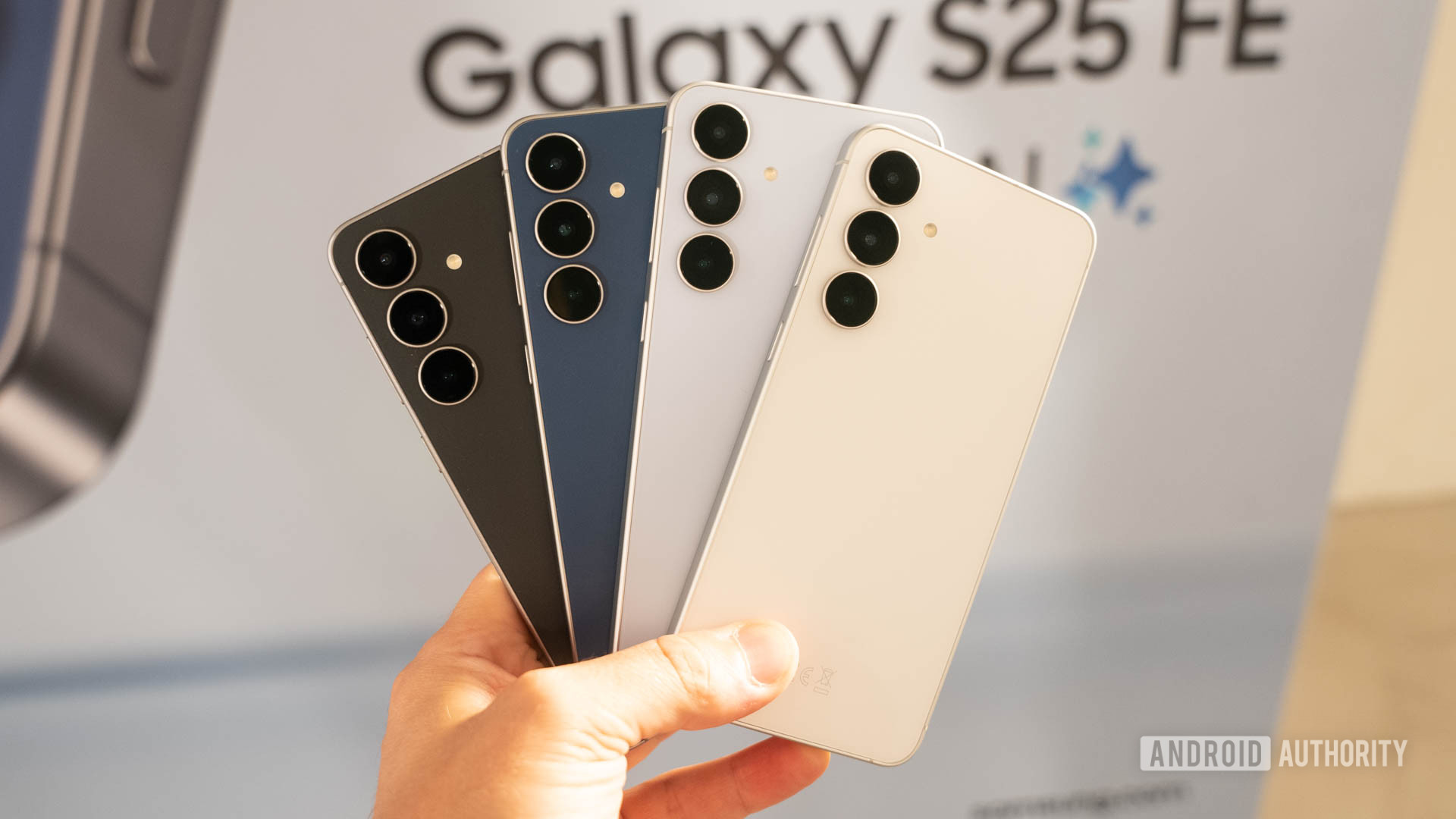
Photo credit: C. Scott Brown / Android Authority
I’ve become far more willing to compromise a little on performance for price over the past couple of years. For instance, the Galaxy S25 FE is a brilliant phone despite packing a lower‑spec chip than Samsung’s flagship models. Apple has long split even its flagship models into regular and Pro‑tier performance levels, and I didn’t find the Nothing Phone 3’s choice of a more budget chip to be as controversial as others did.
There are conditions attached to this, though: a phone has to use those silicon savings to pad out the overall experience with other, more meaningful features—robust IP rating, top‑notch build materials, improved cameras, etc.
This applies a little less to a phone as affordable as the Pixel 10a—I’m certainly not expecting the phone to have it all for $499. However, if it’s sticking with the same silicon as last year, the Pixel 10a should bring something notably new to the table.
What’s new on the Pixel 10a?
- 10 W wireless charging (a modest upgrade)
- Slightly brighter display
- Gorilla Glass 7i protection
These changes feel incremental. The 10a also inherits most of the Pixel 10 series’ latest AI features and software tricks, which suggests those capabilities will soon trickle back to the Pixel 9 and 9a. If that’s the case, why not just grab one of those cheaper models?
The chipset debate
The Pixel 10a continues to use last year’s Tensor G4 chip. That isn’t necessarily a bad move for a budget series:
- The chip powered Google’s flagship models last year and will remain decent for years to come.
- It includes Google’s custom AI accelerators, keeping the device competitive on AI‑related tasks compared with other mid‑range phones.
However, the chipset isn’t the only familiar component on the 10a. The phone feels too close to the 9a, suggesting a broader lack of ambition for this year’s budget Pixel. The early hands‑on impressions describe it as a handset that “plays it safe” and leans heavily on a formula that’s already been stretched to its limit.
Given current hardware availability and cost pressures, this cautious approach might become the norm for mid‑range phones. A newer Tensor G5 processor could have improved the phone’s appeal and longevity, but Google opted not to upgrade.
Follow
Thank you for being part of our community. Please read our Comment Policy before posting.