
I Built a Fabric Finder Tool for Sports Jerseys for B1 Apparels
Source: Dev.to
When people think about sports jerseys, they usually focus on design, colors, or fit.
But after working around sportswear, I kept noticing something else: people were often wearing the wrong fabric for their conditions — especially in hot or humid environments. That observation led me to build a small fabric finder tool, which helped me understand how complex fabric selection actually is.
Tool: Sportswear Fabric Recommender
The Real Problem: Too Many Variables
Choosing a jersey fabric seems simple at first glance, but multiple variables interact:
- Temperature
- Humidity
- Type of sport
- Intensity of activity
- Fit preference
Each factor changes how a fabric performs. For example:
- A breathable polyester might work great in dry heat.
- The same fabric can feel uncomfortable in high humidity.
- A tight fit changes airflow and heat retention completely.
These nuances directly affect comfort, yet most users don’t consider them.
Why Static Fabric Advice Fails
Most online guides say things like:
- “Use polyester for sports.”
- “Mesh is breathable.”
While true, these static recommendations ignore:
- Context (weather + activity)
- Interaction between variables
- Real‑world usage
There’s no simple way to combine these inputs into a decision, which creates a gap.
Building the Fabric Finder Tool
I built a lightweight tool that takes real‑world inputs and returns a practical recommendation.
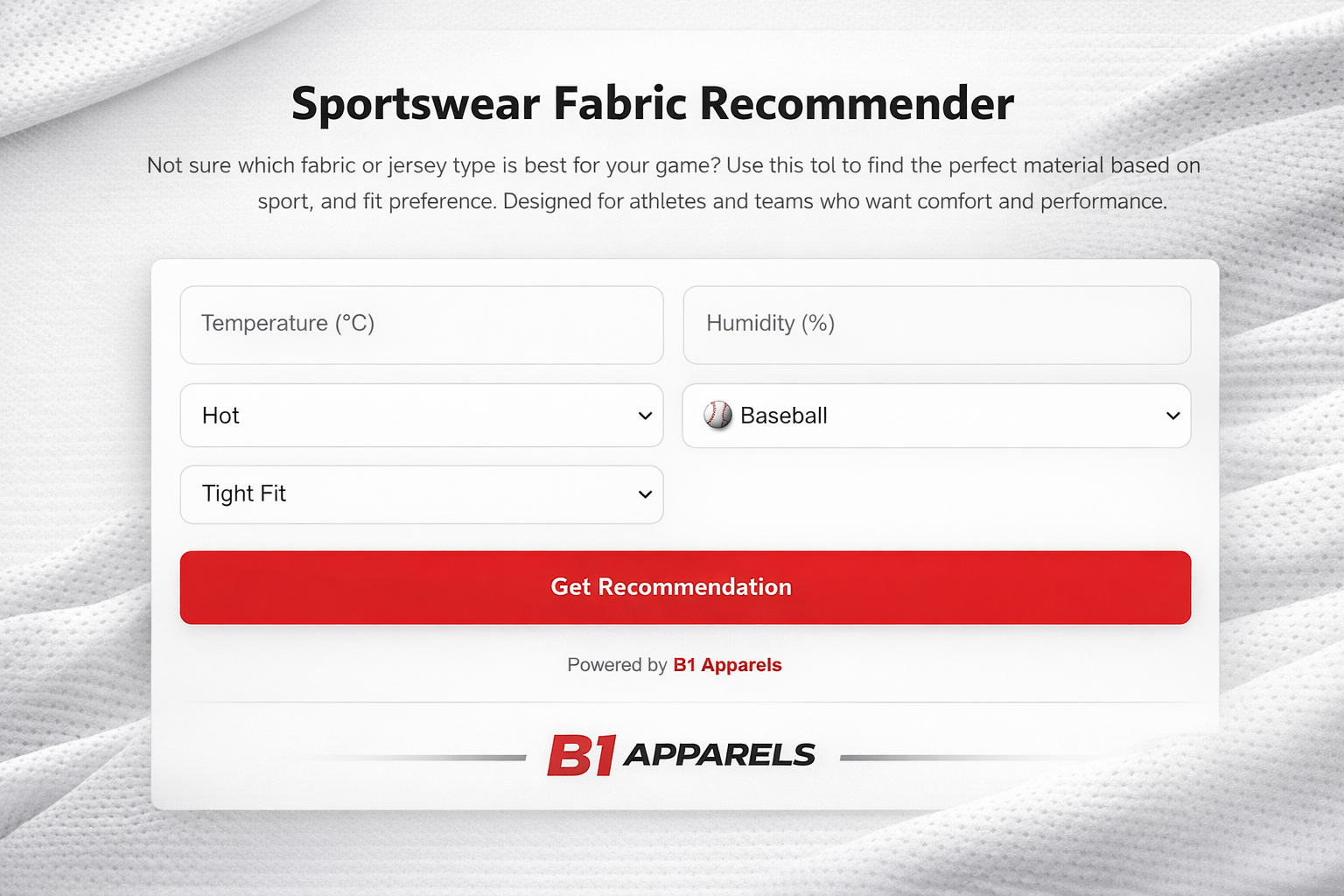
Inputs
- Temperature
- Humidity
- Weather condition
- Sport (football, basketball, baseball, etc.)
- Fit preference
Output
- Fabric type (e.g., polyester mesh, blend, thermal)
- Jersey type (breathable, compression, etc.)
- Fabric weight (light / medium / heavy)
- Short reasoning
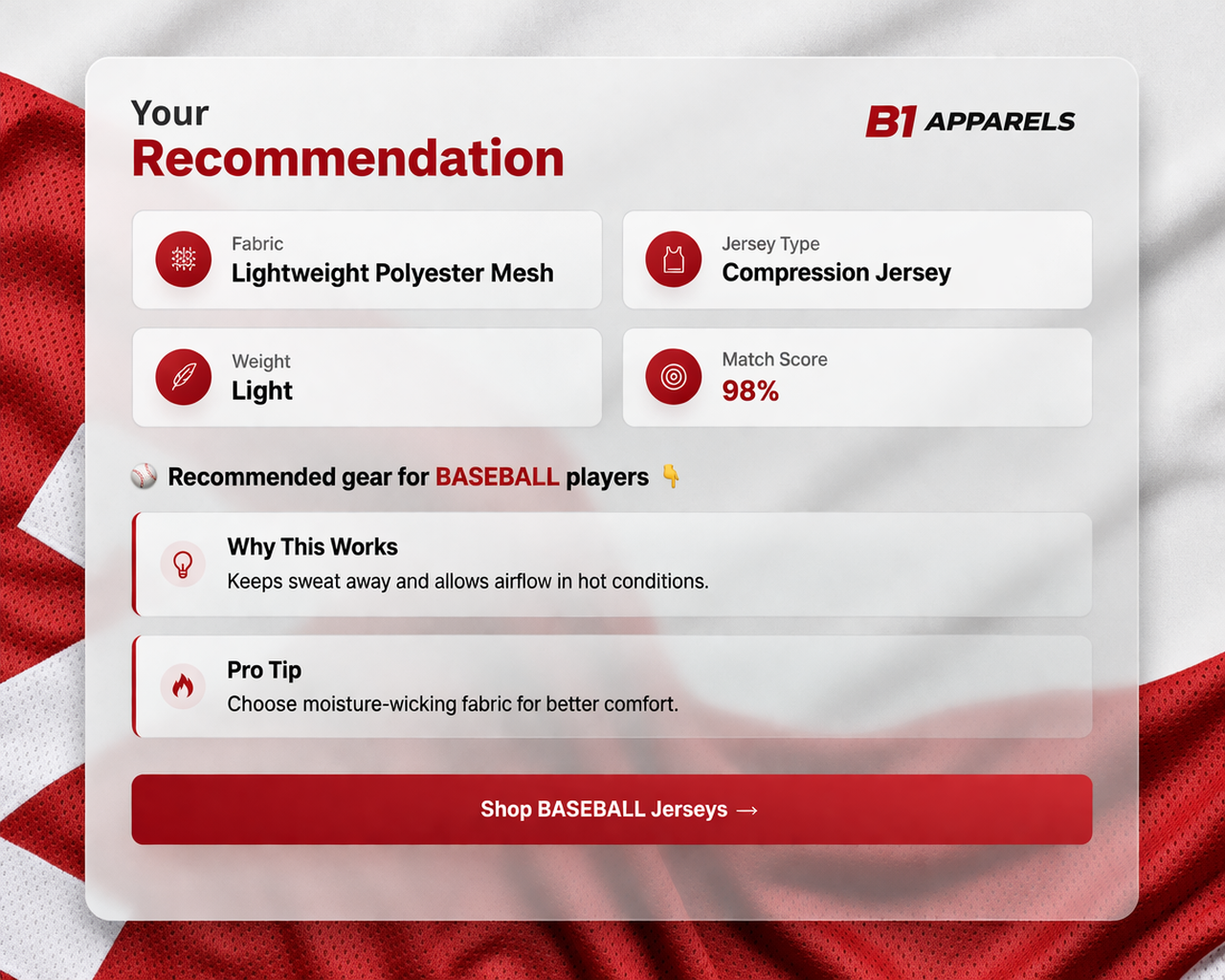
The goal wasn’t to make it “AI‑heavy,” but to make it useful and structured.
Key Insight: Context > Material
The biggest lesson from building this tool is that the “best fabric” doesn’t exist—only the best fabric for a situation.
- Hot + humid: airflow + moisture‑wicking become critical.
- Cold: insulation matters more than breathability.
- High‑intensity sports: lightweight + stretch is key.
Shifting from material‑first to context‑first thinking is what the tool aims to solve.
Translating Real‑World Logic into Code
Instead of relying on generic recommendations, I structured the logic as follows:
- Weather conditions influence base fabric selection.
- Sport type modifies durability vs. breathability.
- Fit preference adjusts stretch and compression.
- Output combines all factors into a single recommendation.
The logic isn’t overly complex, but it mirrors how decisions are made in practice.
Why This Matters (Beyond Sportswear)
The project illustrates a broader idea: many everyday decisions are multi‑variable problems, yet we treat them as single‑variable choices. By structuring inputs and mapping them to outcomes, we can turn:
- Guesswork → Logic
- Opinions → Systems
Final Thoughts
Building this tool made me realize that even something as simple as a jersey involves layered decision‑making. Most users don’t need technical details—they need clear, contextual recommendations. Sometimes the value isn’t in advanced AI or complex systems… it’s in organizing the right variables in a way that actually makes sense.