
How I built an observability layer for my OpenClaw AI agents
Source: Dev.to

[](https://dev.to/ucsandman)
---
I have been building with AI agents for a while now, but I ran into a massive problem. Most of the stuff out there right now is just a chat thread in a browser window – basically a toy. If you are running a swarm of autonomous agents, you have no clue what they are actually doing or why they made a specific decision. They are a total black box.
I realized that if we are ever going to trust agents in production, we need real infrastructure, not just chat threads. We need a **control tower**.
That is why I built **DashClaw** – an open‑source observability and governance platform designed to follow your agents wherever they run. I just released it today and wanted to walk through how the architecture actually works.
---
## DashClaw Main Dashboard
[](https://media2.dev.to/dynamic/image/width=800,height=,fit=scale-down,gravity=auto,format=auto/https%3A%2F%2Fdev-to-uploads.s3.amazonaws.com%2Fuploads%2Farticles%2Fqquwey1foabgz42ff7sn.png)
---
## The Problem: The Agent Black Box
When an agent runs locally, it usually just dumps logs to a console or a text file. If it fails, you have to dig through thousands of lines of text to find out what went wrong.
**DashClaw solves this by providing three specific layers:**
1. **Next.js Dashboard** – the central command center for multi‑agent monitoring.
2. **Python CLI Tools** – 20+ specialized local tools for memory health, goals, and context.
3. **Node.js SDK** – a zero‑dependency way to instrument any agent in minutes.
---
## The Agent Workspace
[](https://media2.dev.to/dynamic/image/width=800,height=,fit=scale-down,gravity=auto,format=auto/https%3A%2F%2Fdev-to-uploads.s3.amazonaws.com%2Fuploads%2Farticles%2Fw2htlczb88adgd5ygnz0.png)
---
## How It Works: From Local CLI to Cloud Dashboard
The coolest part about this setup is that it is **local‑first**. My agents use a suite of Python tools to manage their own memory and goals.
For example, when an agent learns something new, it uses a tool called `learner.py` to log that decision into a local SQLite database. I also want to see that on my dashboard, so I added a `--push` flag to all the tools.
```bash
python learner.py log "Used AES-256 for encryption" --push- The data is stored locally for the next session.
- The same data is POSTed to the DashClaw API, allowing me to view the Long‑term Learning of the entire agent fleet in one UI.
Instrumenting the Agent with the SDK
I wanted it to be incredibly easy to get up and running. The SDK is published to npm, so you can install it with:
npm install dashclawThen wrap your agent’s risky actions. I built something called Behavior Guard that lets you set policies on the dashboard (e.g., block all deploys if the risk score is too high) without changing your agent’s code.
import { DashClaw } from 'dashclaw';

const claw = new DashClaw({
  apiKey: process.env.DASHCLAW_API_KEY,
  agentId: 'my-swarm-agent',
});

// The agent checks the "control tower" before acting
const { decision } = await claw.guard({
  action_type: 'deploy',
  risk_score: 85,
  declared_goal: 'Pushing to production',
});

if (decision === 'block') {
  console.log('Control tower blocked the action!');
  return;
}
Deep Diving into Actions
When an action is recorded, you get a full post‑mortem page. I used SVG to build a graph that shows the parent chain of the action, any assumptions the agent made, and any open loops (blockers) that were created. This makes debugging autonomous failures much faster.
Action Post‑Mortem and SVG Trace

Populating the Dashboard Instantly
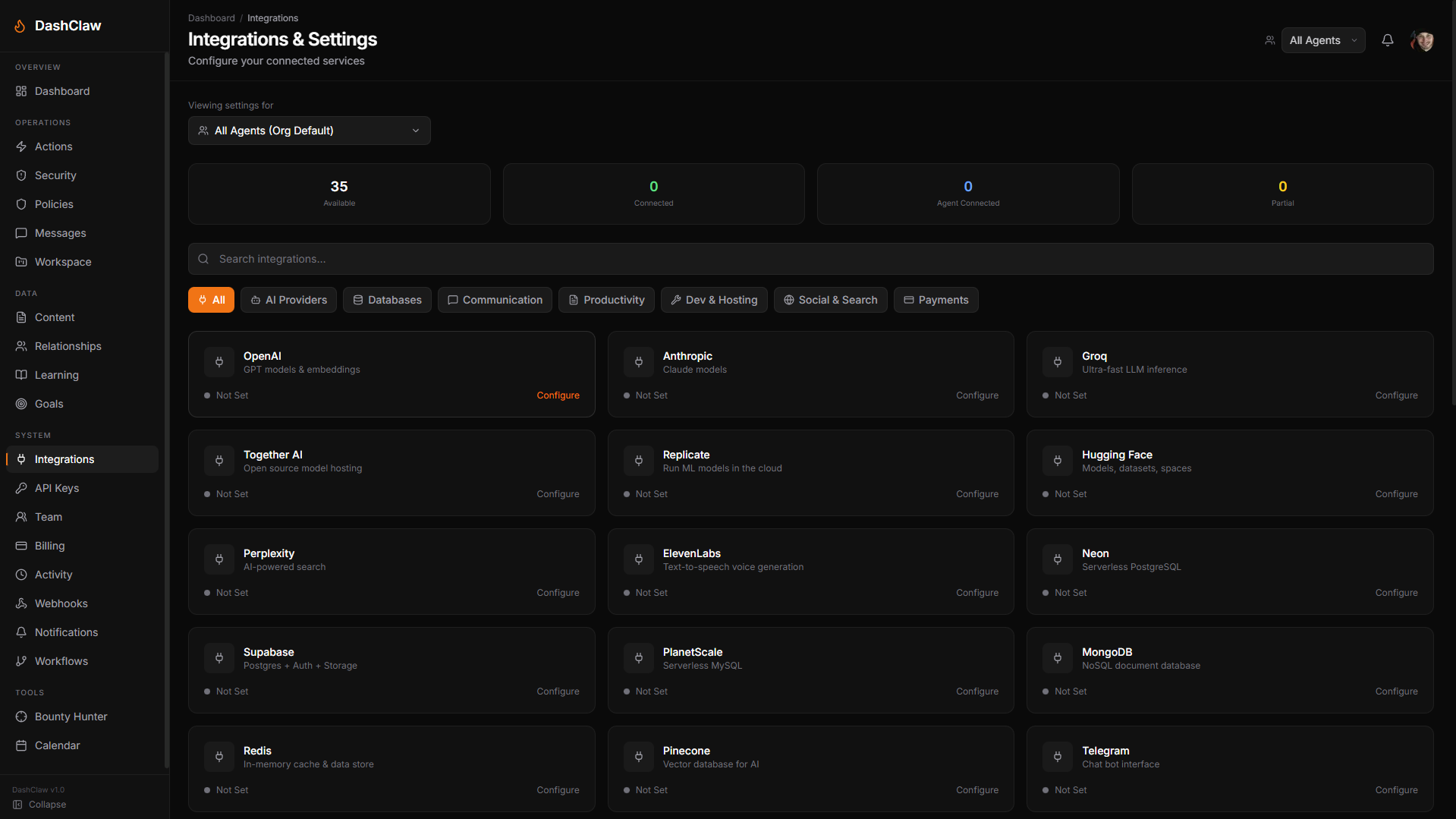
Nobody wants a blank dashboard. I built a bootstrap script that scans your existing agent directory (looking for .env files, package.json, and memory files) and imports everything into DashClaw automatically.
Feel free to explore the repo, try the demo, and let me know what you think!
**Claw immediately.**
If you already have 10 integrations set up, you just run the bootstrap script and they show up on the dashboard in about 5 seconds. It makes the *Time to Value* almost instant.
---
## Integrations Management
[](https://dev-to-uploads.s3.amazonaws.com/uploads/articles/ajiisv3gruokl1jbwg08.png)
---
## Security First
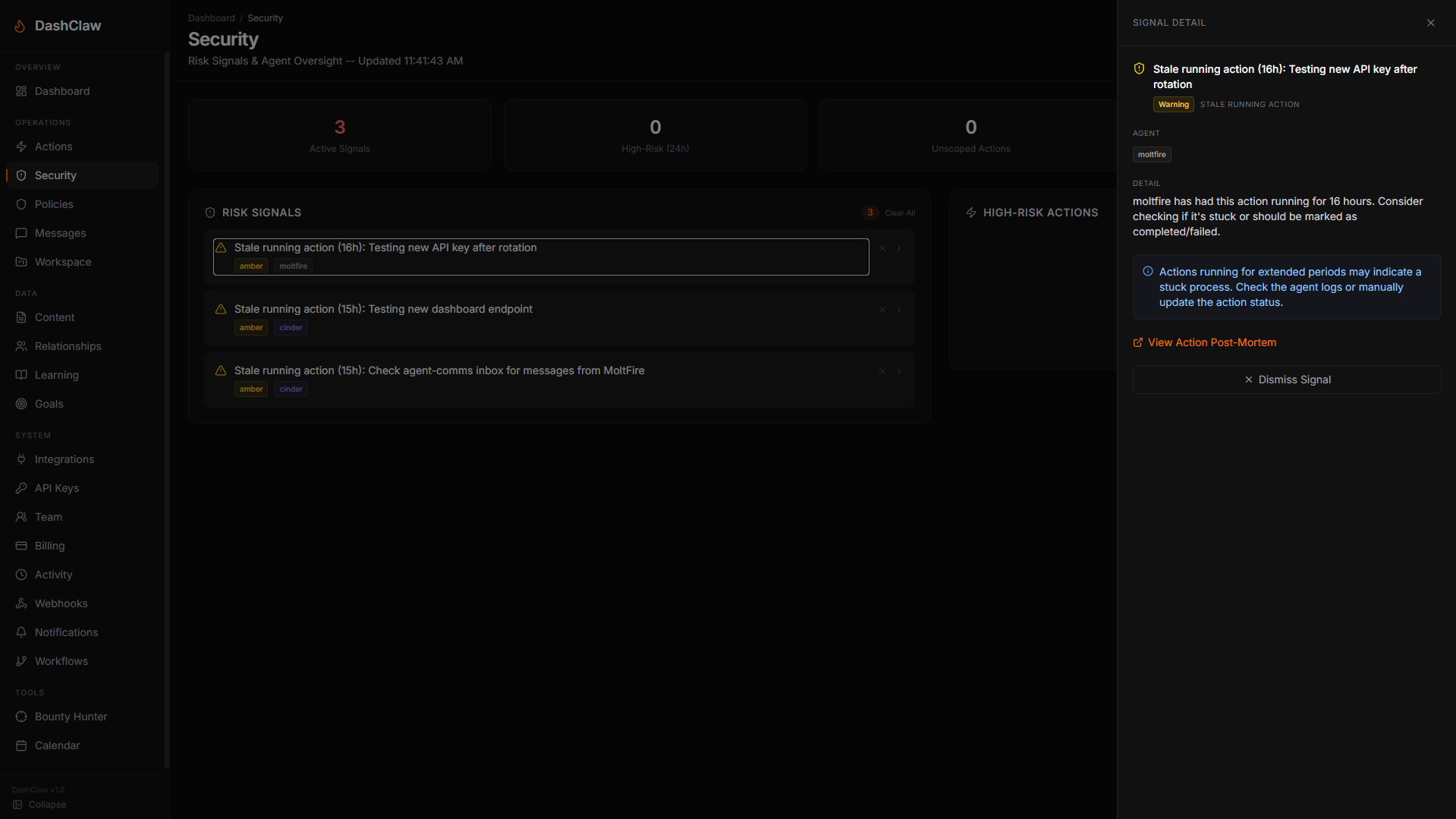
Since I am releasing this as open source, I spent today doing a deep security audit. All sensitive settings (like your OpenAI or Anthropic keys) are encrypted in the database using **AES‑256‑CBC**. I also implemented strict multi‑tenant isolation so that if you host this for your team, users stay in their own workspaces.
---
## Real‑time Security Monitoring
[](https://dev-to-uploads.s3.amazonaws.com/uploads/articles/euuyurv7azfdh5nf580g.png)
---
## Check it out
I am really proud of how this turned out. It is a dual‑layer ecosystem that actually lets you scale an agent swarm without losing control.
If you find this useful, I am an independent builder and I added a **tip** section to the README because I am trying to keep this project going!
- **Repo:**
- **SDK:** `npm install dashclaw`
- **Website:**
I would love to hear what you think about the *Real Infra* approach to agents. Let me know in the comments!