
Helion, the Sam Altman-backed fusion startup, raises $465M to build a power plant for Microsoft
Source: TechCrunch
Funding round
Helion, the fusion startup backed by Sam Altman, announced on Thursday that it had raised $465 million in a new Series G funding round, valuing the company at $15.5 billion.
The round was led by Thrive Capital and included new investors Alta Park Capital, Anti Fund, BoxGroup, Lux Capital, Peak XV Partners, and Bill Ford, alongside existing backers Capricorn Technology Impact Funds, Lightspeed Venture Partners, Mithril Capital, Dustin Moskovitz (through Good Ventures Foundation), SoftBank Vision Fund 2, and a university endowment fund.
Helion previously raised $425 million in January 2025 (TechCrunch), bringing its total funding to $1.5 billion.
Helion’s technology
Helion’s approach differs from many fusion peers. While some startups use magnetic confinement or laser‑driven compression and then convert the resulting heat to electricity via steam turbines, Helion uses magnets to compress the fuel and harvest electricity directly from the magnetic fields. When fusion occurs, the expanding plasma pushes against the magnetic fields; this force can be drawn off the magnets as inductive current—similar to regenerative braking in electric vehicles.
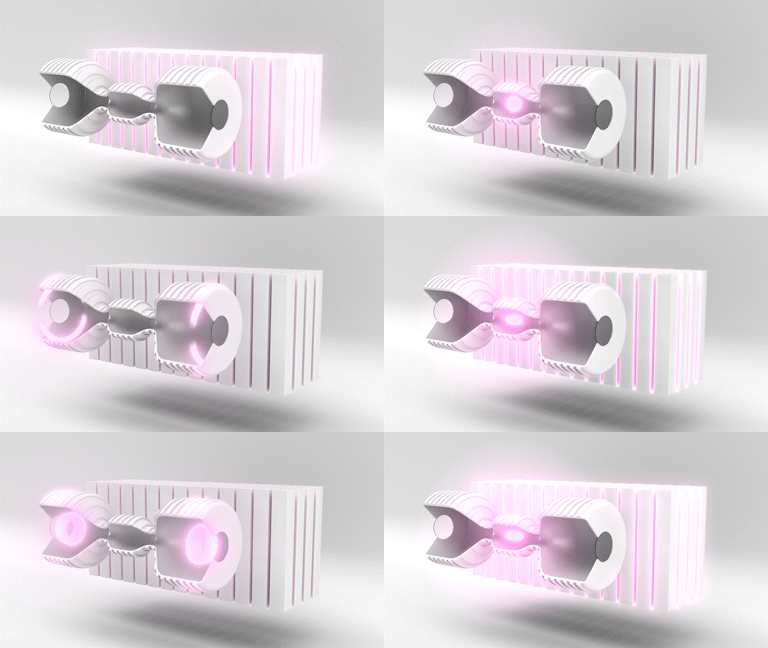
Image credit: Helion
This configuration could dramatically improve the efficiency of a fusion power plant. Some experts remain skeptical, noting Helion’s limited peer‑reviewed publications, but CEO David Kirtley argues that demonstrable results from the company’s devices will speak for themselves.
Industry context
Fusion is attracting fresh capital across the sector:
- Focused Energy – $240 million (TechCrunch)
- Thea Energy – $100 million (TechCrunch)
- Inertia Energy – $450 million Series A (TechCrunch)
- Type One Energy – pursuing $250 million Series B (TechCrunch)
Despite the long timelines—most companies project commercial‑scale plants not before the mid‑2030s—investors are drawn by fusion’s promise of near‑limitless, always‑on energy from seawater, a prospect especially appealing to AI‑focused tech firms.
Outlook
Helion aims to complete its Orion power plant and potentially connect fusion power to the grid as early as 2028, contingent on delivering under its deal with Microsoft (TechCrunch). While the path is uncertain, the potential payoff could reshape trillion‑dollar energy markets if costs can be driven down aggressively.
When you purchase through links in our articles, we may earn a small commission. This doesn’t affect our editorial independence.