
Halt and Catch Fire: TV’s best drama you’ve probably never heard of (2021)
Source: Hacker News
Overview

Image courtesy of Prime Video
This piece contains spoilers for Halt and Catch Fire.
Halt and Catch Fire is one of my favorite TV shows of all time. During quarantine I binged all four seasons in a week and was immediately struck by its themes of human connection—the desire for it, the difficulty that inevitably comes with it, and ultimately the necessity of it. Above all, it’s a show obsessed with change.
It’s also a show you’ve probably never heard of.
When it debuted in 2014, it drew just over 1 million viewers, making it the least‑watched premiere in AMC’s modern history. Throughout its run, ratings steadily declined. Despite its lack of popularity, Halt and Catch Fire got better with every season.
Over the next three years, across 40 episodes, viewers who stuck around witnessed a series brave enough to discard its original design and become something even greater. That evolution intrigues me most—not the writing or the performances (both fantastic), but the way the show transformed. What began as an anti‑hero‑centric drama about surviving in the cut‑throat tech industry became a deeply empathetic ensemble study about finding connection in the process of creation.
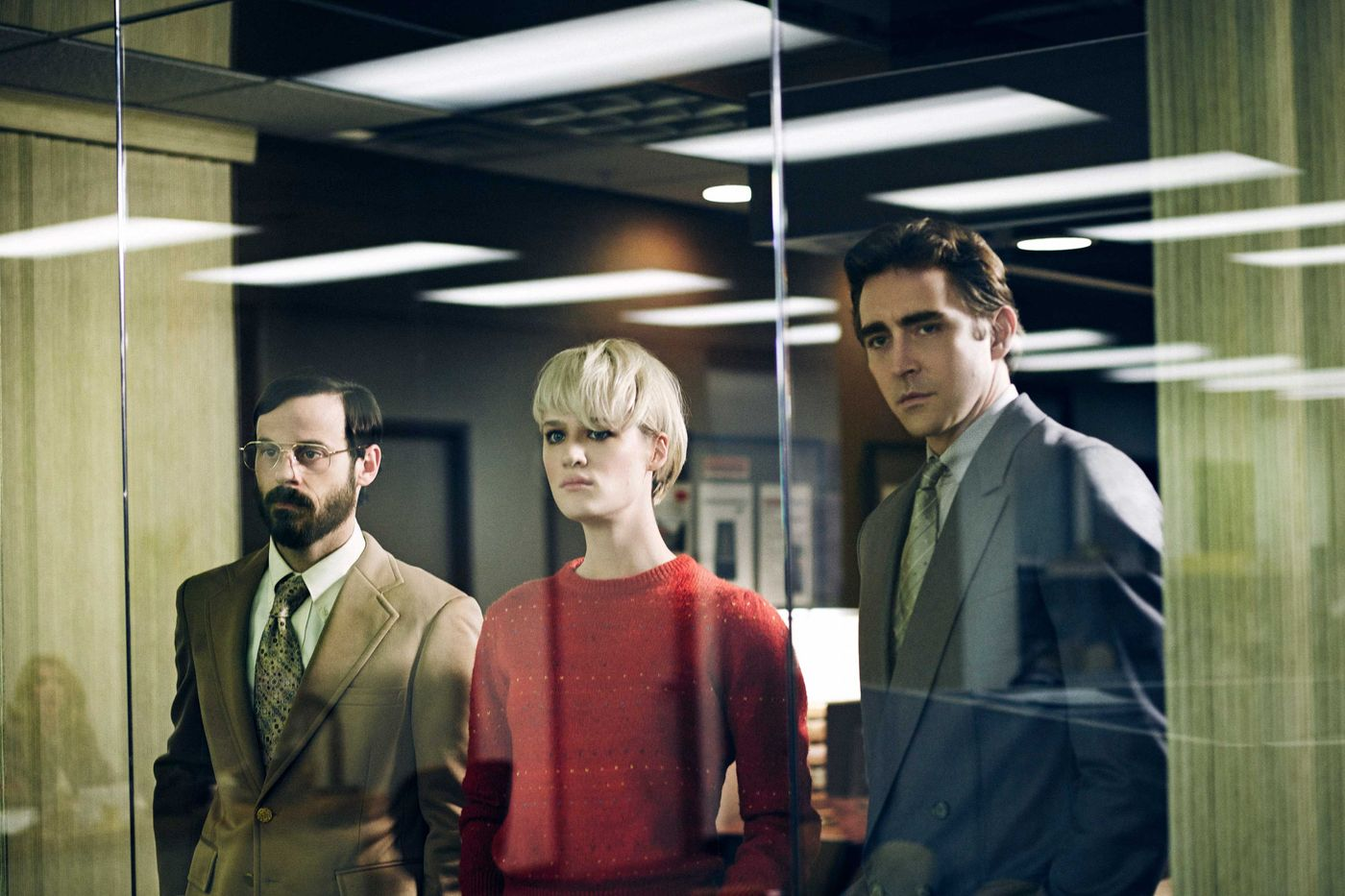
Image courtesy of AMC
AMC broke into the prestige‑television landscape with Mad Men and Breaking Bad, both wildly successful shows that defined an era of “Peak TV.” This over‑trodden anti‑hero formula bled into Season 1 of Halt and Catch Fire, which tried to capture the same success as other morally‑gray dramas.
Its main character, Joe MacMillan (Lee Pace), is a charismatic salesman with a mysterious past and self‑destructive tendencies. In an effort to build a computer that outpaces and outprices the competition, he recruits Gordon Clark (Scoot McNairy), a pitiful computer engineer, and Cameron Howe (Mackenzie Davis), a rebellious coding prodigy. Donna Clark (Kerry Bishé), Gordon’s wife, is relegated to the sidelines for most of the first season despite a desire to utilize her own engineering talents.
Much of Season 1 treads familiar beats, offering little reason for the audience to become emotionally invested. Too much of the narrative hangs on Joe—a mediocre, overconfident man who exploits those around him for personal gain. His arrogance and proclivity to go off the books is meant to feel admirable and seductively dangerous, but it ultimately comes across as manipulative and one‑dimensional. The characters around Joe are far more interesting; however, the series devotes so much time to him that they remain archetypal renderings waiting to be filled in.
Nevertheless, there are some great moments in the first season—sparks of what’s to come in later seasons. The tech revolution of the 1980s provides an engaging, nostalgic setting, transporting viewers back to a time of floppy‑disk drives and dial‑up modems. We also see Donna and Cameron’s first interactions, as well as the fascinating dynamic of Joe and Gordon’s working relationship.
The Makings of Greatness

Image courtesy of AMC
The best thing the show’s writers ever did was realize that Joe wasn’t the most interesting character. Subsequent seasons trace the dissolution of his complex as he confronts the limits of his charisma and the consequences of his actions. It’s the death of the anti‑hero, and in its place rises a series imbued with newfound life, driven by the burgeoning business partnership between its two main female characters.
Season 2’s opening sequence establishes this energetic shift with a three‑minute, single‑take scene. A handheld camera swings and pans around a suburban home crammed with coders, construction tools, and cables strewn across the floor—a cinematographic manifestation of the crackling, messy energy of people taking a risk to create something new. Here we meet Mutiny, Donna and Cameron’s video‑game subscription service that takes center stage in Seasons 2 and 3.
As the two navigate the passions and pitfalls of running a startup, the melodramatic tension of the first season is replaced with a palpable lightness and ambition. There are still plenty of great dramatic revelations and story beats, but none feel forced or in service of a half‑baked anti‑hero arc. The stakes feel genuine and emotionally potent.
The Power of the Partnership
The partnership between Donna and Cameron is the main impetus for this transformation. I can’t think of a better portrayal of female friendship on television than the one in this show. Rather than being defined by their relationships to Joe and Gordon—or by tropes like the “working mother”—they’re given agency, allowed to be flawed, ambitious, and everything else media has historically denied women.
- Cameron grew up learning how to survive on her own. She opens up to collaborate and trust others, but she constantly fears losing the company to which she’s dedicated her whole life.
- Donna has experienced the heartbreak of a failed product once before. She comes into her own as a leader, yet by always making the most logical decisions for the company, she risks losing the partnership she needs most.
The progression of their friendship—the ways they support, hurt, and eventually forgive each other—is treated with nuance, making it a genuinely moving relationship to watch unfold.
Other Complex Dynamics
Their bond is just one of many intricate dynamics the show explores. As the series matures, so do its characters:
- Joe learns to value the people around him, realizing that others are not merely means to an end but the end itself.
- Gordon, once eager to prove himself and be remembered, finds confidence and peace in the present, leaving a legacy that reverberates in both characters and viewers.
Even as these characters grow and evolve, what remains at their core is what brought them together in the first place: a shared ambition to build something that makes a difference in the world.
Recursion: An Ending, and a Beginning

Image courtesy of AMC
In computer science, recursion is a method of problem‑solving in which a function repeatedly calls upon itself to solve increasingly complex solutions.
In the show’s finale, Cameron describes her inner software as run by recursion. It’s an apt realization for someone who has spent much of her professional life building ideas into reality, only to find herself back in the same place still searching for an answer. It also offers a way to read the series as a whole.
Halt & Catch Fire is a show dedicated to its own reinvention. Across four seasons spanning ten years, there are two time lapses, a change in location, and the rise and fall of numerous companies. It’s a testament to the writers that this constant reinvention never feels choppy or stale.
Nevertheless, despite all these variables, the characters always find their way back to one another. The deep connection they share acts like a gravitational force, pulling them back into orbit across time and space. By the finale, it’s heartbreaking to watch them go.
In its beginning, Halt & Catch Fire was ostensibly about characters trying to pioneer the next big tech breakthrough. As exciting as it is to watch people work toward the technological future we live in today, the show is wired so that the narrative is defined by process, not by results. Rarely do characters ever succeed in their original goal. Yet, in the work and in the moments they have with one another, something greater is forged.
Products come and go; the technological industry, built on constant advancement, ensures it. This show isn’t interested in the disposability of things, but rather in what endures. The desire for human connection is one of those things that never really goes away.
It seems fitting that the last line of the series features, not a goodbye, but an offer. Even in its final moments, the show looks toward the future. Life isn’t episodic; it’s cyclical, and the series is adamant that saying goodbye doesn’t signal an end. Instead, with every goodbye comes a chance to start anew. It’s life in recursion: we watch these characters innovate and fail over and over again, each time learning from past mistakes. The hope is that, someday, it’ll be enough. Even if it isn’t, all it takes is one idea to reboot and start again.
Halt & Catch Fire is currently streaming on Netflix.