
Exploring The Lens as a Free Alternative for Prior Art
Source: Dev.to
The Problem with Traditional Approaches
Traditional patent‑search methods face significant challenges when conducting comprehensive prior‑art analysis. Why traditional methods miss relevant information becomes apparent when you consider their inherent limitations.
- Terminology mismatches – Different inventors and patent offices use varying technical language to describe similar concepts.
- Database limitations – Many commercial tools restrict access to certain patent databases or charge premium fees.
- Manual‑review bottlenecks – Human reviewers can only process a limited number of documents efficiently.
Real‑world examples of missed prior art frequently occur when keyword‑based searches fail to capture semantically similar innovations described with different terminology.
What Is the Modern Approach?
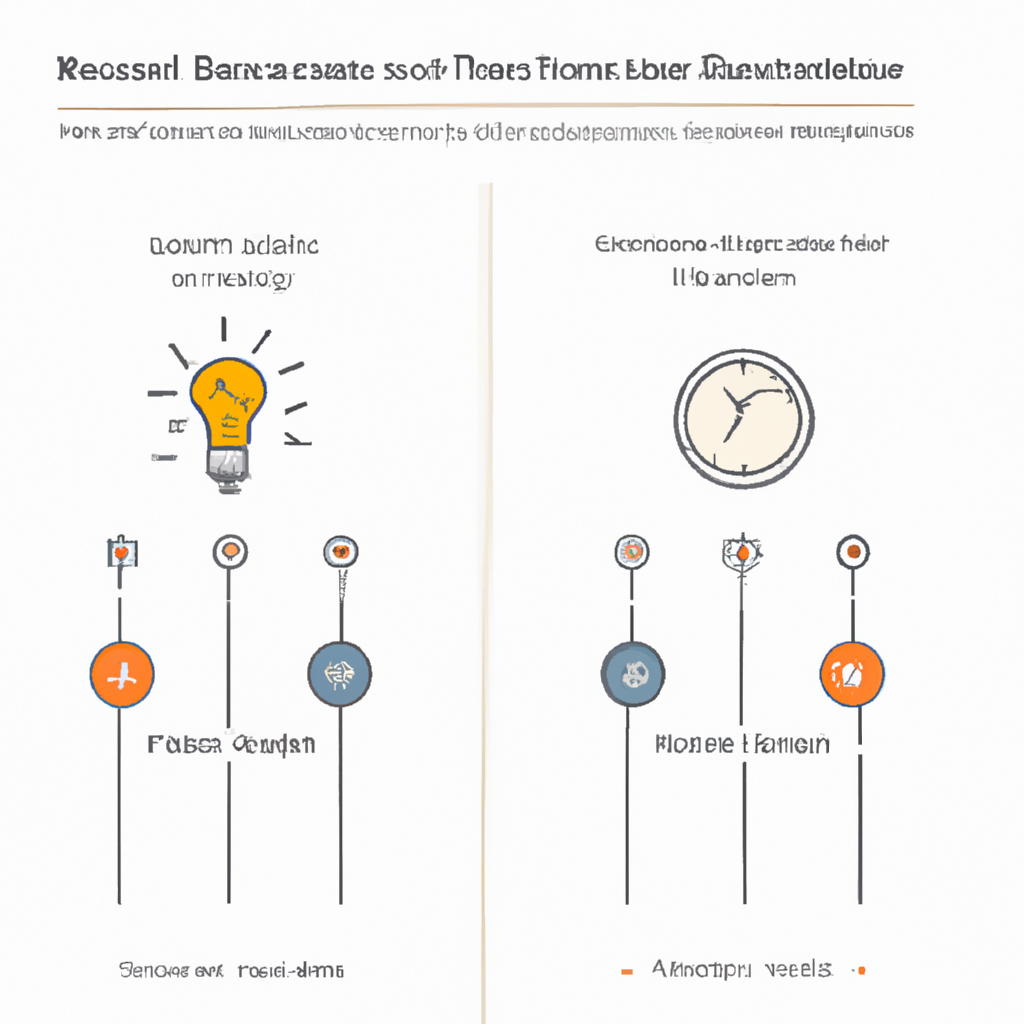
The modern approach to prior‑art search leverages semantic understanding and AI‑powered analysis to overcome traditional limitations. Unlike simple keyword matching, advanced systems like Traindex and The Lens interpret meaning and intent behind search queries.
Core concepts
- Vector embeddings – Converting patent text into mathematical representations that capture semantic meaning.
- Similarity scoring – Ranking results based on conceptual relevance rather than just keyword overlap.
- Contextual analysis – Understanding relationships between technical concepts across different domains.
Modern platforms use representation methods that map similar concepts together, even when expressed with different vocabulary. This dramatically improves both recall (finding more relevant results) and precision (reducing irrelevant matches).
How the Modern Approach Differs from Traditional Methods
Query flexibility (natural language vs. rigid syntax)
Traditional systems require precise Boolean operators and exact keyword matches. Modern approaches accept natural‑language queries and interpret user intent, making searches more intuitive and comprehensive.
Recall vs. precision trade‑offs
Traditional searches optimise for precision (exact matches). Modern semantic search balances recall (finding conceptually relevant patents) with precision. Tools like Traindex excel at discovering relevant prior art that traditional methods would miss.
Language, terminology, and interpretation handling
Cross‑language patent searching becomes significantly more effective with modern approaches. Translation barriers that historically limited prior‑art discovery are reduced through semantic‑understanding capabilities.
The Technology Behind Modern Systems
Advanced models trained on domain‑specific corpora
Modern patent‑search platforms utilise transformer models and neural networks trained specifically on patent literature. This domain‑specific training enables better understanding of technical language and patent‑specific terminology.
Domain‑specific training and optimisation
Unlike general‑purpose search engines, patent‑focused platforms like The Lens and Traindex are optimised for technical documentation and legal patent language, providing more accurate semantic matching.
Knowledge representation, relationships, and concept linking
Advanced systems build knowledge graphs that capture relationships between technical concepts, inventors, companies, and patent classifications. This enables discovery of prior art through conceptual connections rather than just textual similarity.
When to Use Modern vs. Traditional Methods
- Early‑stage invention disclosures – Modern semantic search helps identify relevant prior art across different technical domains when concepts are still being refined.
- Cross‑domain discovery – Innovations that may have applications in unexpected fields benefit most from platforms like Traindex. Traditional keyword searches often miss these cross‑pollination opportunities.
- Conceptual similarity identification – Modern approaches excel when patent‑language variations describe similar innovations using completely different vocabulary.
Evaluating Modern Tools and Platforms
When selecting patent‑search platforms, consider these critical factors:
Accuracy and relevance metrics
- Precision and recall performance on known prior‑art sets.
- False‑positive and false‑negative rates.
- User‑satisfaction scores from patent professionals.
Database coverage breadth and depth
- Geographic patent‑office coverage (USPTO, EPO, JPO, WIPO).
- Historical depth and update frequency.
- Inclusion of non‑patent literature.


## Explainability and Transparency
- Understanding why results are ranked as relevant
- Ability to trace semantic connections
- User control over search parameters and filters
---
## Key Expert Analysis Points
### Why domain‑specific language presents unique challenges
Patent documentation uses **highly technical vocabulary** and demands **legal precision**. Generic AI models often lack the specialized training needed for patent‑specific semantic understanding.
### Granular analysis vs. full‑context analysis
- **Granular (claim‑level) analysis** – offers precision by focusing on individual claims.
- **Full‑document context** – captures broader semantic relationships across the entire patent.
Platforms like **[Traindex](https://www.traindex.io/)** provide configurable analysis granularity.
### Similarity‑based vs. structured‑relationship approaches
- **Similarity‑based** (vector embeddings) – excel at finding conceptually related patents.
- **Structured‑relationship** – leverage patent classification systems and citation networks.
The most effective modern platforms combine both methodologies.
---
## The Technology Behind Semantic Patent AI
- **Transformer models & patent corpora** – Large language models trained on millions of patents understand technical patterns and legal terminology that general AI models miss.
- **Domain‑specific optimization** – Patent search systems are tuned for **technical precision** and **legal accuracy**, handling claim structures, drawing references, and specialized terminology.
- **Knowledge graphs & concept linking** – Build relationship networks among technologies, inventors, companies, and patent families, enabling discovery through **conceptual connections** rather than simple text matching.
---
## Experience Modern Patent Search Yourself
Modern patent search shifts from keyword‑based discovery to **semantic understanding**.
- **Free access:** Platforms like **The Lens** provide advanced capabilities at no cost.
- **Enterprise‑grade:** Solutions such as **[Traindex](https://www.traindex.io/)** offer robust semantic search for patent professionals.
**Try it now:** Paste any invention or concept description into **[PatentScan](https://www.patentscan.ai/)** and see advanced, concept‑based discovery results in seconds.
---
## References
- [European Patent Office – Advanced Search Guide](https://www.epo.org/)
- [WIPO Global Patent Database](https://www.wipo.int/)
- [USPTO Patent Search Resources](https://www.uspto.gov/)
- [The Lens Patent Search Platform](https://www.lens.org/)
- [IEEE Patent Literature Review](https://ieee.org/patents)