
Don’t make the mistake of pre-ordering a Galaxy S26 today
Source: Android Authority
Why You Shouldn’t Pre‑order the Galaxy S26
It’s only a few hours until Galaxy Unpacked starts and Samsung officially announces everything we’ve known for months about its latest Galaxy S26 line‑up. The three phones should be immediately available for pre‑order right after the announcement, and while you’re ready to take your credit card out and plump down a hefty sum on Samsung’s latest and greatest, I urge you to take a deep breath… and don’t.
You should not pre‑order the Galaxy S26 Ultra, let alone the Galaxy S26 or S26 Plus, and I have three big reasons to convince you of that.
Do you plan on pre‑ordering the Galaxy S26?
9455 votes
Pre‑order Deals Will Be Bad; Later Discounts Will Be Better
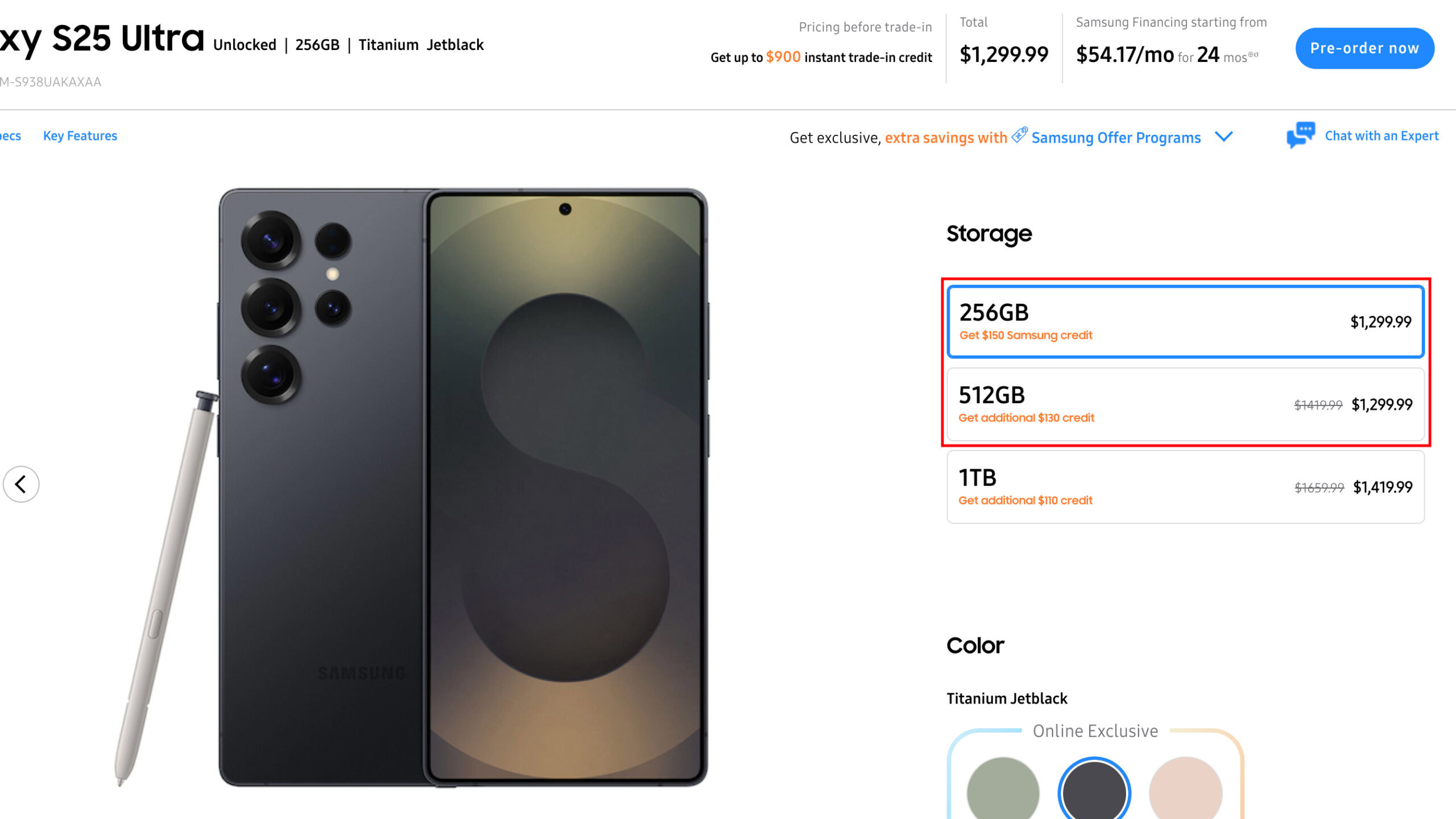
Samsung’s pre‑order incentives for Galaxy S and Z phones have been dwindling over the years.
How the perks have changed
| Generation | Typical Pre‑order Perks | Recent Changes |
|---|---|---|
| Galaxy S21 | Up to $200 Samsung credit + free SmartTag | – |
| Galaxy S22 | Free storage upgrade (e.g., 128 GB → 256 GB) + heavy discounts on Buds or Watches | – |
| Later models | Choice of improved trade‑in value or immediate store credit | Trade‑in value now capped at $900; store credit reduced from $200 to $150 |
| 2025 (S26) | Reservation credits dropped from $50 → $30 | Free storage upgrade appears to be gone in the US |
Note: Reservation credits are the “early‑bird” discounts you receive before pre‑orders go live. The reduction to $30 makes them almost negligible.
What’s missing in the US?
- The free double‑storage upgrade is absent from the US Unpacked page.
- It is still listed on regional pages (UK, France, India).
If the US market only offers a higher trade‑in value, the benefit is questionable because you can often sell your current phone on a secondary market for the same—or a higher—price without any strings attached.
Should you pre‑order?
- Financially: Pre‑order perks are now weaker than the discounts typically offered a few months after launch.
- Practicality: Waiting lets you:
- See real‑world reviews and performance data.
- Take advantage of post‑launch price drops and bundle offers.
Bottom line: Unless you need a replacement immediately, it’s wiser to wait for the post‑launch deals rather than pay for a pre‑order with minimal incentives.
It’s the same phone, but more expensive
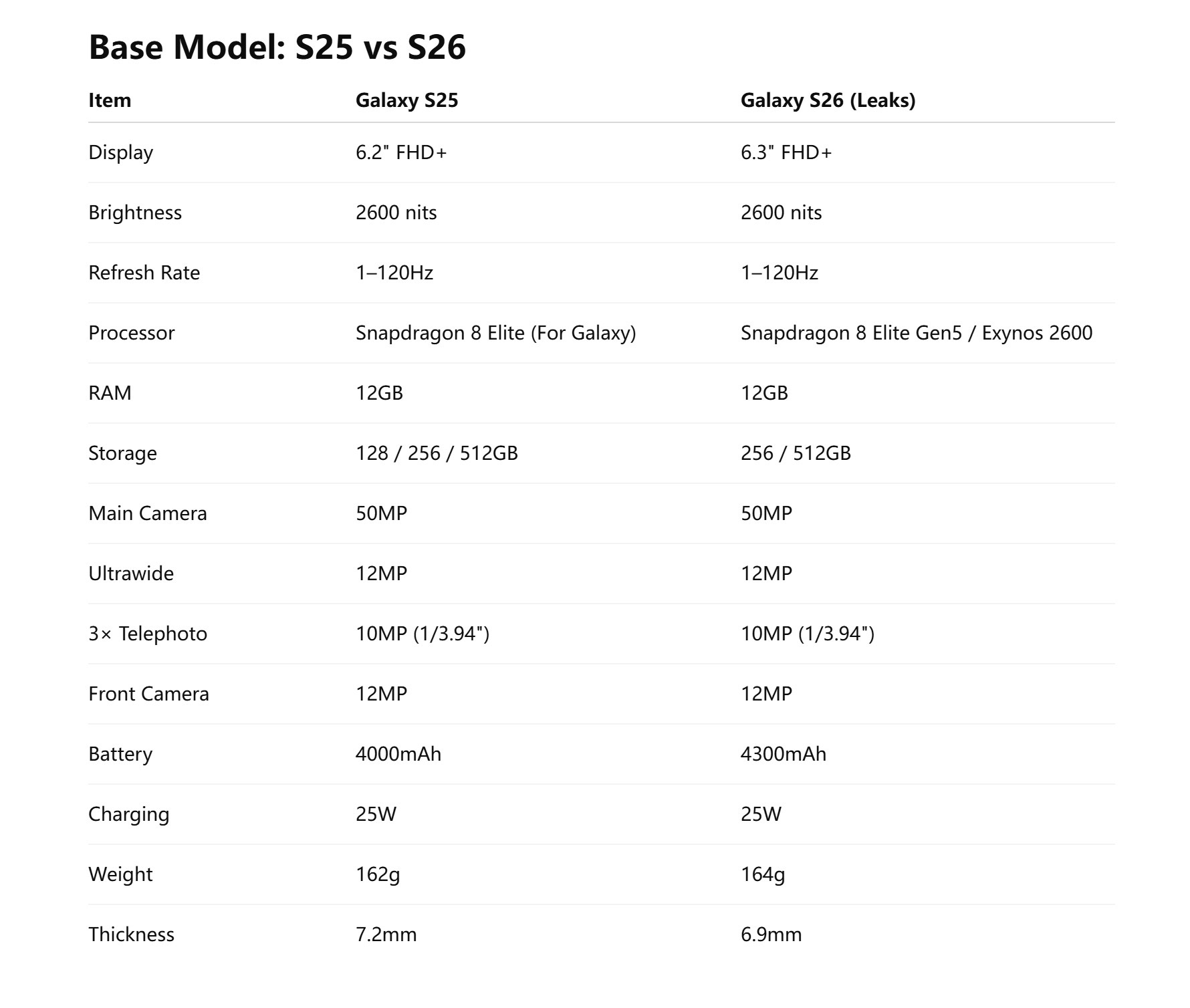
Image credit: @UniverseIce / X
I don’t want to beat a dead horse here, but everything we’ve heard about the Galaxy S26 series points to pretty bare‑bones upgrades—specifically for the base Galaxy S26 and S26 Plus. Earlier, we were hoping Samsung would completely overhaul the line with a new Pro model and, potentially, a better Edge variant. However, pricing woes and tougher competition forced the company to reverse those plans and stick to the original three‑tier lineup: S26, S26 Plus, and S26 Ultra.
Samsung will claim you’re paying the same price as last year for more storage, but that’s not an excuse to raise the entry fee for these iterative phones.
Of course, nothing is certain yet, and these may turn out to be false rumors. Still, the fact that many sources from multiple countries have all pointed to a price increase is worrying—especially when there’s little on the hardware side to justify asking for significantly more money for what is practically the same phone. Samsung’s likely explanation is that both the S26 and S26 Plus will start at 256 GB of storage instead of 128 GB, so you’re effectively paying the same as last year for the higher‑storage variant. Yet we all know it’s the RAM shortage driving these prices up more than any extra storage ever should.
Whatever the reason, you’ll likely have to pay a higher entry fee to own what is essentially the same phone as last year. Things are a bit different for the Ultra, which can at least justify a price hike with its new privacy display hardware.
Samsung Skimped on Some Real Upgrades
We know about the Galaxy S26 Ultra’s privacy display, modest battery improvements, and faster charging. But when you step back and look at the bigger picture, Samsung is skipping any significant upgrades this year.
Missing Qi2 Magnets
- The new Qi2 magnets are not built into the phone; they are only available via additional cases.
- This hurts users who prefer a caseless device and will likely limit the availability of third‑party MagSafe‑compatible cases and accessories for the S26 series.
- When magnets aren’t integrated, accessory makers often overlook the device, and many users won’t realize they can add the functionality with a simple case.
“I’ve seen this with previous Galaxy phones and Pixels, right up until the Pixel 10 added built‑in magnets. Samsung used to be at the forefront of hardware innovation, always adding features before anyone else, and somehow Google has managed to one‑up it on a hardware addition.”
Camera & Battery Concerns
- No major camera upgrades have been announced.
- The battery’s durability may actually be reduced: Samsung appears to have lowered the cycle‑life rating of its lithium‑ion battery from 2,000 cycles at 80 % capacity to 1,200 cycles.
- Competitors such as Xiaomi, HONOR, and others are already rolling out silicon‑carbon batteries, while Samsung offers no comparable improvement.
Overall Impression
Samsung’s only real selling point seems to be a handful of AI features, which feel insufficient to justify the lack of substantial hardware progress.
“They don’t. So if you want to vote with your wallet, skip the pre‑order. Wait until this phone goes on sale in a few months or, better yet, check out last year’s Galaxy S25. It’ll surely receive hefty discounts soon.”
Bottom line: Samsung is falling behind on core hardware innovations this year. If you’re looking for a device with meaningful upgrades, consider waiting for price drops or exploring the previous generation.
Follow
Thank you for being part of our community. Please read our Comment Policy before posting.