
Cracking the Code of GEO: How a 5-Year-Old Clinic Battles to the Top with 25 Reviews
Source: Dev.to


First published from Cybrinal
Introduction
In the world of SEO we used to obsess over Domain Authority (DA) and backlink volume.
But the game has changed. We are entering the era of GEO (Generative Engine Optimization) and AEO (Answer Engine Optimization).
I recently stumbled upon a fascinating case study that perfectly illustrates how AI‑driven search engines—like ChatGPT or Google’s AI Overviews—think differently than traditional SEO.
Case Background
It started with a simple, high‑intent prompt I fed into ChatGPT:
“I’m looking for an Invisalign provider near Minneapolis. Who is considered the best in the area?”
The results surprised me. Among the recommendations was Mpls Skyline Orthodontics & TMJ Therapy.
The mystery: this clinic is only about five years old and has roughly 25 reviews on Google Maps, while its competitors have been around for over a decade and boast 200‑300 reviews. By traditional SEO metrics, Mpls Skyline shouldn’t be on the first page, let alone recommended. Yet both ChatGPT and Google Places (ranking it at #11) pushed it forward.
I decided to dig deep into their digital footprint to understand why. Here’s what I found.
Factors Influencing GEO Results
The AI Doesn’t Just See a Business—It Validates a Real Person
I read all the reviews and noticed something interesting: 8 of the 25 comments directly praised or thanked Dr. Hani.

The first thing an AI does is check if a person is real and qualified. I was able to instantly locate Dr. Hani’s LinkedIn profile, which acts as a digital passport in the eyes of Google. This creates what we call “Identity Credibility,” a key factor in Google’s E‑E‑A‑T (Experience, Expertise, Authoritativeness, Trustworthiness) scoring.
By cross‑referencing his LinkedIn with professional databases, the AI “sees” his verified affiliations:
- American Dental Association (ADA)
- American Association of Orthodontics (AAO)
- Northeastern Society of Orthodontics
Reviewers consistently use his name, praising specific traits: “Dr. Hani is professional,” “Dr. Hani has patience.”
This is crucial for the Experience component of E‑E‑A‑T. The AI confirms that real people are having consistent, positive interactions with this specific expert, making Dr. Hani the absolute core of the business.
Mastering Google Maps: Quality Over Quantity
Mpls Skyline only has about 25 reviews on Google Maps. In traditional SEO we thought “more is better.” In GEO, “better is better.”
The “Ghost” Filter
AI models are getting better at detecting spam. A review from a generic, empty account means very little. I noticed that 18 of the 25 reviewers are active users who have reviewed other businesses. Even better, two of them are Local Guides. A 5‑star rating from a Local Guide carries significantly more weight in the “Trust Score” calculation than a random user.

Consistency
Their reviews span from 5 years ago to today, and they are all 5‑star. This tells the AI that the quality is stable, not the result of a short‑term marketing blitz.
Interaction Signal
The owner (presumably Dr. Hani or his team) has replied to 64 % of the reviews. These aren’t copy‑pasted templates; they mention the reviewer by name. This “active management” signals to Google and the AI that the business is operational, attentive, and cares about customer experience. It creates a dataset of positive human interaction that the AI reads as high reliability.

A Relevance‑Driven Strategy: Local Context Over Link Quantity
I ran a backlink check on their site. Their Domain Authority (DA) is only 7. In the old days of SEO, ranking for “Best Invisalign provider” with a DA of 7 would have seemed impossible.
(The original article continues with a deeper backlink analysis and concluding thoughts—omitted here for brevity.)
Takeaways
- Identity matters – linking a real, verifiable expert to the business boosts AI confidence.
- Review quality trumps quantity – active, reputable reviewers (especially Local Guides) carry more weight.
- Engagement signals – genuine owner responses improve perceived reliability.
- Local relevance can outweigh traditional link‑building metrics in the GEO era.
The shift from classic SEO to GEO/AEO means we must think like the AI: prioritize authentic human signals, contextual relevance, and trustworthy identities over sheer link volume.
Case Study: Mpls Skyline Orthodontist
Sources
-
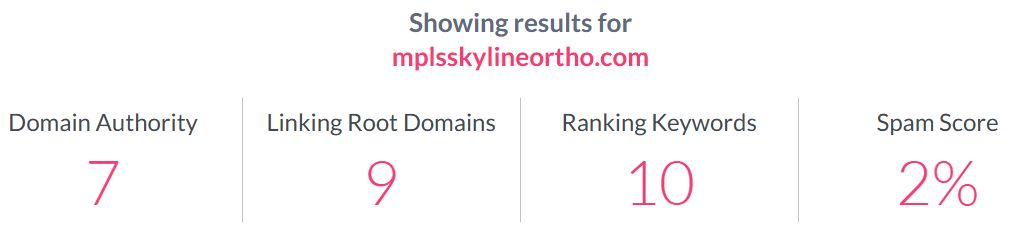
Image source: dev.to -
The clinic appears in two niche “best‑of” articles:
- Best Orthodontist Near Me in Minneapolis, MN (Domain Authority 21)
- The 8 Best Orthodontists in Minneapolis, MN (Domain Authority 27)
Although these sites lack massive authority, they provide strong contextual relevance.
Why AI Treats This as a “Vote of Confidence”
The AI reads the list‑icle title “Best Orthodontist in Minneapolis” and sees Mpls Skyline listed. It interprets the mention as a citation—a vote of confidence from the industry. For GEO‑focused queries, being featured in a “best‑of” list often outweighs a generic backlink from a high‑authority news site because it directly answers the user’s intent.
What Didn’t Matter (The Surprise)
The AI search engines are looking for verification, not noise.
Weaknesses
- Social Media Ghost Town – Facebook: 19 followers; Instagram: 7 posts.
- Thin Content – The website is very basic and lacks a blog to capture long‑tail traffic.
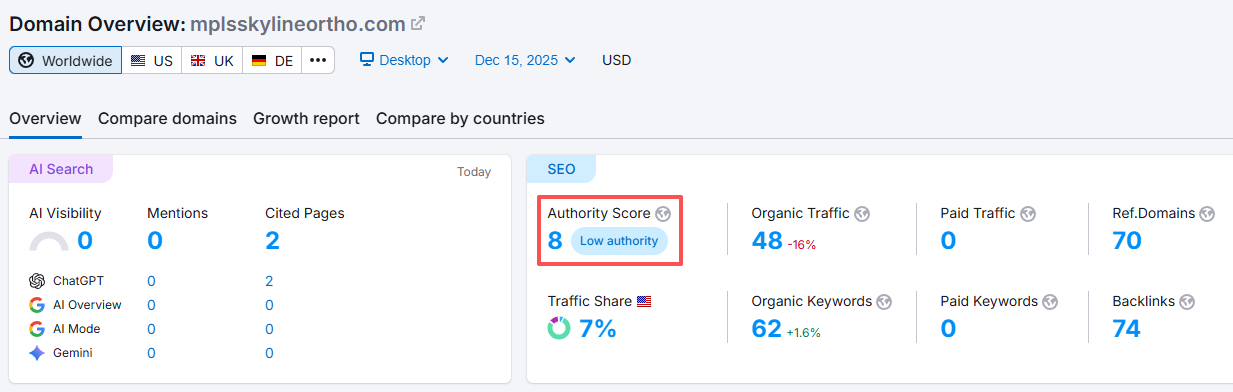
Image source: dev.to
AI search engines care about real, consistent experiences (e.g., 5‑star reviews from local guides) rather than frequent, low‑value social posts.
Conclusion
This case study teaches a vital lesson for 2025 and beyond: the algorithm is getting more human.
- Mpls Skyline ranks in AI searches not because of a massive budget or a huge backlink profile, but because its signals are authentic.
- The practice has a real doctor, validated by genuine local‑guide reviews with consistent 5‑star sentiment over five years.
Takeaway for SEOs
The shift to GEO means moving away from “technical manipulation” toward authenticity shaping. In the era of AI, a small cluster of high‑quality, verified human interactions is more powerful than a mountain of generic data. Focus on the person behind the business, and ensure reviews tell a story—not just a score.
References
- How to Get High‑Quality Backlinks for Startups in 2025 (used for contrast)