
Canada Prime Minister Mark Carney announces questionable national AI strategy
Published: (June 4, 2026 at 03:00 PM EDT)
2 min read
Source: Engadget
Source: Engadget
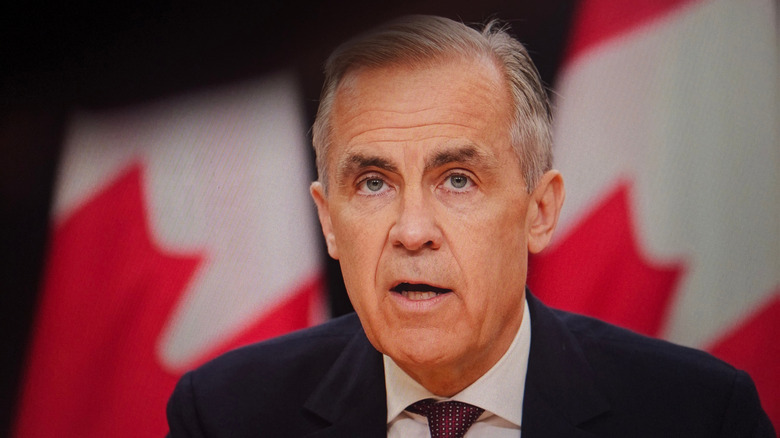
FotoField/Shutterstock
Announcement Overview
Canadian Prime Minister Mark Carney has announced a new AI strategy that will guide Canada’s next five years of legislation and infrastructure investment. The “AI for All” plan is slightly more focused on the impact the technology will have on everyday people than similar frameworks in other countries, while still aiming to grow the domestic AI industry.
“With the global AI market projected to reach US $4.8 trillion by 2033, Canada has a limited but real opportunity to ensure AI works for all Canadians — to harness this technology to create jobs, protect Canadians and strengthen our prosperity.”
The plan aims to:
- Build Canadians’ trust in AI
- Increase AI adoption
- Invest in AI foundations built, hosted, and run in Canada
Main Components of “AI for All”
Legislative Updates
- Strengthen protections for personal information, including safeguards against deepfakes and surveillance pricing.
- Create an “online safety regime” to protect chatbot and social media users.
Education & Workforce
- Establish a National AI Literacy Initiative offering free entry‑level AI training.
- Provide “access to trusted AI agents for every post‑secondary student.”
- Target up to 90,000 AI‑related jobs and work‑placement opportunities.
Infrastructure
- Build a public AI supercomputer.
- Invest in sovereign (Canadian‑owned) compute and cloud infrastructure, aligned with clean‑energy goals.
- Facilitate growth capital through government procurement.
Criticisms and Concerns
- The full strategy document acknowledges public skepticism but largely overlooks evidence that AI adoption does not necessarily increase productivity.
- Growing public distaste for AI suggests that simply increasing adoption may miss the core issues.
- Tools like ChatGPT, Gemini, and Claude are already freely available, indicating that low usage may stem from concerns about the technology itself rather than a lack of understanding or access.
- More robust regulation of AI tools may be needed beyond the plan’s emphasis on communication and adoption.
References
- Prime Minister’s announcement: https://www.pm.gc.ca/en/news/news-releases/2026/06/04/prime-minister-carney-launches-ai-all-canadas-new-national-artificial
- Full strategy document: https://ised-isde.canada.ca/site/ised/en/canadas-national-artificial-intelligence-strategy-ai-all
- Productivity concerns: https://hbr.org/2025/09/ai-generated-workslop-is-destroying-productivity
- Public sentiment article: https://www.nytimes.com/2026/05/14/style/ucf-commencement-ai-booed-gloria-caulfield.html
- US AI policy comparison: https://www.engadget.com/ai/the-white-house-proposes-new-ai-policy-framework-that-supersedes-state-laws-192251995.html