
Android Auto's big 2026 makeover is Gemini at its most practical
Source: Engadget
Vehicle-specific integrations, Immersive Navigation and Android-inspired widgets are small but helpful additions.
Igor Bonifacic for Engadget
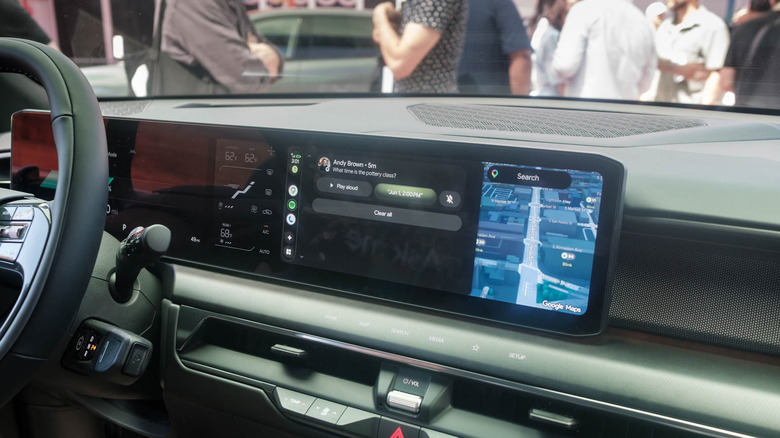
At the Android Show: I/O Edition last week, Google promised 2026 would be a big year for Android Auto, with major updates planned for how the platform looks and works across all the cars and devices where it’s available. Engadget got a chance to see some of those upgrades running on both Android Auto on a phone and a Volvo EX60 with Google built‑in.
Right off the top, most of the enhancements Google announced earlier this month will be available to people whether they access them directly through their car or via a phone. I did notice some visual differences between how those features are presented. With Android Auto, you get Google’s own Material 3 Expressive across the board; with Google built‑in, it’s still Material 3 Expressive, but tweaked to accommodate the automaker’s own stylings and the car’s specific hardware.
The trade‑off is that Google built‑in offers Gemini integration that’s only possible when manufacturers directly include the assistant in their cars, allowing you to use your voice to tweak model‑specific settings. In the EX60 demo, the Google employee could tell Gemini to “darken” the car’s sunroof, turning it from transparent to opaque. Gemini was also asked to describe footage from one of the car’s front‑facing cameras; it identified the Transamerica Pyramid in the distance and noted it had been the tallest building in San Francisco for 48 years, omitting the later‑built Salesforce Tower.
Immersive Navigation looks great
Igor Bonifacic for Engadget
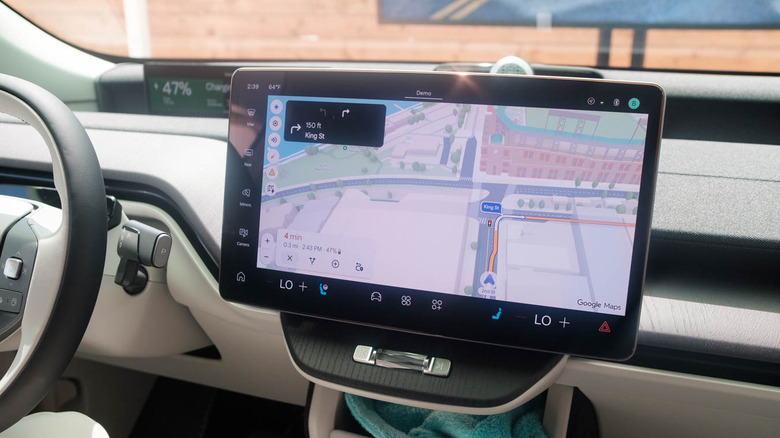
Everything else Google previously announced will be available to users of both Android Auto and Google built‑in as the upgrades roll out. For instance, with Immersive Navigation—the overhaul of driving directions Google first announced in March—you can expect a similar experience no matter how you access the feature. In the demos, Google Maps rendered buildings in 3D along a virtual route, giving a better sense of scale and depth. Important road elements like stop signs, traffic lights, and crosswalks were prominently displayed, and Gemini produced more intuitive voice directions, saying things like “take a left at the next intersection.” It’s a slick interface that most Android Auto users will likely appreciate after a short acclimation period.
Google also highlighted how the Android Auto team collaborated with third‑party developers and other Google teams to make their apps feel more like the mobile experiences they offer. Spotify’s latest version for Android Auto, for example, now resembles its Android and iOS counterparts. Whether this is a welcome tweak depends on how you feel about using a touchscreen in the car; the Android Auto team has guidelines around touchscreen usage designed to reduce distractions.
Android‑like widgets come to Android Auto
Igor Bonifacic for Engadget
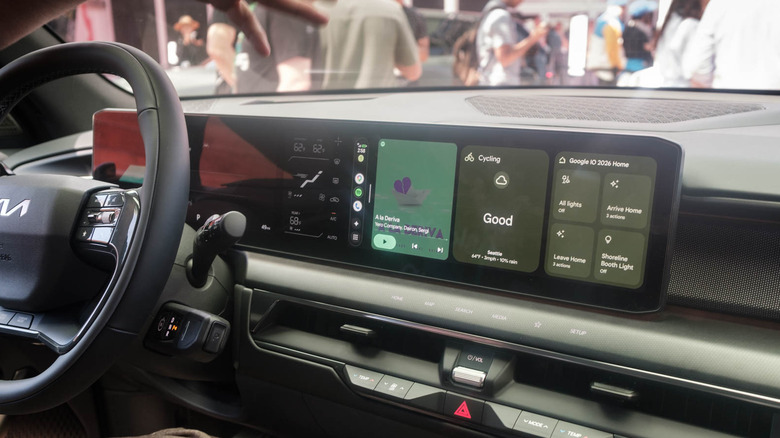
I also saw the Android‑like widgets Google is bringing to Android Auto. They’re a small addition, but there’s utility in having specific information or features just a tap or swipe away. In the demo, a Google employee had a widget set up to check the weather for future bike rides. It’s a modest feature, yet it raises the question of why user‑customizable widgets weren’t added to Android Auto earlier.