
AMD leaves Linux FPGA users in the lurch with controversial Vivado licensing update — new tier model restricts future free versions to Windows
Source: Tom’s Hardware
Image credit: AMD, Larry Ewing
Background
Vivado is AMD’s proprietary design suite used to program Field‑Programmable Gate Arrays (FPGAs). These chips can be rewired via software to emulate a wide range of hardware, making them valuable for simulations, design testing, and custom circuit development in AI, aerospace, and advanced electronics.
For many developers, especially academic researchers, engineering students, and open‑source hobbyists, Vivado is a primary tool for bringing custom hardware designs to life.
Licensing Change
The controversy centers on the upcoming 2026.1 release of Vivado. Under the previous model, the free “Standard” tier was available for both Windows and Linux. The new tiered model introduces:
| Tier | Cost (annual) | Platform support |
|---|---|---|
| Basic (free) | $0 | Windows only |
| Core | $1,200 – $1,800 | Windows and Linux |
Thus, Linux users who wish to stay on the latest version must upgrade to the paid Core tier.
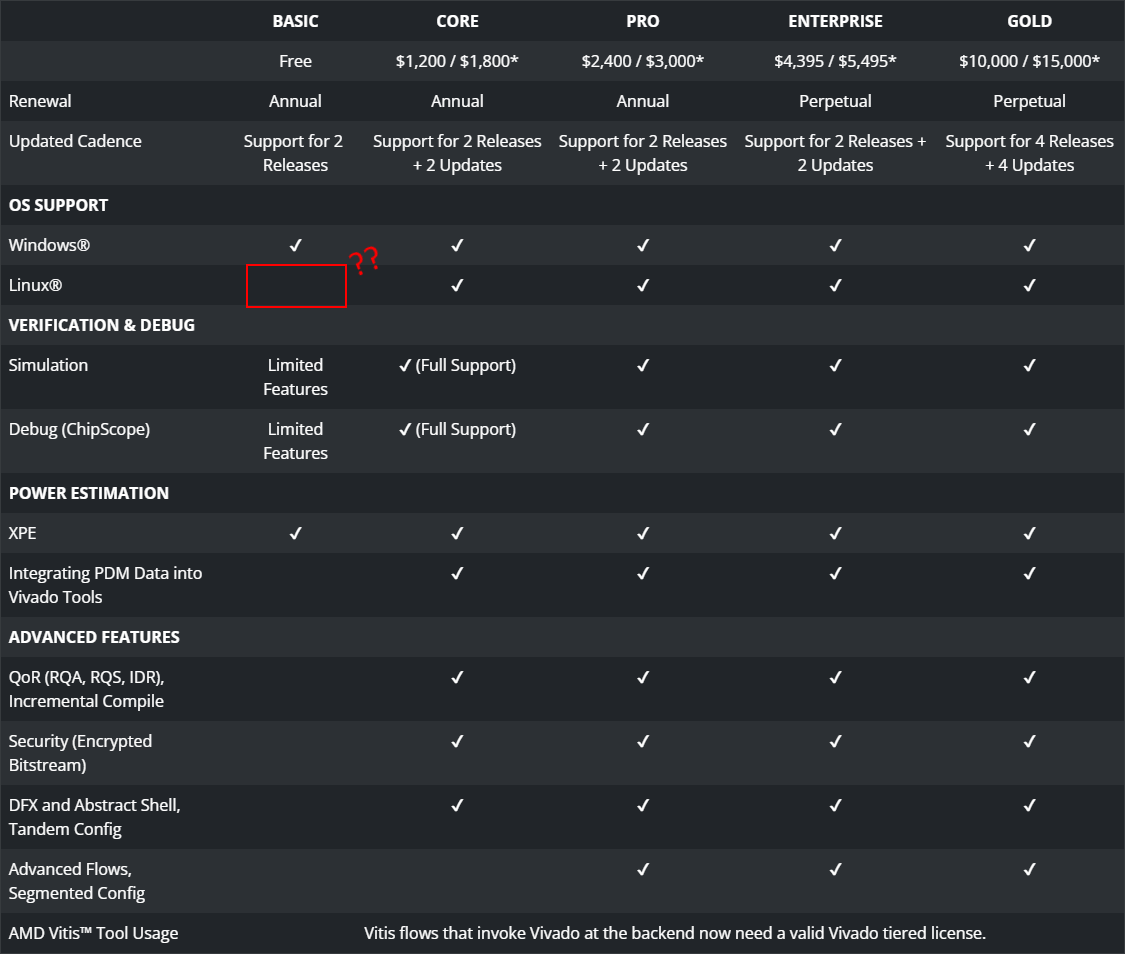
Image credit: Future
Community Reaction
AMD’s response on its community forums has been poorly received. A forum representative claimed that 70 % of Vivado users are on Windows, suggesting that the change primarily affects a minority of users. The representative also stated:
“No one is stopping users (students, etc.) to continue using the current versions of Vivado (any Vivado version prior 2026.1) and developing using the free Vivado ML Standard Edition. It is only if users decide to update that they’d need the license.”
Users expressed frustration:
“I guess no one involved in this decision thought about the millions of hobbyists and amateurs like myself using Vivado for their hobby projects.”
“Many users are already discussing moving to alternate platforms like Lattice and Altera due to these changes.”
AMD indicated that it is collecting feedback and forwarding it to the relevant teams, leaving open the possibility of future policy adjustments.