
Amazon's new Proteus warehouse robot is fully autonomous
Source: Engadget
Background
Amazon has deployed more than a million robots in its fulfillment centers, but none previously could “talk” with human employees.
New Proteus Capabilities
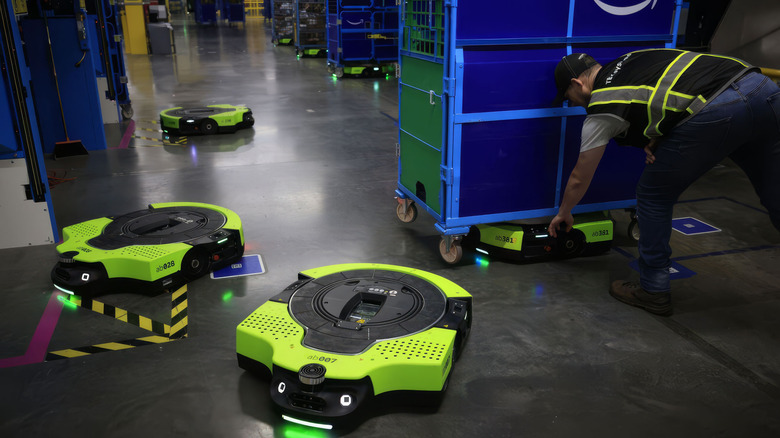
A new version of the Proteus robot now supports plain‑language instructions thanks to an AI upgrade, as announced by Amazon. “You tell it what needs to be done. It figures out the priority, the route, the timing,” said Amazon Robotics VP Scott Dresser.
- Design: Resembles a heavy‑duty Roomba, built to move heavy carts and travel long distances inside warehouses.
- Interaction: Employees can assign tasks using conversational language, similar to directing a coworker.
- Flexibility: The added intelligence lets the robot operate throughout the warehouse, not just in dock areas, enabling it to transport incoming containers, move items between workstations, and assist staff.
Deployment Plans
- Testing: Amazon is piloting the system in its labs.
- Rollout: Planned deployment in Europe in the first half of 2027.
- Related robots: Expansion of the Vulcan touch‑sensitive robot and introduction of a new tote‑handling robot called Stark.
Impact on Workforce
Amazon states the new Proteus robots will allow employees to focus on higher‑skill tasks such as managing inventory flow and ensuring quality control, improving safety and reducing repetitive work. The company also announced plans to grow its European warehouse workforce by 25,000 in the coming years, noting that robotics have coincided with hiring hundreds of thousands of employees globally.
Safety and Labor Concerns
- Layoffs: Amazon has laid off nearly 30,000 workers across various divisions in the past year.
- Injury statistics: In 2024, Amazon employed 39 % of U.S. warehouse workers but accounted for 56 % of serious injuries, according to a report by the Strategic Organizing Center.
Source: Amazon announcement, Engadget, Strategic Organizing Center.