
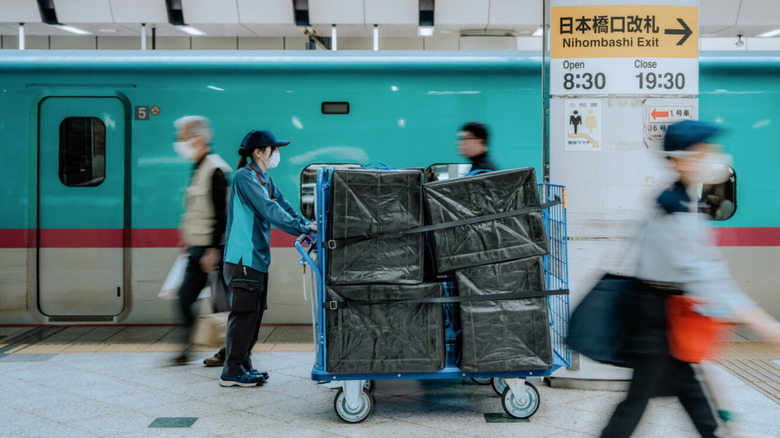
Amazon Japan is now transporting packages on Shinkansen bullet trains
Published: (May 28, 2026 at 05:43 AM EDT)
2 min read
Source: Engadget
Source: Engadget
Overview
Amazon Japan has begun using Japan’s iconic Shinkansen bullet trains to move packages between its facilities across different regions. The partnership with Japan Railway is part of Amazon’s broader effort to reduce delivery times and carbon‑dioxide emissions.
Background
- In 2019, Amazon launched an initiative to achieve net‑zero carbon emissions for deliveries. The company aims for half of its shipments to be net‑zero by 2030, leveraging electric vehicles, renewable energy, and sustainable packaging.
- Under the Climate Pledge—which Amazon co‑founded—it committed to reaching net‑zero carbon across its global operations by 2040.
- The Shinkansen runs on electricity supplied via an overhead system and can travel up to 200 mph, cutting travel times (e.g., Tokyo → Osaka from ~8 hours to ~2.5 hours).
Partnership with Japan Railway
Amazon is using the non‑passenger spaces of Shinkansen trains on three routes that connect the Greater Tokyo area with central and northern Japan:
| Route | Cities Served | Start Date |
|---|---|---|
| Tohoku Shinkansen | Tokyo → Fukushima → Sendai (and others) | March 2026 |
| Tohoku–Hokkaido Shinkansen | Tokyo → Hokkaido | May 2026 |
| Hokuriku Shinkansen | Tokyo → Hokuriku region (including Nagano) | May 2026 |
These routes enable faster, electricity‑powered transport of parcels, aligning with Amazon’s sustainability goals.
Sustainability Context
- While the Shinkansen initiative supports carbon reduction, Amazon’s 2025 sustainability report noted a rise in overall carbon emissions for the first time since 2022, largely due to increased energy use from AI‑focused data centers.
- The report highlighted that AI chips and data‑center construction consume more power and require additional cooling compared with traditional hardware.
Related Sustainable Delivery Efforts
- Europe: Amazon employs e‑cargo bikes for local deliveries.
- United States: Drone deliveries are available in several cities.
These complementary methods, together with the Shinkansen program, illustrate Amazon’s multi‑modal approach to achieving its climate commitments.
Sources