
AI energy efficiency comparisons ‘unfair’ bleats Sam Altman, citing amount of energy needed to evolve, then train a human — one ‘takes like 20 years of life and all of the food you eat during that time before you get smart’ he argues
Source: Tom’s Hardware
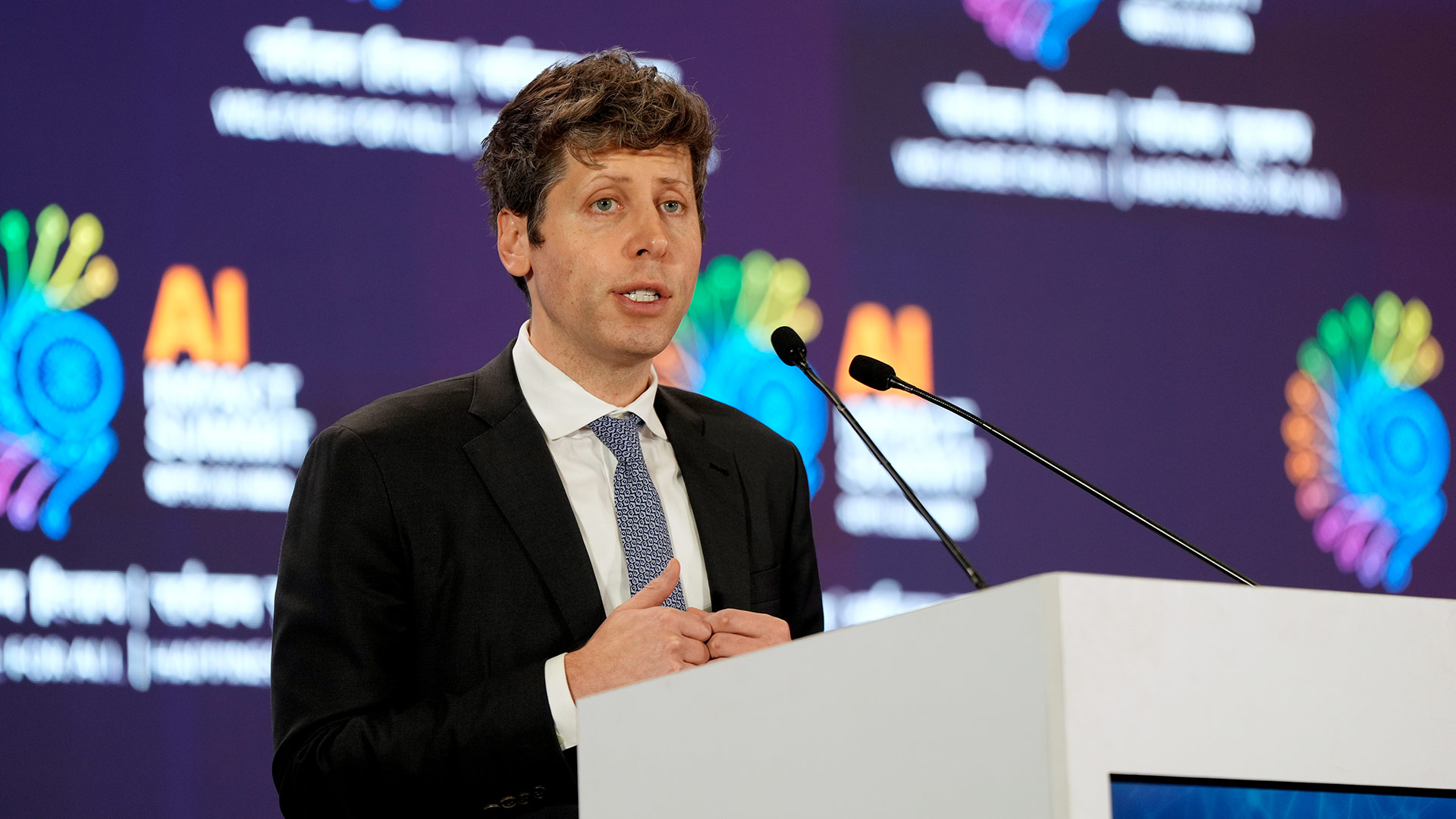
Image credit: Getty Images
Altman’s comments on AI vs. human energy efficiency
OpenAI CEO Sam Altman took part in a wide‑ranging Q&A on Friday, answering dozens of rapid‑fire questions during a 60‑minute session hosted by The Indian Express. Altman bemoaned “unfair” comparisons between the efficiency of AI inference queries and human thought, arguing that humans benefit from millennia of evolutionary development and that an individual requires “like 20 years of life and all of the food you eat during that time before you get smart.”
SAM ALTMAN: “People talk about how much energy it takes to train an AI model … But it also takes a lot of energy to train a human. It takes like 20 years of life and all of the food you eat during that time before you get smart.”
February 21 2026 – Twitter
In the video segment Altman states that the comparison is skewed because people focus on “how much energy it takes to train an AI model” — see the discussion on AI power consumption in this Tom’s Hardware article. He adds that humanity’s evolutionary history, the survival challenges faced by our ancestors, and the cumulative knowledge gained over centuries should also be considered. If those factors are accounted for, Altman suggests that “AI has already caught up on an energy‑efficiency basis… measured that way.”
OpenAI tech also evolved – from the minds and technological feats of humans
Altman’s timeline raises further questions. Should the AI computing world also factor in the prior “energy cost” of human evolution, the Renaissance, and other milestones? For instance, the creation of ENIAC was a product of human ingenuity, not alien blueprints—see the history of ENIAC here.
Some commentators argue that Altman’s framing reduces childhood learning and personal growth to mere energy inputs, while others wonder whether resources might be diverted from human development to machine intelligence.
Beyond the tweet clip, Altman also emphasizes the need for more sustainable energy solutions. Leveraging renewable resources could help large AI consumers like OpenAI mitigate the strain on scarce resources as utility costs rise.
The Q&A took place shortly after Altman and other AI leaders met with Prime Minister Narendra Modi during a highly publicized week that highlighted India’s importance as an AI growth engine.