
AI Copilot Keeps Berkeley’s X-Ray Particle Accelerator on Track
Source: NVIDIA AI Blog
Overview
Location: Berkeley, California – Lawrence Berkeley National Laboratory (LBNL)
Researchers at the Advanced Light Source (ALS) have deployed the Accelerator Assistant, a large‑language‑model (LLM)‑driven system that keeps X‑ray research on track.
- Hardware: NVIDIA H100 GPU with CUDA‑accelerated inference.
- LLM back‑ends: Gemini, Claude, or ChatGPT (routed through institutional knowledge).
- Capabilities:
- Writes and executes Python scripts.
- Solves physics‑related problems autonomously or with a human‑in‑the‑loop.
The ALS Facility
- Accelerator type: Electron storage ring (≈ 200 yd circumference).
- Beam: Near‑light‑speed electrons generate ultraviolet and X‑ray light.
- Beamlines: 40, supporting 1,700 scientific experiments per year.
- Research domains: Materials science, biology, chemistry, physics, environmental science.
“It’s really important for such a machine to be up, and when we go down, there are 40 beamlines that do X‑ray experiments, and they are waiting.”
— Thorsten Hellert, staff scientist, Accelerator Technology & Applied Physics Division, Berkeley Lab
Operational challenges
- Beam interruptions can last minutes, hours, or days.
- The control system monitors > 230,000 process variables.
- Traditional troubleshooting requires rapid identification of fault areas, data retrieval, and coordination of expert personnel under intense time pressure.
Accelerator Assistant in Action
- Autonomous experiment preparation: The assistant can set up and run a multistage physics experiment without manual intervention.
- Impact:
- Setup time reduced dramatically.
- Effort savings: up to 100× compared with conventional methods.
“The novel approach offers a blueprint for securely and transparently applying large language model‑driven systems to particle accelerators, nuclear and fusion reactor facilities, and other complex scientific infrastructures.”
— Thorsten Hellert
The team’s findings are detailed in a research paper available on arXiv:
Accelerator Assistant: LLM‑Driven Operations for the ALS
Visual
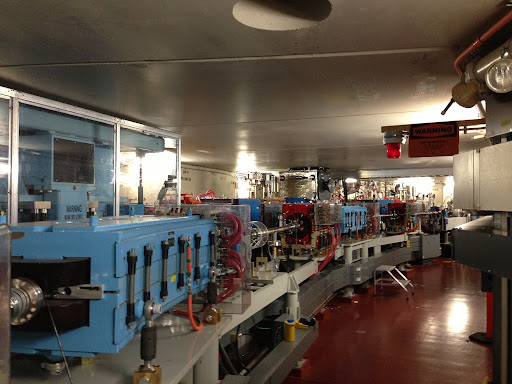
For more information, contact the ALS Accelerator Technology & Applied Physics Division at Lawrence Berkeley National Laboratory.
Applying Context‑Engineering Prompts to Accelerator Assistant
The ALS operators interact with the system through either a command‑line interface or Open WebUI (available from control‑room stations and remotely). Under the hood, the system uses Osprey, a Berkeley Lab framework that applies agent‑based AI safely in complex control environments.
Key Architectural Elements
| Component | Description |
|---|---|
| Authentication & Context | Each user is authenticated; the framework maintains personalized context and memory across sessions. Multiple sessions can run simultaneously, letting users organize distinct tasks or experiments into separate threads. |
| Accelerator Assistant | Routes inputs to: • A database of >230 000 process variables • A historical database‑archive service • Jupyter‑Notebook‑based execution environments |
| Inference Engine | • Local – Ollama on an H100 GPU node inside the control‑room network. • External – CBorg gateway, which forwards requests to external models (ChatGPT, Claude, Gemini, etc.). |
| Hybrid Architecture | Combines secure, low‑latency on‑premises inference with access to the latest foundation models. |
| EPICS Integration | EPICS (Experimental Physics and Industrial Control System) provides operator‑standard safety constraints for direct hardware interaction. Python code in Jupyter can communicate with EPICS. |
“We try to engineer the context of every language‑model call with whatever prior knowledge we have from this execution up to this point,” – Hellert
How It Works
- User Input – Conversational text entered via CLI or Open WebUI.
- Context Engineering – The system enriches the request with:
- Personalized memory tied to the user.
- Relevant documentation and accelerator‑specific databases.
- Prior execution state (e.g., recent commands, variable values).
- Task Description Generation – The input is transformed into a concise natural‑language task description, stripped of redundancy.
- Execution – The task is dispatched to the appropriate backend (local Ollama, CBorg‑routed external model, Jupyter notebook, or EPICS).
Benefits
- Rapid Knowledge Retrieval – Operators can locate obscure information (e.g., “address of a temperature sensor”) instantly.
- Safety‑First Interaction – EPICS enforces safety constraints before any hardware command is issued.
- Scalable Collaboration – Multiple users can run independent sessions, each preserving its own context and memory.
“It’s a large facility with a lot of specialized expertise,” said Hellert. “Much of that knowledge is scattered across teams, so even finding something simple — like the address of a temperature sensor in one part of the machine — can take time.”
Tapping the Accelerator Assistant to Aid Engineers in Fusion‑Energy Development
The Accelerator Assistant lets engineers begin with a simple prompt that describes their goal. Behind the scenes the system draws on curated examples and accelerator‑operation keywords to steer the LLM’s reasoning.
“Each prompt is engineered with relevant context from our facility, so the model already knows what kind of task it’s dealing with,” – Hellert
How It Works
- Prompt definition – The engineer supplies a concise description of the desired outcome.
- Domain‑specific agent – An expert agent, trained on accelerator operations, interprets the request.
- Capability orchestration – The agent assembles the needed tools (e.g., process‑variable lookup, control‑system navigation).
- Automated execution – Python scripts are generated and run to:
- Analyze data
- Visualize results
- Interact safely with the accelerator
“This can save you serious time — in the paper we report a two‑order‑of‑magnitude speed‑up for such a prompt,” – Hellert
Future Directions
- Wiki of processes – ALS engineers are building a comprehensive wiki documenting the many procedures that support experiments.
- Human‑in‑the‑loop – For high‑stakes scientific work (e.g., a $1 M TEM microscope), a human reviewer will approve any autonomous actions.
“On these high‑stakes scientific experiments, even if it’s just a TEM microscope or something that might cost $1 million, a human in the loop can be very important,” – Hellert
Expansion Beyond ALS
- The framework is part of the DOE’s Genesys mission and is being deployed across U.S. particle‑accelerator facilities.
- ITER collaboration – Hellert has begun working with engineers at the ITER fusion reactor in France to implement the assistant for fusion‑reactor operations.
- Extremely Large Telescope (ELT) – A partnership is in development to apply the technology to the ELT in northern Chile.
Benefiting Humanity: Scientific Impact of Experiments Supported by ALS
The Advanced Light Source (ALS) provides stable, high‑brightness X‑ray beams that enable scientific breakthroughs with global relevance. Below are three illustrative examples of how ALS‑supported experiments are advancing health, climate resilience, and planetary science.
1. Health & Pandemic Response
- COVID‑19 antibody characterization
- Beamline: 4.2.2
- Discovery: Structural biology experiments revealed how six molecular loops of a rare antibody latch onto the SARS‑CoV‑2 spike protein, neutralizing the virus.
- Impact: The structural insight accelerated the development of a therapeutic that remained effective across multiple viral variants.
2. Climate‑Focused Materials Research
- Metal‑Organic Frameworks (MOFs)
- Scope: Extensive studies across several ALS beamlines examined MOFs’ ability to capture water vapor and carbon dioxide directly from air.
- Outcome: This work underpinned the foundational research that earned the 2025 Nobel Prize in Chemistry, recognizing MOFs’ transformative potential for sustainable water harvesting and carbon management.
3. Planetary Science & Astrobiology
- OSIRIS‑REx asteroid sample analysis
- Mission: NASA’s OSIRIS‑REx returned material from asteroid Bennu.
- ALS contribution: High‑resolution X‑ray analyses traced the chemical history of the samples, providing evidence that such asteroids delivered water and organic precursors to early Earth.
- Significance: These findings deepen our understanding of how habitable conditions originated on our planet.
The ALS’s versatile X‑ray capabilities continue to empower research that directly benefits humanity—whether by informing life‑saving medicines, enabling climate‑positive technologies, or unraveling the origins of life itself.