
$5,000 RTX 5090 Lightning Z gets killed in extreme overclocking attempt, thermal shock cracks the GPU core — MSI's 2,500-Watt XOC BIOS pushed too high a voltage to the core
Source: Tom’s Hardware
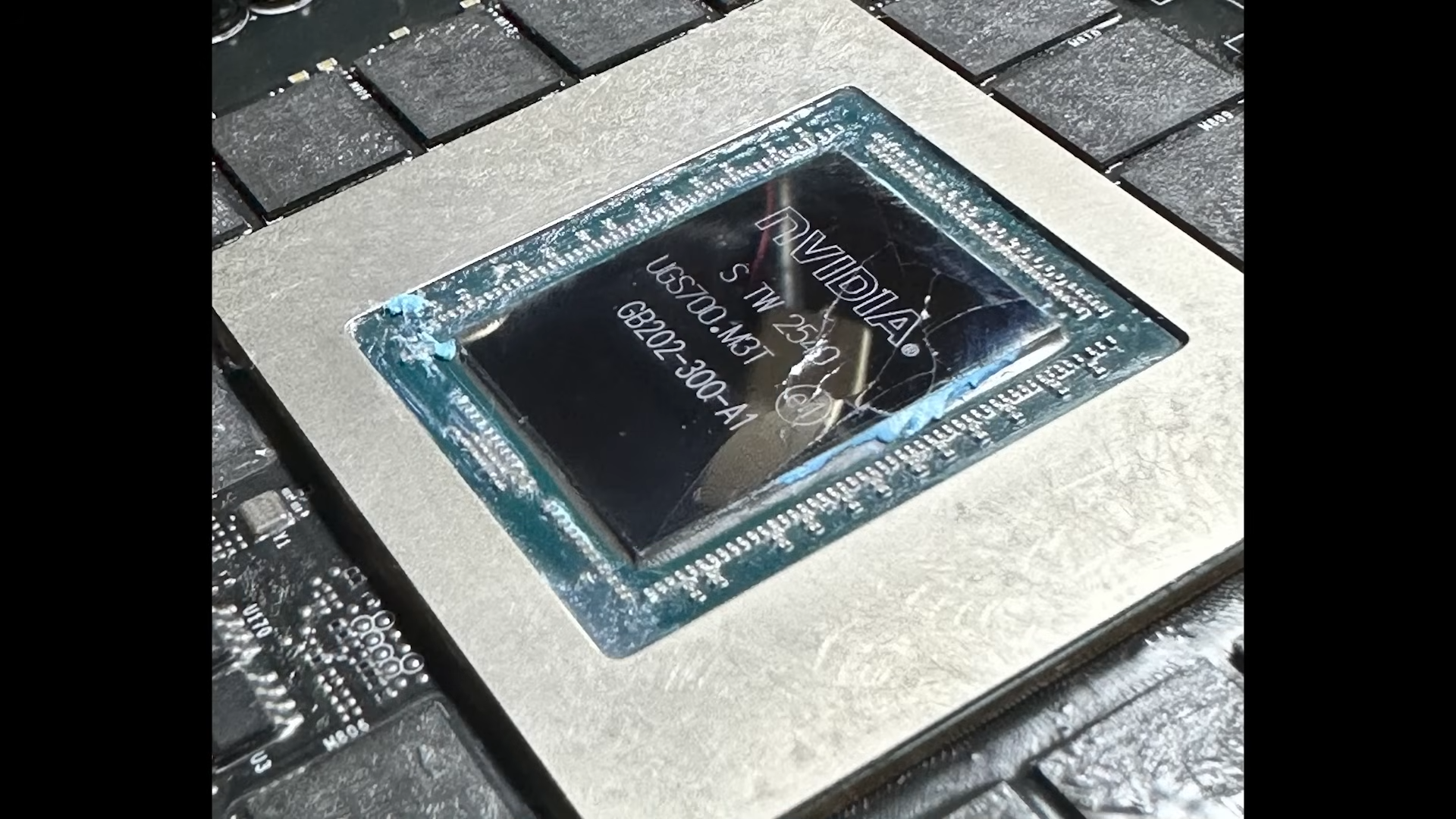
Image credit: Alva Jonathan on YouTube
MSI recently launched the RTX 5090 Lightning Z, a $5,090 GPU aimed at extreme overclockers seeking world‑record performance. YouTuber Alva Jonathan took the card to its limits, ultimately destroying it with a sudden thermal‑shock event that cracked the GPU core.
Record‑breaking launch
The Lightning Z entered the market already holding a world record, thanks to its dual 12 V‑2×6 power connectors (up to 1 000 W total) and a 40‑phase VRM. It also ships with a special 2 500 W XOC BIOS for overclockers and an 8‑inch screen that replaces the top backplate to display telemetry data.
Initial overclock
- Core clock: 3.25 GHz at 1.05 V
- Power draw: >700 W
- 3DMark Port Royal score: 43,112 (with an 800 W power limit) – well above the 40‑41 K points of the RTX 5090 Suprim Liquid and the typical 36‑37 K of a regular 5090.
Liquid‑nitrogen testing
Jonathan moved the card to ARX (arxidmedia) for extreme cooling experiments, using liquid nitrogen (LN₂).
- Heatsink temperature: ‑40 °C
- GPU core temperature: rose to +9 °C under full load
- Power draw: >1 000 W at 1.12 V with a 3.42 GHz boost clock
One run saw the GPU hit 21 °C and crash immediately. In a more forgiving benchmark (GPUPI), Jonathan reached 3.6 GHz at around 0 °C. Settling on 3.5 GHz as the “sweet spot,” the card broke the HWBot Geekbench 5 compute record with 683,433 points (HWBot submission).
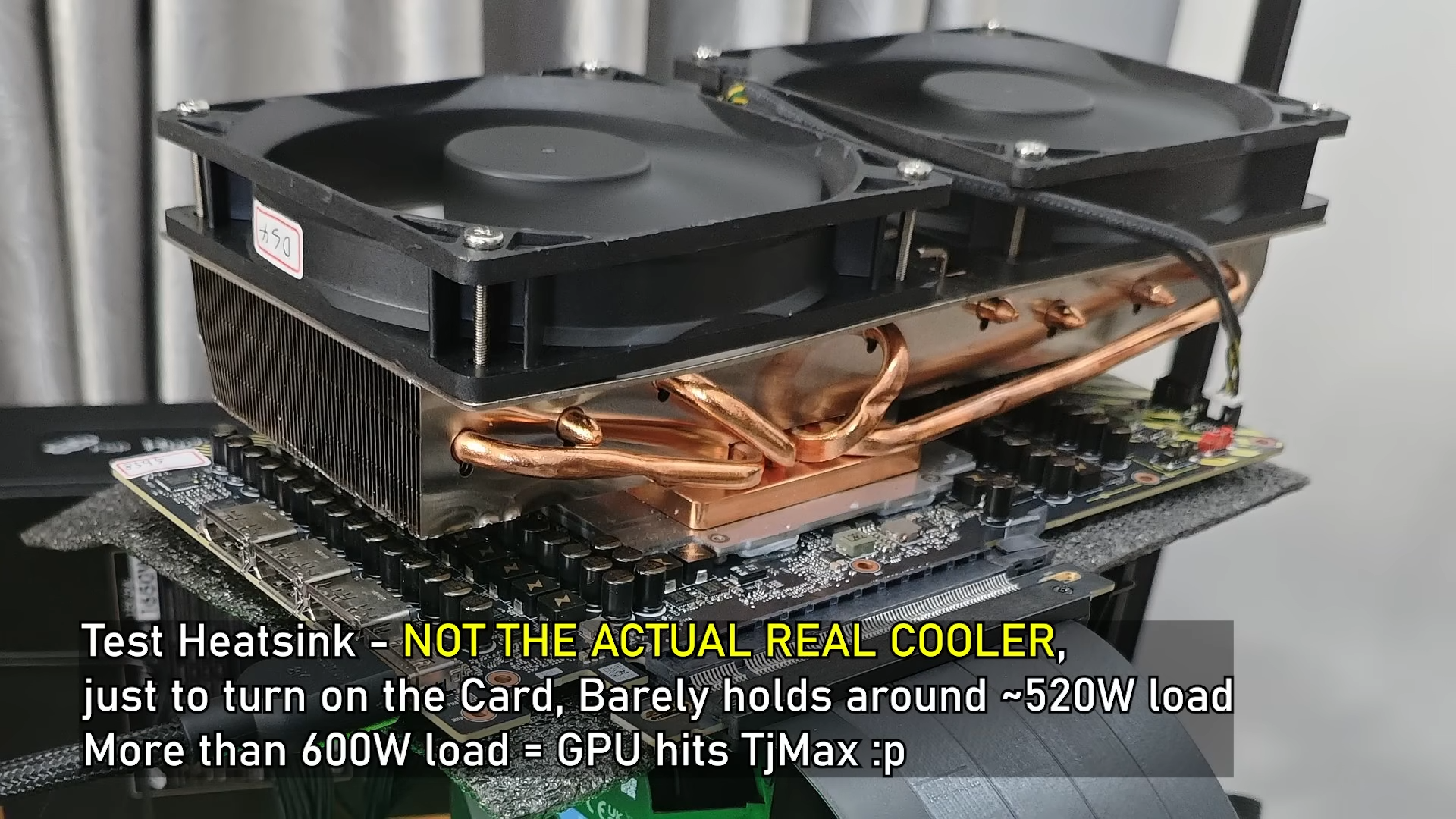
Image credit: Alva Jonathan on YouTube
Thermal‑shock failure
The team then switched to the 2 500 W XOC BIOS, but an earlier revision applied too much voltage at once. The GPU core received 1.2 V at ambient temperature (~25 °C), causing a sudden temperature imbalance: part of the die was extremely cold from LN₂ while another region became a hotspot. The resulting thermal shock cracked the GPU core, rendering the sample dead.
Aftermath
- The damaged card is effectively a $5 000 loss, though the remaining components are intact and could be revived with a donor core.
- Jonathan still has four more Lightning Z samples for further testing.
- No additional world records (e.g., 3DMark Solar Bay Extreme) were achieved; a more securely mounted cooler or a stable retail BIOS may be needed for future attempts.