
3D printing with one of the world’s hardest Tungsten-based materials is now possible — material’s incredible hardness made it difficult to additively manufacture
Source: Tom’s Hardware
Image credit: Getty Images
Overview
Scientists at Hiroshima University have developed a novel method to 3D‑print tungsten carbide–cobalt (WC‑Co), one of the hardest engineering materials used in industry. Ultra‑hard materials are valuable for cutting and construction tools, but their toughness makes additive manufacturing challenging. The Japanese research team succeeded by softening the material rather than fully melting it, reducing waste compared with traditional manufacturing.
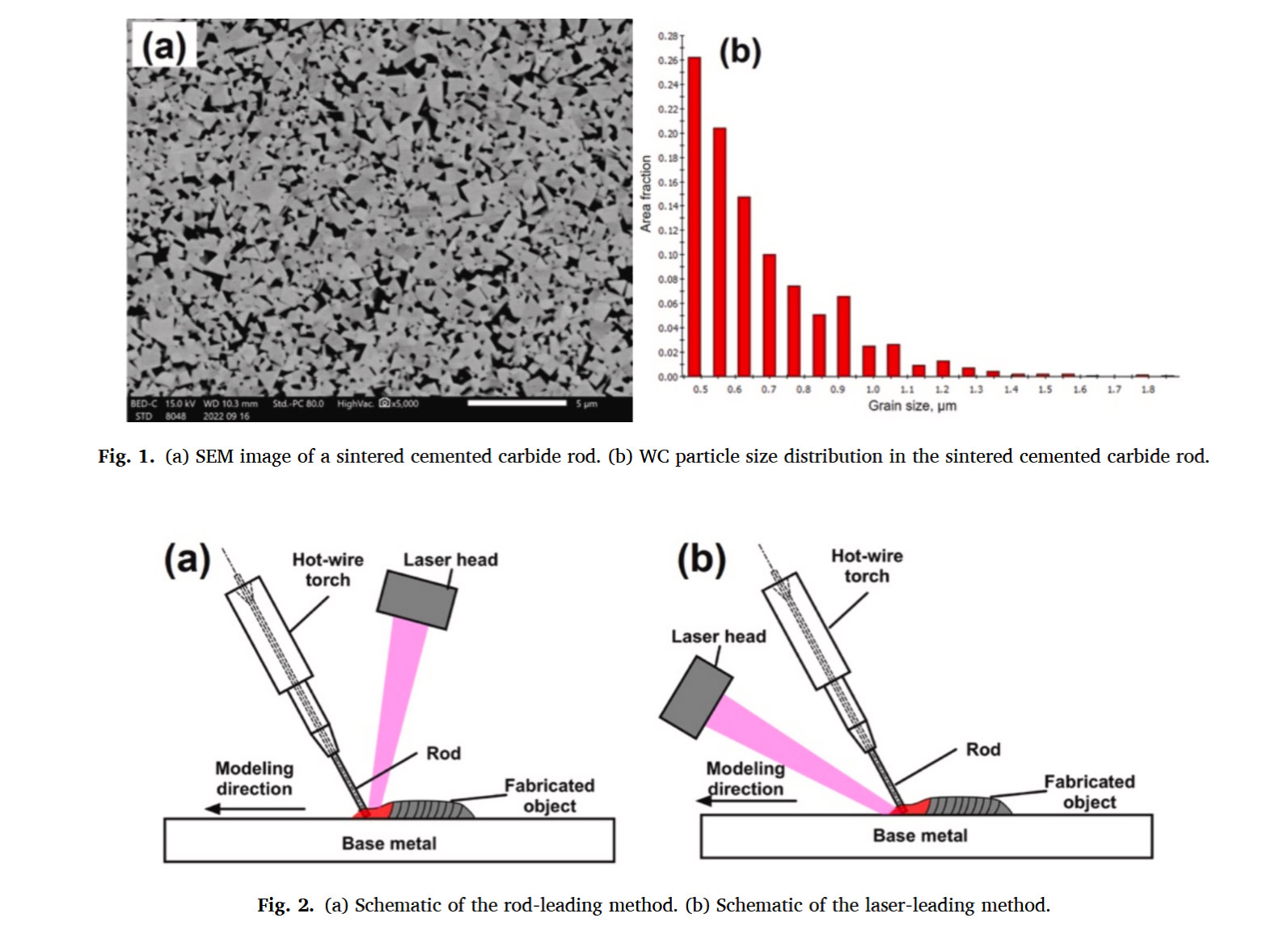
Image credit: Hiroshima University
Hot‑wire irradiation method
The process, described as a hot‑wire irradiation method, uses a laser beam to locally soften a cemented carbide rod without fully melting it, thereby avoiding grain growth. A nickel‑alloy middle layer is inserted between additive layers to improve bonding.
Key points of the technique:
- Laser softening (also called laser hot‑wire welding)
- No complete melting, preserving microstructure
- Nickel alloy interlayer for enhanced layer adhesion
Material properties
The resulting 3D‑printed WC‑Co retains a hardness of over 1400 HV, comparable to super‑hard materials such as sapphire and diamond, while remaining free of defects or decomposition.
“The approach of forming metal materials by softening them rather than fully melting them is novel, and it has the potential to be applied not only to cemented carbides, which were the focus of this study, but also to other materials,” said Keita Marumoto, assistant professor at Hiroshima University’s Graduate School of Advanced Science and Engineering.
Future work
The research team—Keita Marumoto, Takashi Abe, Keigo Nagamori, Hiroshi Ichikawa, Akio Nishiyama, and Motomichi Yamamoto—plans to:
- Eliminate cracking issues observed with the current process
- Refine the technique to produce more complex geometries
Context
Additive manufacturing of metals is significantly more demanding than printing plastics due to the extreme temperatures, complex thermal cycles, and phase changes involved. This new method represents a promising step toward broader industrial adoption of metal 3D printing.
References
- Hiroshima University news release: https://www.hiroshima-u.ac.jp/en/news/95492
- Tom’s Hardware article on 3D printing: https://www.tomshardware.com/best-picks/best-3d-printers
- Additional Tom’s Hardware coverage of metal 3D printing: https://www.tomshardware.com/3d-printing/metalprinting-gauss-mt90-3d-printer-offers-office-safe-metal-printing-without-powders-uses-paste-based-metal-extrusion-pme-tech