
🚀 2026 Software Development Roadmap: How to Start (or Reinvent) Your Career in Tech
Source: Dev.to
Source: Dev.to
💡 Why 2026 Is the Perfect Year to Jump Into Tech
The tech industry isn’t just growing—it’s exploding. With 350 000+ new jobs annually in the U.S. alone, there’s never been a better time to start (or pivot) your career. Whether you’re a complete beginner, a junior developer looking to level up, or a seasoned programmer stuck in legacy tech, this guide is your no‑BS roadmap to thriving in 2026.
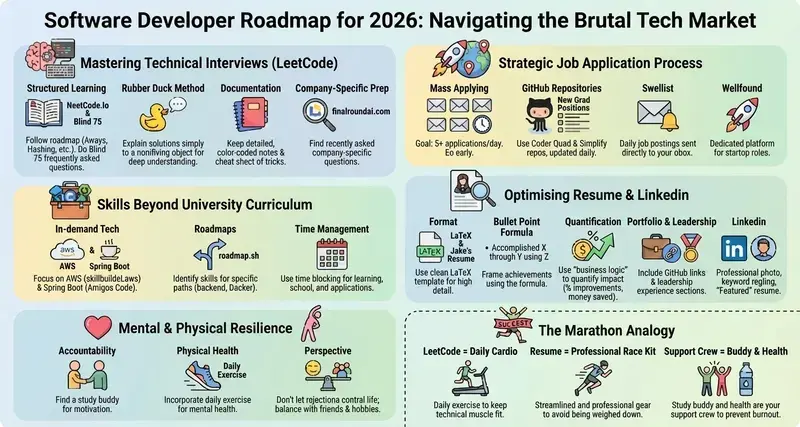
The truth
- ✅ Companies are desperate for skilled talent.
- ✅ Salaries are higher than ever (even for remote roles).
- ✅ You don’t need a CS degree—just the right skills and hustle.
- ✅ Legacy developers: your experience is gold; you just need to modernize it.
Let’s break it down. No fluff. Just actionable advice.
🎯 Step 1 – Pick One Path (Stop Trying to Learn Everything!)
The biggest mistake I see? People jumping between languages and frameworks without mastering any. In 2026, companies want specialists, not jacks‑of‑all‑trades. Below is a quick guide to help you choose a career track and understand the pay landscape.
🔥 Best Entry‑Level Roles for Beginners
Low barrier, high demand
| # | Role | What You’ll Do | Why It’s Great | Salary (US) | Salary (LatAm / Europe) | Ideal For |
|---|---|---|---|---|---|---|
| 1 | Cloud Engineer 🌥️ | Build and manage cloud infrastructure (AWS, Azure, GCP). | 6 M+ job openings worldwide; certifications (e.g., AWS Cloud Practitioner) can land you a job in 3–6 months. | $110 K – $160 K | €30 K – €60 K (remote jobs often pay more) | Beginners who want a fast, stable entry into tech. |
| 2 | Full‑Stack Developer 💻 | Develop both frontend (React, Vue) and backend (Node.js, Django). | Startups love versatile devs; easy path to architecture or AI later. | $80 K – $130 K | €25 K – €50 K (remote: up to $70 K) | Creators who enjoy seeing their code come to life. |
| 3 | Data Analyst 📊 | Turn raw data into actionable insights (SQL, Python, Tableau). | 30‑35 % annual growth; easier entry than Data Science. | $70 K – $100 K | €30 K – €50 K | Logical thinkers who love solving puzzles with data. |
💎 Mid‑Level Roles for Upskilling
Higher pay, more challenge
| # | Role | What You’ll Do | Why It’s Great | Salary (US) | Salary (LatAm / Europe) | Ideal For |
|---|---|---|---|---|---|---|
| 1 | DevOps Engineer 🔄 | Automate CI/CD pipelines, manage Kubernetes, bridge dev + ops. | High demand; requires sysadmin/scripting experience. | $100 K – $140 K | €40 K – €70 K | Devs who love automation and scalability. |
| 2 | Cybersecurity Specialist 🛡️ | Protect systems from attacks, implement security protocols. | 3.5 M+ unfilled jobs; low risk of AI replacement. | $90 K – $150 K (senior $250 K+) | €40 K – €70 K | Paranoid problem‑solvers (in a good way!). |
| 3 | Blockchain Developer ⛓️ | Build smart contracts (Solidity, Rust) for DeFi, NFTs, Web3. | Niche but lucrative; companies pay premium salaries. | $120 K – $180 K | €45 K – €80 K | Devs fascinated by decentralization and crypto. |
🚀 Advanced Roles
For experienced devs ready to specialize
| # | Role | What You’ll Do | Why It’s Great | Salary (US) | Salary (LatAm / Europe) | Ideal For |
|---|---|---|---|---|---|---|
| 1 | AI/ML Engineer 🤖 | Build and deploy machine‑learning models (TensorFlow, PyTorch). | Highest salaries in tech; requires solid math & CS fundamentals. | $120 K – $180 K | €50 K – €80 K | Devs who love algorithms and innovation. |
| 2 | Software Architect 🏗️ | Design large‑scale systems (microservices, cloud‑native apps). | Top‑tier salaries ($200 K+ in the US); requires years of experience. | $200 K + | — | Senior devs ready to lead technical vision. |
🛠️ Step 2 – How to Break Into Tech (Even Without Experience)
👉 If You’re a Complete Beginner
- Pick one role – Cloud, Full‑Stack, or Data Analyst.
- Get certified
- Cloud – AWS Cloud Practitioner
- Full‑Stack – The Odin Project (free)
- Data – Google Data Analytics Certificate (Coursera)
- Build projects
- Cloud – Deploy a serverless app on AWS.
- Full‑Stack – Create a CRUD app (e.g., a task manager).
- Data – Analyze a public dataset (Kaggle) and publish insights.
- Apply to jobs
- Platforms: LinkedIn, AngelList, RemoteOK.
- Pro tip: Start with startups or freelance gigs to gain experience.
👉 If You’re a Legacy Dev (COBOL, PHP, VB, etc.)
- Leverage your experience – problem‑solving skills are timeless.
- Learn one modern stack – e.g., JavaScript + React + Node.js.
- Transition gradually
- PHP → Laravel (still in demand)
- SQL → Data Engineering
- Highlight transferable skills – debugging, system design, legacy maintenance.
👉 If You’re a Junior Dev Looking to Level Up
- Specialize – pick one advanced area (DevOps, Cybersecurity, AI).
- Contribute to open source – GitHub is your resume.
- Network aggressively – join Dev.to, Stack Overflow, local meetups, and Discord/Slack communities.
⚠️ Step 3 – Avoid These Costly Mistakes
| ❌ Mistake | ✅ Fix |
|---|---|
| Learning obsolete tech (e.g., VB6, Flash) | Focus on cloud, JavaScript, Python, or Go |
| Ignoring soft‑skill development | Practice explaining technical concepts in simple terms |
| Not building a portfolio | Create a GitHub profile + a personal website – your ticket to interviews |
| Skipping English | Remote jobs pay in USD – English is non‑negotiable |
💰 Step 4 – Salary Expectations
| Role | US Salary Range | LATAM / Europe Salary Range |
|---|---|---|
| Cloud Engineer | $110 K – $160 K | €30 K – €60 K |
| Full‑Stack Developer | $80 K – $130 K | €25 K – €50 K |
| Data Analyst | $70 K – $100 K | €30 K – €50 K |
| DevOps Engineer | $100 K – $140 K | €40 K – €70 K |
| Cybersecurity Specialist | $90 K – $150 K (senior $250 K+) | €40 K – €70 K |
| Blockchain Developer | $120 K – $180 K | €45 K – €80 K |
| AI/ML Engineer | $120 K – $180 K | €50 K – €80 K |
| Software Architect | $200 K+ | — |
Pro tip: Remote roles often pay U.S. rates regardless of where you live. Mastering English and remote‑friendly tools (Git, Docker, CI/CD) can dramatically boost earnings—sometimes 2–3× the local market salary.
Ready to dive in?
- Pick a path that aligns with your interests.
- Start learning through courses, tutorials, and hands‑on projects.
- Build a portfolio that showcases real‑world work.
- Apply relentlessly—the tech job market in 2026 rewards persistence and results.
🚀 Turn ambition into a tech career—no fluff, just results.
🎓 Step 5 – Resources to Get Started Today
| Goal | Free / Paid Resources |
|---|---|
| Learn Cloud | • AWS Free Tier • A Cloud Guru |
| Learn Full‑Stack | • The Odin Project • Scrimba |
| Learn Data Analysis | • Kaggle • Google Data Analytics Certificate (Coursera) |
| Learn DevOps | • Kubernetes Basics • DevOps Bootcamp (Udemy) |
| Learn Cybersecurity | • TryHackMe • Cybrary |
| Learn Blockchain | • CryptoZombies • Solidity Docs |
🚀 Final Advice: Your 2026 Action Plan
| Timeline | Action |
|---|---|
| This week | Pick one role from this guide. |
| This month | Start a certification or course. |
| Next 3 months | Build 2–3 portfolio projects. |
| Next 6 months | Apply to 10+ jobs per day (yes, it’s a numbers game). |
| Always | Network, contribute to open‑source, and keep learning. |
💬 Your Turn!
👉 Which path excites you the most? Cloud? Full‑Stack? AI?
Drop a comment below—I’ll help you craft a personalized roadmap!
P.S. If you found this useful, share it with a friend who’s thinking about tech. Let’s get more people into this life‑changing industry! 🚀